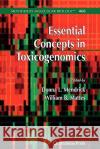
The field of toxicogenomics is moving rapidly, so it is impossible at the timeofthiswritingtocompileaclassicmethodstextbook.Instead, wechose to identify experts in all aspects of this field and challenged them to write reviews, opinion pieces, and case studies. This book covers the main areas important to the study and use of toxicogenomics. Chapter 1 speaks to the convergenceofclassicapproachesalongsidetoxicogenomics.Chapter2deals withtheusefulnessoftoxicogenomicstoidentifythemechanismoftoxicity. Chapter3callsattentiontotheissuesthataffectthequalityoftoxicogenomics experiments, as well as...
The field of toxicogenomics is moving rapidly, so it is impossible at the timeofthiswritingtocompileaclassicmethodstextbook.Instead, wechose to identi...
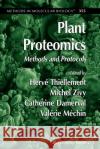
The aim of Plant Proteomics: Methods and Protocols is to present up-- date methods and protocols used by recognized scientists in the world of plant proteomics. If this world was a very small one twenty-five years ago when the first papers were published, it has since experienced exponential growth, and in most countries around the world there are laboratories working on plant proteomics. Two-dimensional gel electrophoresis is still the basic method used, but it has been improved greatly with IPG in the first dimension (Chapter 13) and with new detection methods with fluorochromes (Chapters...
The aim of Plant Proteomics: Methods and Protocols is to present up-- date methods and protocols used by recognized scientists in the world of plant p...
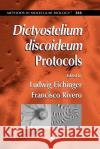
Dictyostelium discoideum is a simple but fascinating eukaryotic microorg- ism, whose natural habitat is deciduous forest soil and decaying leaves, where the amoebae feed on bacteria and grow as independent single cells. Exhaustion of the bacterial food source triggers a developmental program, in which up to 100,000 cells aggregate by chemotaxis towards cAMP. Morphogenesis and cell different- tion then culminate in the production of spores enabling the organism to survive unfavorable conditions. Dictyostelium offers unique advantages for studying f- damental cellular processes with the aid of...
Dictyostelium discoideum is a simple but fascinating eukaryotic microorg- ism, whose natural habitat is deciduous forest soil and decaying leaves, whe...
Protein Folding Protocols presents protocols for studying and characterizing steps and conformational ensembles populating pathways in protein folding from the unfolded to the folded state. It further presents a sample of approaches toward the prediction of protein structure starting from the amino acid sequence, in the absence of overall homologous sequences. Protein folding is a crucial step in the transfer of genetic information from the DNA to the protein. The Genome Project has led to a huge number of available DNA sequences and, therefore, protein sequences. The Structural Genomics...
Protein Folding Protocols presents protocols for studying and characterizing steps and conformational ensembles populating pathways in protein folding...
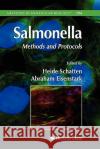
Salmonella: Methods and Protocols presents detailed methods on a variety of aspects of Salmonella research, focusing on those which provide landmarks for future discovery. Highlighted topics include molecular genotyping, rapid and accurate new methods for sensitive determination of antibiotic resistance profiles, the characterization of Salmonella-specific cell antigens, and Salmonella-host cell interactions. Detailed methods for studying Salmonella motility are also presented. Each chapter provides a short overview of the topic, which is followed by detailed explanations of techniques...
Salmonella: Methods and Protocols presents detailed methods on a variety of aspects of Salmonella research, focusing on those which provide landmar...
It is now 10 years since the first edition of YAC Protocols was published in 1996. YAC Protocols was first produced to address the huge demand within the research community for a lab-based text that described in detail the wide range of uses for large insert yeast artificial chromosome (YAC) DNA clones. In doing this, the original editor, David Markie, and the many different contri- tors who provided descriptions of the protocols they used and developed, did a magnificent job. Indeed many of the techniques described within the first e- tion require little change and have stood up admirably to...
It is now 10 years since the first edition of YAC Protocols was published in 1996. YAC Protocols was first produced to address the huge demand within ...
Molecular biology has driven a powerful reductionist, or molecule-c- tric, approach to biological research in the last half of the 20th century. Red- tionism is the attempt to explain complex phenomena by defining the functional properties of the individual components of the system. Bloom (1) has referred to the post-genome sequencing era as the end of naive reductionism. Red- tionist methods will continue to be an essential element of all biological research efforts, but naive reductionism, the belief that reductionism alone can lead to a complete understanding of living organisms, is not...
Molecular biology has driven a powerful reductionist, or molecule-c- tric, approach to biological research in the last half of the 20th century. Red- ...
The field of bacterial diagnostics has seen unprecedented advances in recent years. The increased need for accurate detection and identification of bacteria in human, animal, food, and environmental samples has fueled the development of new techniques. The field has seen extensive research aided by the information from bacterial genome sequencing projects. Although traditional methods of bacterial detection and identification remain in use in laboratories around the world, there is now a growing trend toward the use of nucleic ac- based diagnostics and alternative biochemically and...
The field of bacterial diagnostics has seen unprecedented advances in recent years. The increased need for accurate detection and identification of ba...
Microarray Technology, Volumes 1 and 2, present information in designing and fabricating arrays and binding studies with biological analytes while providing the reader with a broad description of microarray technology tools and their potential applications. The first volume deals with methods and protocols for the preparation of microarrays. The second volume details applications and data analysis, which is important in analyzing the enormous data coming out of microarray experiments.
Among the topics discussed in Volume 1: Synthesis Methods, are matrices in the synthesis of...
Microarray Technology, Volumes 1 and 2, present information in designing and fabricating arrays and binding studies with biological analytes while ...
This volume explores recent progress in the microelectronics arena, the resultant miniaturization of component device features to nanometer size particles, and the ensuing growth in the development and use of microchip-based techniques in leading laboratories around the world. While the area of microelectronics is faced with daunting challenges, it promises fascinating new advances that may translate into products such as sensors and devices that use nanometer-sized building blocks for real-world applications. The contributors to this volume are part of growing...
This volume explores recent progress in the microelectronics arena, the resultant miniaturization of component device features to nanometer s...