The prevalence of particular fortress types in medieval China, Mongolia, Japan and Korea demanded the evolution of different modes of siege warfare in each country. The wealthy walled towns of China, the mountain fortresses of Korea and the military outposts of Japan each presented different challenges to besieging forces, and this book reveals the diversity of tactics that were developed to meet these challenges. Most of the Far Eastern weaponry of this period originated in China, but was adapted to fit the demands of siegecraft across the region and the individual strengths and weaknesses...
The prevalence of particular fortress types in medieval China, Mongolia, Japan and Korea demanded the evolution of different modes of siege warfare in...
From the 11th century AD, East Asian armies made increasing use of exploding missiles and siege cannon to reduce the fortifications of their enemies. Some of these weapons were very similar to those used in Europe - for example, the heavy siege cannon used in the siege of P'yongyang during the Japanese invasion in the late 16th century. Others, like the Korean hwach'a carts mounting over a hundred rockets that were used to bombard the Japanese at Haengiu in 1593, were very different from their European contemporaries. This book details the design and use of the wide range of weaponry...
From the 11th century AD, East Asian armies made increasing use of exploding missiles and siege cannon to reduce the fortifications of their enemies. ...
Viking longships evolved from one-man canoes of the Scandinavian Stone Age, through wood-built-ships of c. 200 BC into the recognisable longboats of the 4th century AD. From this point, the Viking Longship developed into the pre-eminent raider and trader in the North Sea and Baltic, venturing as far afield as the Mediterranean, North Atlantic and modern-day Russia. Keith Durham uses reconstructions, original sources, translations and archaeological evidence to render a vivid picture of the vessels that dominated the seaways of Scandinavia, founded colonies on Iceland, Greenland and the New...
Viking longships evolved from one-man canoes of the Scandinavian Stone Age, through wood-built-ships of c. 200 BC into the recognisable longboats of t...
Of all the British guns in use during the Second World War, the 25 pounder is the gun that best represents Britain's armed forces. It was adaptable, it packed a powerful punch, and above all it was reliable. This book provides a full combat history of a gun that was used in every theatre of the Second World War and saw extensive service in the postwar years, particularly in Korea and during the Malaysian emergency. The last 25-pounder gun to see action in the British Army was one used by SAS troops at Mirbat, Oman, in 1972.
Of all the British guns in use during the Second World War, the 25 pounder is the gun that best represents Britain's armed forces. It was adaptable, i...
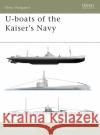
As was the case in World War II, one of the greatest threats to Britain during World War I was the German U-boat menace. This book traces the development of the U-boat threat from the Brandtaucher, designed by Wilhelm Bauer, the father of the German submarine arm, in 1850, through to the commissioning of Germany's first U-boat to go into service, the U-1, in 1906. It then covers the main types of World War I U-boat, detailing the operational history of the U-boat service in depth, with a particular focus on the campaigns in the Atlantic and Mediterranean, as well as the slow build up of...
As was the case in World War II, one of the greatest threats to Britain during World War I was the German U-boat menace. This book traces the developm...
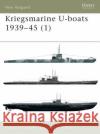
This, the first of two volumes on Germany's World War II U-boats, traces their development from the early U-boats of the Kaiser's Navy, the prohibition on Germany having U-boats following the Armistice in 1918 and the subsequent Treaty of Versailles, the secret development of U-boats using a 'cover-firm' in Holland, culminating in the formation of the 1st U-boat Flotilla in 1935 with the modern Type II. The operational history section includes examples from the Classes Type VIIA, Type VIIB, VIID, VIIE and VIIF before concentrating on the mainstay of the U-boat arm, the Type VIIC. Comparisons...
This, the first of two volumes on Germany's World War II U-boats, traces their development from the early U-boats of the Kaiser's Navy, the prohibitio...
Fighting Ships of the Far East (1) adds enormously to the hitherto small corpus of knowledge about a fascinating and little known subject. Using detailed descriptions, accurate cutaway plates and reliable historical examples, this book covers the history of Chinese ship design and naval warfare from the beginning of the Han dynasty to the first few years of the Ming dynasty. The epic battle of Lake Poyang in in 1363, won by the man who was to become the first Ming Emperor, is also detailed.
Fighting Ships of the Far East (1) adds enormously to the hitherto small corpus of knowledge about a fascinating and little known subject. Using detai...
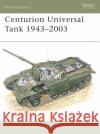
From 1943 the British began the design of a tank that bore distinct similarities to the German Panther tank. Designed as a Universal Tank, the design emerged in mid-1945 as the Centurion. It was last used in action by the British Army in 1991 during the Gulf War. It has also seen action with the Israeli Defence Forces, the Indian Army in the wars with Pakistan and the Australian Army in Vietnam. This book details all the variants of the Centurion used in these conflicts as well as covering the specialised variants last used by the British in the Gulf War.
From 1943 the British began the design of a tank that bore distinct similarities to the German Panther tank. Designed as a Universal Tank, the design ...
At the start of the American Civil War, neither side had warships on the Mississippi River and in the first few months both sides scrambled to gather a flotilla, converting existing riverboats for naval use. These ships were transformed into powerful naval weapons despite a lack of resources, trained manpower and suitable vessels. The creation of a river fleet was a miracle of ingenuity, improvisation and logistics, particularly for the South. This title describes their design, development and operation throughout the American Civil War.
At the start of the American Civil War, neither side had warships on the Mississippi River and in the first few months both sides scrambled to gather ...
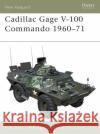
Destined to become one of the most influential postwar armored cars, the V-100 Commando was developed by the Cadillac Gage Company in 1962 as a private venture, and the first prototype was completed in the same year. It was designed as a multi-purpose vehicle and could function as an 11-man personnel carrier, reconnaissance vehicle, convoy escort, command or patrol car and a riot vehicle. The V-100 was tested and evaluated in Vietnam before full-scale production began in 1964. It saw widespread use in Vietnam by both US and South Vietnamese forces. This title describes the design, development...
Destined to become one of the most influential postwar armored cars, the V-100 Commando was developed by the Cadillac Gage Company in 1962 as a privat...