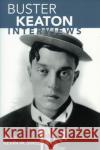
With his trademark porkpie hat, floppy shoes, and deadpan facial expression, Buster Keaton (1895-1966) is one of the most iconic stars of Hollywood's silent and early sound eras. His elaborate sets, careful camerawork, and risky pratfalls have been mimicked by film comedians for generations. His short films, including One Week and Cops, and his feature-length comedies, such as Sherlock Jr., Go West, and The General, routinely appear on critics' lists of the greatest films of all time.
Buster Keaton: Interviews collects interviews from the...
With his trademark porkpie hat, floppy shoes, and deadpan facial expression, Buster Keaton (1895-1966) is one of the most iconic stars of Hollywood...
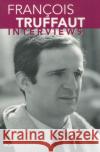
The French New Wave was one of the most seismic events in cinema's history, and among its contributors Francois Truffaut (1932-1984) was a key figure. Along with Jean-Luc Godard, Eric Rohmer, Claude Chabrol, Jacques Rivette, and others, Truffaut helped to form the New Wave's aesthetics and vision and was the first to conceptualize the auteur theory. He made films that reflected his three professed passions: a love of cinema, an interest in the difficulties of male-female relationships, and a fascination with the problems of children. As this collection of interviews progresses, we follow...
The French New Wave was one of the most seismic events in cinema's history, and among its contributors Francois Truffaut (1932-1984) was a key figure....
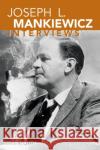
Joseph L. Mankiewicz: Interviews features talks with the master director of such classics as All About Eve, The Barefoot Contessa, and Cleopatra. Mankiewicz (1909-1993) was a creative force in Hollywood from the end of the silent film era through the early years of the Hollywood renaissance of the 1970s. Displaying the wit, insight, and daring that were the hallmarks of his movies, Mankiewicz explores his films and his approach to writing and directing. These interviews span the period from his greatest Hollywood triumphs-he won four Oscars in two years-to just...
Joseph L. Mankiewicz: Interviews features talks with the master director of such classics as All About Eve, The Barefoot Contessa...
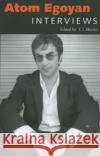
Four-time winner at the Cannes Film Festival, Canadian filmmaker Atom Egoyan (b. 1960) began his career while still an undergraduate at the University of Toronto. His first love was playwriting, but he began to see that he could investigate themes emotionally through film- that the camera could play a role. He learned his craft in his own independent films and by directing television episodes before attempting his first feature film, Next of Kin (1984). There he explored the themes of family and identity that continue to interest him today.
A frequent winner at film festivals,...
Four-time winner at the Cannes Film Festival, Canadian filmmaker Atom Egoyan (b. 1960) began his career while still an undergraduate at the Univers...
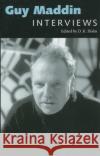
One of Canada's premier cinematic exports, Guy Maddin (b. 1956) is an award-winning filmmaker with a rising reputation. Known for his autobiographical tales---hidden deeply within comical, absurd, and surrealistic narratives---Maddin has earned international acclaim, including a lifetime achievement award at the Telluride Film Festival at the age of thirty-nine.
Possessing a deep knowledge of silent cinema, modernist artists, and novelists, Maddin's seemingly amateurish visual style and unusual subjects (patriphagia in The Dead Father, incest in Careful) obscure the...
One of Canada's premier cinematic exports, Guy Maddin (b. 1956) is an award-winning filmmaker with a rising reputation. Known for his autobiographi...
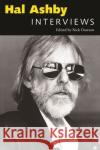
Hal Ashby (1929-1988) is considered to be the lost genius of the New Hollywood generation. While his name does not bear the familiarity of, say, Robert Altman or Martin Scorsese, his diverse films are among the best known and most beloved of the era. From the cult classic Harold and Maude (1971) to the iconic political satire Being There (1979), from the subversive sex comedy Shampoo (1975) to the anti-Vietnam romance Coming Home (1979), Ashby rejected mainstream conventions while his films attracted both popular and critical praise.
A true actors'...
Hal Ashby (1929-1988) is considered to be the lost genius of the New Hollywood generation. While his name does not bear the familiarity of, say, Ro...
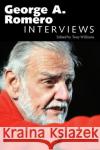
George A. Romero (b. 1940) has achieved a surprising longevity as director since his first film, Night of the Living Dead (1968). After recently relocating to Canada, he shows no signs of slowing up: his recent film, Survival of the Dead (2009), is discussed in a new interview conducted by Tony Williams for this volume, and still other films are awaiting release. Although commonly known as a director of zombie films, a genre he himself launched, Romero's films often transcend easy labels. His films are best understood as allegorical commentaries on American life that just...
George A. Romero (b. 1940) has achieved a surprising longevity as director since his first film, Night of the Living Dead (1968). After rece...