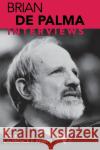
Brian De Palma (b. 1940) isn't your average Hollywood director.
For years he reigned as the "master of the macabre," the man who massacred the class of '76 in Carrie and stalked Angie Dickinson in Dressed to Kill. By the mid-1980s De Palma found himself assaulting his audience and critics, daring them to watch a chainsaw enter a man's skull in Scarface and a power drill disembowel a defenseless woman in Body Double.
What drove De Palma to such extremes? In the late 1960s, he wanted to be the next Jean-Luc Godard and revolutionize American cinema. Instead,...
Brian De Palma (b. 1940) isn't your average Hollywood director.
For years he reigned as the "master of the macabre," the man who massacred the cl...
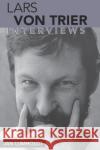
With six entries at the Cannes Film Festival thus far, Lars von Trier has been a Cannes award winner four times. Without question, he is the most intriguing film director to emerge in Denmark since the days of his great mentor in spirit Carl Theodor Dreyer. A relentless visionary, von Trier (b. 1956) has succeeded not only in realizing his projects but also in managing to gather substantial audiences to his films. Breaking the Waves (1996) made him a well-known figure to American audiences, as did Dancer in the Dark (2000), winner of the Palme d'Or at...
Film -- Biography
With six entries at the Cannes Film Festival thus far, Lars von Trier has been a Cannes award winner four times. Without question...
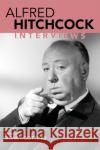
Even twenty years after his death and nearly fifty or more years after his creative peak, Alfred Hitchcock (1899-1980) is still arguably the most instantly recognizable film director in name, appearance, vision, and voice. Long ago, through a combination of timing, talent, genius, energy, and publicity, he made the key transition from proper noun to adjective that confirms celebrity and true stature. It is a rare film watcher indeed who cannot define -Hitchcockian.-
As the director of such films as Psycho, North by Northwest, Spellbound, Vertigo, Rear...
Even twenty years after his death and nearly fifty or more years after his creative peak, Alfred Hitchcock (1899-1980) is still arguably the most i...
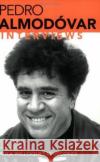
In full command of both Hollywood stylistics and camp aesthetics, Spain's Pedro Almodovar (b. 1951) has become a master of the audacious and the unorthodox, of the permissive and the polemical.
Pedro Almodovar: Interviews documents the 22-year-long cinematic career of the most internationally celebrated Spanish art-film director since Luis Bunuel. Many of these interviews, from French, Italian, and Spanish periodicals, appear for the first time in English.
Almodovar's early cinematic ventures in Super 8 and 16mm in the 1970s marked and memorialized the rise...
Film -- Biography
In full command of both Hollywood stylistics and camp aesthetics, Spain's Pedro Almodovar (b. 1951) has become a master of the au...
In this collection of interviews, Robert Aldrich (1918-1983) tells fascinating stories of making motion pictures with such film legends as Burt Lancaster, Lee Marvin, Jack Palance, Robert Mitchum, Bette Davis, Joan Crawford, James Stewart, Charles Bronson, Eddie Albert, and Burt Reynolds. As he speaks of them, of his on-going battles with censors, and of his audacious but failed attempt to create his own studio, he talks bluntly, sometimes ferociously, about struggling to make movies that accented his uncompromising view of life.
Among Aldrich's interviewers are...
Film -- Biography
In this collection of interviews, Robert Aldrich (1918-1983) tells fascinating stories of making motion pictures with such film l...
Few Hollywood directors had a higher profile in the 1930s than Frank Capra (18971991). He served as president of the Academy of Motion Picture Arts and Sciences and of the Screen Directors Guild. He won three Academy Awards as best director and was widely acclaimed as the man most responsible for making Columbia Pictures a success.
This popularity was established and sustained by films that spoke to and for the times--It Happened One Night, Mr. Deeds Goes to Town, Meet John Doe, and Mr. Smith Goes to Washington. These replicated the nation's...
FILM ] BIOGRAPHY
Few Hollywood directors had a higher profile in the 1930s than Frank Capra (18971991). He served as president of the Academy of Mo...
This collection of interviews with the renowned filmmaker, animator, artist, and member of the Monty Python comedy troupe covers the phases of his career from his early work as a cartoonist and animator through his most recent and most difficult projects.
Among many subjects, Gilliam discusses his formative years as an artist and humor-magazine cartoonist, his move from the United States to England, his entry into British television, and his success as resident animator for the Monty Python's Flying Circus television show.
As co-director of Monty Python and the Holy Grail...
This collection of interviews with the renowned filmmaker, animator, artist, and member of the Monty Python comedy troupe covers the phases of his ...
At first glance, George Stevens (19041975) appears to be the quintessential Hollywood director. A closer look at his achievements shows him to be more than just the creator of some of the smartest melodramas and comedies of the 1930s and 1940s, including Annie Oakley, Swing Time, and Gunga Din. Several of his films--Giant, The Diary of Anne Frank, Shane, The Greatest Story Ever Told, and A Place in the Sun--are regarded as some of the most important and enduring dramas of postwar American cinema. As a leading producer...
FILM ] BIOGRAPHY
At first glance, George Stevens (19041975) appears to be the quintessential Hollywood director. A closer look at his achievements ...
Of all the American filmmakers who emerged from the 1970s, Francis Ford Coppola (b. 1939) may be the one most passionately revered by both critics and mainstream audiences.
The Godfather and The Godfather: Part II are landmark epics whose shots and dialogue sequences have become wholly absorbed by popular culture. Apocalypse Now, his visionary reworking of Joseph Conrad's Heart of Darkness, remains an enduring and controversial template for all future films about the Vietnam War.
Coppola's films featured pivotal roles for such actors as Robert Duvall, Al...
Of all the American filmmakers who emerged from the 1970s, Francis Ford Coppola (b. 1939) may be the one most passionately revered by both critics ...
Fred Zinnemann (1907-1997) was one of Hollywood's most honored directors. In a career that spanned fifty years, he won four Academy Awards and directed such classic movies as From Here to Eternity, A Man for All Seasons, The Day of the Jackal, and High Noon.
Covering thirty-three years of conversations (1964-1997), Fred Zinnemann: Interviews provides a revealing glimpse into the director's vision as he discusses in his cultivated, elegant voice his varied experiences as a filmmaker. He defends himself against charges that his films are too objective...
Fred Zinnemann (1907-1997) was one of Hollywood's most honored directors. In a career that spanned fifty years, he won four Academy Awards and dire...