• Wyszukiwanie zaawansowane
  • Kategorie
  • Kategorie BISAC
  • Książki na zamówienie
  • Promocje
  • Granty
  • Książka na prezent
  • Opinie
  • Pomoc
  • Załóż konto
  • Zaloguj się

The Microbiological Safety of Low Water Activity Foods and Spices » książka


zaloguj się | załóż konto
Logo Krainaksiazek.pl

koszyk

konto

szukaj
topmenu
Księgarnia internetowa
Szukaj
Książki na zamówienie
Promocje
Granty
Książka na prezent
Moje konto
Pomoc
 
 
Wyszukiwanie zaawansowane
Pusty koszyk
Bezpłatna dostawa dla zamówień powyżej 20 złBezpłatna dostawa dla zamówień powyżej 20 zł

Kategorie główne

• Nauka
 [2950560]
• Literatura piękna
 [1849509]

  więcej...
• Turystyka
 [71097]
• Informatyka
 [151150]
• Komiksy
 [35848]
• Encyklopedie
 [23178]
• Dziecięca
 [617388]
• Hobby
 [139064]
• AudioBooki
 [1657]
• Literatura faktu
 [228597]
• Muzyka CD
 [383]
• Słowniki
 [2855]
• Inne
 [445295]
• Kalendarze
 [1464]
• Podręczniki
 [167547]
• Poradniki
 [480102]
• Religia
 [510749]
• Czasopisma
 [516]
• Sport
 [61293]
• Sztuka
 [243352]
• CD, DVD, Video
 [3414]
• Technologie
 [219456]
• Zdrowie
 [101002]
• Książkowe Klimaty
 [124]
• Zabawki
 [2311]
• Puzzle, gry
 [3459]
• Literatura w języku ukraińskim
 [254]
• Art. papiernicze i szkolne
 [8079]
Kategorie szczegółowe BISAC

The Microbiological Safety of Low Water Activity Foods and Spices

ISBN-13: 9781493920617 / Angielski / Twarda / 2014 / 444 str.
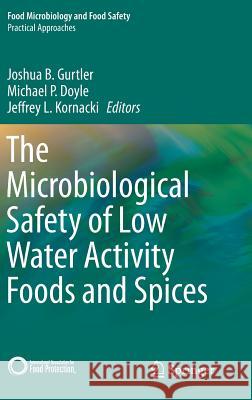
Joshua Gurtler; Michael P. Doyle; Jeffrey L. Kornacki
The Microbiological Safety of Low Water Activity Foods and Spices Joshua Gurtler Michael P. Doyle Jeffrey L. Kornacki 9781493920617 Springer - książkaWidoczna okładka, to zdjęcie poglądowe, a rzeczywista szata graficzna może różnić się od prezentowanej.

The Microbiological Safety of Low Water Activity Foods and Spices

ISBN-13: 9781493920617 / Angielski / Twarda / 2014 / 444 str.

Joshua Gurtler; Michael P. Doyle; Jeffrey L. Kornacki
cena 522,07
(netto: 497,21 VAT:  5%)

Najniższa cena z 30 dni: 462,63
Termin realizacji zamówienia:
ok. 22 dni roboczych
Dostawa w 2026 r.

Darmowa dostawa!

Low water activity (aw) and dried foods such as dried dairy and meat products, grain-based and dried ready-to-eat cereal products, powdered infant formula, peanut and nut pastes, as well as flours and meals have increasingly been associated with product recalls and foodborne outbreaks due to contamination by pathogens such as Salmonella spp. and enterohemorrhagic E. coli. In particular, recent foodborne outbreaks and product recalls related to Salmonella-contaminated spices have raised the level of public health concern for spices as agents of foodborne illnesses. Presently, most spices are grown outside the U.S., mainly in 8 countries: India, Indonesia, China, Brazil, Peru, Madagascar, Mexico and Vietnam. Many of these countries are under-developed and spices are harvested and stored with little heed to sanitation. The FDA has regulatory oversight of spices in the United States; however, the agency's control is largely limited to enforcing regulatory compliance through sampling and testing only after imported foodstuffs have crossed the U.S. border. Unfortunately, statistical sampling plans are inefficient tools for ensuring total food safety. As a result, the development and use of decontamination treatments is key. This book provides an understanding of the microbial challenges to the safety of low aw foods, and a historic backdrop to the paradigm shift now highlighting low aw foods as vehicles for foodborne pathogens. Up-to-date facts and figures of foodborne illness outbreaks and product recalls are included. Special attention is given to the uncanny ability of Salmonella to persist under dry conditions in food processing plants and foods. A section is dedicated specifically to processing plant investigations, providing practical approaches to determining sources of persistent bacterial strains in the industrial food processing environment. Readers are guided through dry cleaning, wet cleaning and alternatives to processing plant hygiene and sanitation. Separate chapters are devoted to low aw food commodities of interest including spices, dried dairy-based products, low aw meat products, dried ready-to-eat cereal products, powdered infant formula, nuts and nut pastes, flours and meals, chocolate and confectionary, dried teas and herbs, and pet foods. The book provides regulatory testing guidelines and recommendations as well as guidance through methodological and sampling challenges to testing spices and low aw foods for the presence of foodborne pathogens. Chapters also address decontamination processes for low aw foods, including heat, steam, irradiation, microwave, and alternative energy-based treatments.


Kategorie:
Nauka, Chemia
Kategorie BISAC:
Technology & Engineering > Food Science - General
Science > Chemia
Science > Biotechnology
Wydawca:
Springer
Seria wydawnicza:
Food Microbiology and Food Safety / Practical Approaches
Język:
Angielski
ISBN-13:
9781493920617
Rok wydania:
2014
Wydanie:
2014
Numer serii:
000459579
Ilość stron:
444
Waga:
1.01 kg
Wymiary:
23.37 x 16.0 x 3.05
Oprawa:
Twarda
Wolumenów:
01

A. Introduction and Overview.- 1. The Microbiological Safety of Spices and Low Water Activity Foods: Correcting Historic Misassumptions.-2. Challenges in the Control of Foodborne Pathogens in Low-Water Activity Foods and Spices.- B. Pathogen Persistence and Control in Low aw Foods and Processing Plants.- 3. Adaptation of Pathogenic Microorganisms to Dry Conditions.- 4. Transcriptomic Responses of Salmonella Species to Desiccation and Low-Moisture Environments: Extending Our Knowledge of How Bacteria Cope with Low-Moisture Stress.- 5. Processing Plant Investigations: Practical Approaches to Determining Sources of Persistent Bacterial Strains in the Industrial Food Processing Environment.- 6. Dry Cleaning, Wet Cleaning and Alternatives to Processing Plant Hygiene and Sanitation.- C. Low aw Food Commodities of Interest.- 7. Spices.- 8. Dried Dairy-Based Products.- 9. Low Water Activity Meat Products.- 10. Dried, Ready-to-Eat Cereal Products.- 11. Powdered Infant Formula.- 12. Nuts and Nut Pastes.- 13. Flour and Meal.- 14. Chocolate and Confectionary.- 15. Salty Snack Foods.- 16. Pet Foods.- 17. Dried Teas and Herbs.- D. Product Testing.- 18. Regulatory Testing Guidelines and Recommendations.- 19. Methodological and Sampling Challenges to Testing Spices and Low aw Foods for the Presence of Foodborne Pathogens.- E. Low aw Food Decontamination.- 20. Irradiation, Microwave and Alternative Energy-Based Treatments for Low Water Activity.- 21. Heat and Steam Treatments.- F. Research Needs.- 22. Research Gaps and Needs Pertaining to Microbial Pathogens in Spices and Low aw Foods.

Joshua B. Gurtler, USDA Research Scientist, Phoenixville, PA

Michael P. Doyle, Regents Professor of Food Microbiology, Director, Center for Food Safety, Department of Food Science and Technology, University of Georgia, Griffin, GA

Jeffrey L. Kornacki, President and Senior Technical Director, Kornacki Microbiology Solutions, Inc., Madison, WI

Low water activity (aw) and dried foods such as dried dairy and meat products, grain-based and dried ready-to-eat cereal products, powdered infant formula, peanut and nut pastes, as well as flours and meals have increasingly been associated with product recalls and foodborne outbreaks due to contamination by pathogens such as Salmonella spp. and enterohemorrhagic E. coli.  In particular, recent foodborne outbreaks and product recalls related to Salmonella-contaminated spices have raised the level of public health concern for spices as agents of foodborne illnesses. Presently, most spices are grown outside the U.S., mainly in 8 countries: India, Indonesia, China, Brazil, Peru, Madagascar, Mexico and Vietnam. Many of these countries are under-developed and spices are harvested and stored with little heed to sanitation. The FDA has regulatory oversight of spices in the United States; however, the agency’s control is largely limited to enforcing regulatory compliance through sampling and testing only after imported foodstuffs have crossed the U.S. border. Unfortunately, statistical sampling plans are inefficient tools for ensuring total food safety. As a result, the development and use of decontamination treatments is key. 

This book provides an understanding of the microbial challenges to the safety of low aw foods, and a historic backdrop to the paradigm shift now highlighting low aw foods as vehicles for foodborne pathogens.  Up-to-date facts and figures of foodborne illness outbreaks and product recalls are included.  Special attention is given to the uncanny ability of Salmonella to persist under dry conditions in food processing plants and foods.  A section is dedicated specifically to processing plant investigations, providing practical approaches to determining sources of persistent bacterial strains in the industrial food processing environment.  Readers are guided through dry cleaning, wet cleaning and alternatives to processing plant hygiene and sanitation.  Separate chapters are devoted to low aw food commodities of interest including spices, dried dairy-based products, low aw meat products, dried ready-to-eat cereal products, powdered infant formula, nuts and nut pastes, flours and meals, chocolate and confectionary, dried teas and herbs, and pet foods.  The book provides regulatory testing guidelines and recommendations as well as guidance through methodological and sampling challenges to testing spices and low aw foods for the presence of foodborne pathogens.  Chapters also address decontamination processes for low aw foods, including heat, steam, irradiation, microwave, and alternative energy-based treatments.

The Food Microbiology and Food Safety series is published in conjunction with the International Association for Food Protection, a non-profit association for food safety professionals. Dedicated to the life-long educational needs of its Members, IAFP provides an information network through its two scientific journals (Food Protection Trends and Journal of Food Protection), its educational Annual Meeting, international meetings and symposia, and interaction between food safety professionals.

Doyle, Michael P. MICHAEL P. DOYLE, PhD, was D. R. Semmes Professor ... więcej >


Udostępnij

Facebook - konto krainaksiazek.pl


Opinie o Krainaksiazek.pl na Opineo.pl

Partner Mybenefit

Krainaksiazek.pl w programie rzetelna firma Krainaksiaze.pl - płatności przez paypal

Czytaj nas na:

Facebook - krainaksiazek.pl
  • książki na zamówienie
  • granty
  • książka na prezent
  • kontakt
  • pomoc
  • opinie
  • regulamin
  • polityka prywatności

Zobacz:

  • Księgarnia czeska

  • Wydawnictwo Książkowe Klimaty

1997-2025 DolnySlask.com Agencja Internetowa

© 1997-2022 krainaksiazek.pl
     
KONTAKT | REGULAMIN | POLITYKA PRYWATNOŚCI | USTAWIENIA PRYWATNOŚCI
Zobacz: Księgarnia Czeska | Wydawnictwo Książkowe Klimaty | Mapa strony | Lista autorów
KrainaKsiazek.PL - Księgarnia Internetowa

Polityka prywatnosci - link
Krainaksiazek.pl - płatnośc Przelewy24
Przechowalnia Przechowalnia





