• Wyszukiwanie zaawansowane
  • Kategorie
  • Kategorie BISAC
  • Książki na zamówienie
  • Promocje
  • Granty
  • Książka na prezent
  • Opinie
  • Pomoc
  • Załóż konto
  • Zaloguj się

Perspectives in Molecular Toxinology » książka


zaloguj się | załóż konto
Logo Krainaksiazek.pl

koszyk

konto

szukaj
topmenu
Księgarnia internetowa
Szukaj
Książki na zamówienie
Promocje
Granty
Książka na prezent
Moje konto
Pomoc
 
 
Wyszukiwanie zaawansowane
Pusty koszyk
Bezpłatna dostawa dla zamówień powyżej 40 złBezpłatna dostawa dla zamówień powyżej 40 zł

Kategorie główne

• Nauka
 [2952531]
• Literatura piękna
 [1815254]

  więcej...
• Turystyka
 [52246]
• Informatyka
 [151406]
• Komiksy
 [36554]
• Encyklopedie
 [23115]
• Dziecięca
 [612095]
• Hobby
 [104900]
• AudioBooki
 [1784]
• Literatura faktu
 [191556]
• Muzyka CD
 [380]
• Słowniki
 [2946]
• Inne
 [442645]
• Kalendarze
 [1505]
• Podręczniki
 [166084]
• Poradniki
 [422936]
• Religia
 [506774]
• Czasopisma
 [518]
• Sport
 [60387]
• Sztuka
 [242639]
• CD, DVD, Video
 [3428]
• Technologie
 [219359]
• Zdrowie
 [98539]
• Książkowe Klimaty
 [124]
• Zabawki
 [2509]
• Puzzle, gry
 [3809]
• Literatura w języku ukraińskim
 [261]
• Art. papiernicze i szkolne
 [8058]
Kategorie szczegółowe BISAC

Perspectives in Molecular Toxinology

ISBN-13: 9780471495031 / Angielski / Twarda / 2002 / 516 str.
Andre Menez; A. Minez
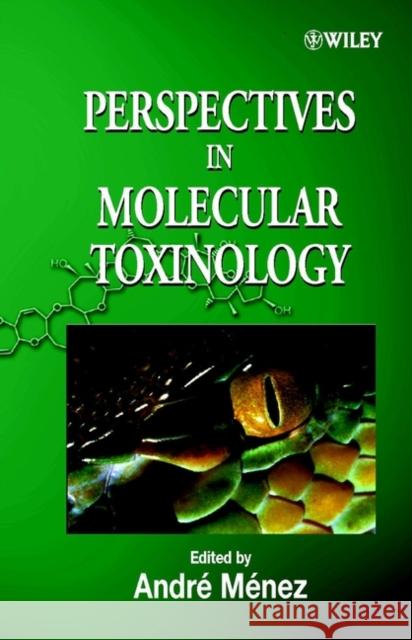
Perspectives in Molecular Toxinology Andre Menez A. Minez 9780471495031 John Wiley & Sons - książkaWidoczna okładka, to zdjęcie poglądowe, a rzeczywista szata graficzna może różnić się od prezentowanej.

Perspectives in Molecular Toxinology

ISBN-13: 9780471495031 / Angielski / Twarda / 2002 / 516 str.

Andre Menez; A. Minez
cena 2436,78
(netto: 2320,74 VAT:  5%)

Najniższa cena z 30 dni: 2382,85
Termin realizacji zamówienia:
ok. 30 dni roboczych.

Darmowa dostawa!

Covering the most recent advances in our understanding of toxins from venomous animals and microbes as well as that of their targets, this book expertly addresses the many intriguing and unsolved questions concerning; proteomics studies of the "toxinome," intimate modes of toxin actions, molecular basis of specificity, pleiotropic properties of toxins and structural biology of toxins.

Through twenty-seven chapters the authors discuss the role of structural genomics in toxinology, how toxins are subject to accelerated evolution, how toxins can be exploited as models for the design of new drugs, and what the future holds for the treatment of snake bites.

In order to address these challenging aspects, the authors have posed crystal-clear questions. Based on the most precise knowledge the attendant reasoning shows how toxinology has become an important area of biochemistry and is directly associated with advances in cellular microbiology, molecular pharmacology, molecular physiology, cell biology, protein engineering and many other disciplines.


Kategorie:
Nauka, Chemia
Kategorie BISAC:
Science > Biologia molekularna
Science > Biochemia
Medical > Toxicology
Wydawca:
John Wiley & Sons
Język:
Angielski
ISBN-13:
9780471495031
Rok wydania:
2002
Ilość stron:
516
Waga:
0.88 kg
Wymiary:
22.8 x 15.7 x 3.4
Oprawa:
Twarda
Wolumenów:
01
Dodatkowe informacje:
Bibliografia
Wydanie ilustrowane

"...useful not only to those in the field of toxinology, but also to any interested in dramatic examples of the applications and promise of modern techniques of molecular biology to medicine in general." ( Veterinary and Human Toxicology, Vol. 44, No. 6, December 2002)

"...insightful and informative reviews...much to ponder here..." (Chemistry & Industry, (3 March 2003)

List of Contributors

Preface

I TOXINS FROM MICROORGANISMS

Bacterial Toxins with Metalloprotease Activity (O. Rossetto and C. Montecucco)

The Cholesterol–dependent Cytolysins: Current Perspectives on Membrane Assembly and Insertion (E. Hotze and R.K. Tweten)

Toxin–producing Dinoflagellates (M.J. Holmes and R. Lewis)

Involvement of Na+ in the Actions of Ciguatoxins and Brevetoxins that Stimulate Neurotransmitter Release and Affect Synaptic Transmission (J. Molgó and E. Benoit)

II ANIMAL TOXINS AND NEW METHODOLOGIES

Role of Discovery Science in Toxicology: Examples in Venom Proteomics (J.W. Fox, J.D. Shannon, B. Stefansson, A.S. Kamiguti, R.D.G. Theakston, S.M.T. Serrano, A.C.M. Camargo and N. Sherman)

Proteomics of Venom Peptides (R. Stocklin and P. Favreau)

High–resolution NMR of Venom Toxins in Nanomolar Amounts (M. Delepierre)

III ANIMAL TOXINS: FROM FUNDAMENTAL STUDIES TO DRUGS?

Cone Snails and Conotoxins Evolving Sophisticated Neuropharmacology (B.M. Olivera, J.S. Imperial and G Bulaj)

Toxin Structure and Function: What Does Structural Genomics Have To Offer? (R.S. Norton)

The Sites by which Animal Toxins Bind to their Targets Involve Two Components: A Clue for Selectivity, Evolution and Design of Proteins? (A. Ménez, D. Servent and S. Gasparini)

Scorpion Genes and Peptides Specific for Potassium Channels: Structure,Function and Evolution (L.D. Possani, E. Merino, M. Corona and B. Becerril)

Scorpion Toxins Differentiating among Neuronal Sodium Channel Subtypes: Nature′s Guide for Design of Selective Drugs (D. Gordon, N. Gilles, D. Bertrand, J. Molgó, G.M. Nicholson, M.P. Sauviat, E. Benoit, I. Shichor, I. Lotan, M. Gurevitz, R.G. Kallen and S.H. Heinemann)

Diversification of Toxic Sites on a Conserved Protein Scaffold – a Scorpion Recipe for Survival (M. Gurevitz, N. Zilberberg, O. Froy, M. Turkov, R. Wilunsky, I. Karbat, J. Anglister, B. Shaanan, M. Pelhate, M.E. Adams, N. Gilles, D. Gordon)

Methodological Approaches to the Study of Ion Channels Using Peptide Toxins: Proposed Comprehensive Guidelines (M. De Waard, J.–M. Sabatier and H. Rochat)

Toxins as Probes for Structure and Specificity of Synaptic Target Proteins (P. Taylor, B. Molles, S. Malany and H. Osaka)

Allosteric and Steric interactions of Polyamines and Polyamine–containing Toxins with Nicotinic Acetylcholine Receptors (T.J. Brier, I.R. Mellor and P.N.R. Usherwood)

Anabaseine as a Molecular Model for Design of a7 Nicotinic Receptor Agonist Drugs (W.R. Kem)

Understanding the Structure–Function Relationship of Snake Venom Cardiotoxins (T.K.S. Kumar, S. Srisailam, R.R. Vethanayagam and C. Yu)

Structure and Function of Disintegrins and C–lectins: Viper Venom Proteins Modulating Cell Adhesion (S. Niewiarowski, C. Marcinkiewicz, I. Wierzbicka–Patynowski, M.A. McLane and J.J. Calvete)

Prothrombin Activators from Snake Venoms (R.M. Kini, J.S. Joseph and V.S. Rao)

C–type Lectins from Snake Venoms: New Tools for Research in Thrombosis and Haemostasis (A. Wisner, M. Leduc and C. Bon)

Toxins Leading to Medicines (A.L. Harvey)

IV EVOLUTION OF ANIMAL TOXINS

Accelerated and Regional Evolution of Snake Venom Gland Isozymes (M. Ohno, T. Ogawa, N. Oda–Ueda, T. Chijiwa and S. Hattori)

Functional Diversification of Animal Toxins by Adaptive Evolution (D. Kordis, I. Kriûaj and F. Gubenëek)

V FROM VENOMS TO TREATMENT

The Venomous Function (M. Goyffon)

Are Inhibitors of Metalloproteinases, Phospholipases A2 and Myotoxins Members of the Innate System? (J. Perales and G.B. Domont)

The Treatment of Snake Bites: Analysis of Requirements and Assessment of Therapeutic Efficacy in Tropical Africa (J.–P. Chippaux)

Andre Menez is the Director of the Department of Protein Engineering at the Commissariat a l′Energie Atomique (CEA) in France. He heads the Laboratory of Protein Chemistry and is Professor at the National Institute of Sciences and Nuclear Techniques.

In this volume the editors have reviewed the most recent major advances in our understanding of toxins from venomous animals and microbes and their targets in mammals, insects and other animals. To approach these challenging aspects, the authors have posed crystal–clear questions based on the most precise acquired knowledge.
∗ What can be learnt from genomics and proteomics?

∗ What are the intimate modes of action of toxins on ion channels, receptors, enzymes, cell membranes?

∗ What is the molecular basis of specificity and more generally of pleiotropism of toxins?

∗ What else can be learnt about toxin tertiary structures and dynamics?

∗ How can we enhance our understanding of target architecture and complex toxin–target structures?

∗ Are toxins subject to accelerated evolution?

∗ Can they be exploited as models for the design of new drugs?

∗ What does the future hold for the treatment of snake bites?
These are just some of the many questions that have been addressed in this book. Complete answers may not always be readily apparent, but the attendant reasoning shows how toxinology has become an important area of biochemistry, directly associated with advances in cellular microbiology, molecular pharmacology, molecular physiology, cell biology, protein engineering, and other disciplines.

Menez, Andre Menez is the Director of the Department of Protein... więcej >


Udostępnij

Facebook - konto krainaksiazek.pl


Opinie o Krainaksiazek.pl na Opineo.pl

Partner Mybenefit

Krainaksiazek.pl w programie rzetelna firma Krainaksiaze.pl - płatności przez paypal

Czytaj nas na:

Facebook - krainaksiazek.pl
  • książki na zamówienie
  • granty
  • książka na prezent
  • kontakt
  • pomoc
  • opinie
  • regulamin
  • polityka prywatności

Zobacz:

  • Księgarnia czeska

  • Wydawnictwo Książkowe Klimaty

1997-2026 DolnySlask.com Agencja Internetowa

© 1997-2022 krainaksiazek.pl
     
KONTAKT | REGULAMIN | POLITYKA PRYWATNOŚCI | USTAWIENIA PRYWATNOŚCI
Zobacz: Księgarnia Czeska | Wydawnictwo Książkowe Klimaty | Mapa strony | Lista autorów
KrainaKsiazek.PL - Księgarnia Internetowa

Polityka prywatnosci - link
Krainaksiazek.pl - płatnośc Przelewy24
Przechowalnia Przechowalnia





