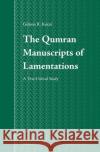
In The Qumran Manuscripts of Lamentations: A Text-Critical Study, the first large-scale investigation of the topic, Gideon Kotze establishes how the four Lamentations manuscripts from Qumran present the content of the biblical book. Kotze takes as his point of departure the contributions of the Dead Sea scrolls to the discipline of Old Testament textual criticism and treats the Qumran manuscripts of Lamentations, the Masoretic text and the ancient translations as witnesses to the content of the book and not only as witnesses to earlier forms of its Hebrew text. By focusing the analysis...
In The Qumran Manuscripts of Lamentations: A Text-Critical Study, the first large-scale investigation of the topic, Gideon Kotze establishes ho...
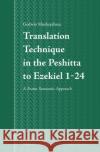
The Peshitta Institute Leiden is fulfilling its aim of producing a critical edition of the Old Testament in Syriac according to the Peshitta version. As this critical edition becomes available, Translation Technique in the Peshitta to Ezekiel 1-24: A Frame Semantics Approach takes its role in providing perspectives on the value of the Peshitta to Ezekiel in Old Testament textual studies. Godwin Mushayabasa uses the cognitive linguistics approach of frame semantics to determine what techniques were used to translate Ezekiel 1-24 from Hebrew to Syriac. He observes that the Peshitta was...
The Peshitta Institute Leiden is fulfilling its aim of producing a critical edition of the Old Testament in Syriac according to the Peshitta version. ...
In The Verbal System of the Dead Sea Scrolls Ken M. Penner determines whether Qumran Hebrew finite verbs are primarily temporal, aspectual, or modal. Standard grammars claim Hebrew was aspect-prominent in the Bible, and tense-prominent in the Mishnah. But the semantic value of the verb forms in the intervening period in which the Dead Sea Scrolls were written has remained controversial. Penner answers the question of Qumran Hebrew verb form semantics using an empirical method: a database calculating the correlation between each form and each function, establishing that the ancient...
In The Verbal System of the Dead Sea Scrolls Ken M. Penner determines whether Qumran Hebrew finite verbs are primarily temporal, aspectual, or ...
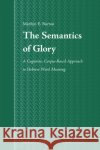
In this study on the kābod of YHWH biblical texts are approached from a canonical perspective, and the synchronic approach prevails over the diachronic. Ben Sira characterized Ezekiel as the prophet who saw the appearance of the glory of God. This characterization is not based on the number of occurrences of kābod in Ezekiel. The peculiarity of Ezekiel is that kābod is used almost exclusively as a hypostasis of YHWH. Ezekiel's description of the kābod of YHWH is more elaborate than any other Old Testament writer's, and it highlights the dual and...
In this study on the kābod of YHWH biblical texts are approached from a canonical perspective, and the synchronic approach prevails over t...
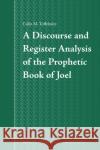
In A Discourse and Register Analysis of the Prophetic Book of Joel, Colin M. Toffelmire presents a thorough analysis of the text of Joel from the perspective of Systemic Functional Linguistics. While traditional explorations of Joel generally engage the book from an historical or literary perspective, here Toffelmire examines syntactic and semantic patterning in the book, and builds from there toward a description of the linguistic register and context of situation that these linguistic patterns suggest. This work also showcases the usefulness of discourse analysis grounded in Systemic...
In A Discourse and Register Analysis of the Prophetic Book of Joel, Colin M. Toffelmire presents a thorough analysis of the text of Joel from t...
In der vorliegenden Monographie untersucht Peter Juhas die Funktion der viel diskutierten biblisch-hebraischen Partikel -n im Lichte der wichtigsten antiken Bibelubersetzungen (LXX, P t und Vulgata). Dabei werden Textkritik, Ubersetzungswissenschaft, Diskurspragmatik und Hoflichkeitsforschung kombiniert. Eine systematische und umfassende Untersuchung der textuellen Evidenz zeigt, dass die pragmatische Funktion dieser Partikel von jeweiligem Kontext stark konditioniert ist und mit einem einfachen gemeinsamen Nenner nicht erklart werden kann. Ein Zugang, der verschiedene Diskursebenen...
In der vorliegenden Monographie untersucht Peter Juhas die Funktion der viel diskutierten biblisch-hebraischen Partikel -n im Lichte der wichtigsten a...
Hebrew Texts in Jewish, Christian and Muslim Surroundings offers a new perspective on Judaism, Christianity and Islam as religions of the book. Their problematic relation seems to indicate that there is more that divides than unites these religions. The present volume will show that there is an intricate web of relations between the texts of these three religious traditions. On many levels readings and interpretations intermingle and influence each other. Studying the multifaceted history of the way Hebrew texts were read and interpreted in so many different contexts may contribute to a...
Hebrew Texts in Jewish, Christian and Muslim Surroundings offers a new perspective on Judaism, Christianity and Islam as religions of the book. Their ...
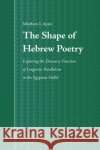
In The Shape of Hebrew Poetry, Matthew Ayars explores foregrounding and structural cohesion as the dual discourse function of linguistic parallelism in biblical Hebrew poetry through a robust application of Russian Formalist Roman Jakobson's conceptulisation of linguistic parallelism to the Egpytian Hallel (Psalm 113–118). Other hebraists and biblical Hebrew poetry specialists have long noted the importance of Jakobson's theory of parallelism for poetic texts of the Hebrew Bible, however, Ayars is the first to offer an application of Jakobsonian-based analysis to a poetic corpus of the...
In The Shape of Hebrew Poetry, Matthew Ayars explores foregrounding and structural cohesion as the dual discourse function of linguistic parallelism i...