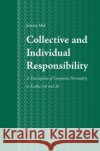
Following an extensive study of Ezekiel 18 and 20, this book offers a redefinition and a new theoretical basis for the concept of corporate personality. This theory is subsequently applied to Ezekiel 18 and 20 to analyze the collective and individual features.
Following an extensive study of Ezekiel 18 and 20, this book offers a redefinition and a new theoretical basis for the concept of corporate personalit...
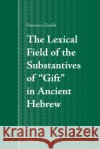
This monograph exhaustively investigates the semantic domain of 'gift' in Ancient Hebrew, which comprises 28 substantives. The investigation firstly focuses on the syntagmatic and paradigmatic relations that determine the meanings of each individual lexeme and subsequently provides an overall picture of the developments and extensions of the whole lexical field across the different layers of Ancient Hebrew. The investigation sheds new light on the debated issue of the so-called sectarian Qumran writings, by demonstrating that they attest to distinctive patterns of lexical organisation that...
This monograph exhaustively investigates the semantic domain of 'gift' in Ancient Hebrew, which comprises 28 substantives. The investigation firstly f...
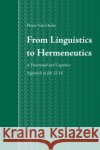
Linguistics and hermeneutics are often regarded as two mutually exclusive scholarly disciplines. Recent decades, however, have witnessed the rise of linguistic approaches that take meaning back to the heart of their inquiry and can be fruitful for textual interpretation. This book applies the insights of two such approaches, i.e. functional grammar and cognitive semantics, to the study of Biblical Hebrew with a specific focus on Job 12-14. The result is two-fold. The study offers a detailed linguistic analysis, providing many new insights in the linguistic peculiarities of the text and...
Linguistics and hermeneutics are often regarded as two mutually exclusive scholarly disciplines. Recent decades, however, have witnessed the rise of l...
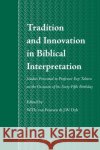
The theme of this volume in honour of Eep Talstra is 'Tradition and Innovation in Biblical Interpretation', with an emphasis on the innovative role of computer-assisted textual analysis. It focusses on the role of tradition in biblical interpretation and of the innovations brought about by ICT in reconsidering existing interpretations of texts, grammatical concepts, and lexicographic practices. Questions addressed include: How does the role of exegesis as the 'clarification of one's own tradition, in order to understand choices and preferences' (Talstra) relate to the critical role which...
The theme of this volume in honour of Eep Talstra is 'Tradition and Innovation in Biblical Interpretation', with an emphasis on the innovative role of...
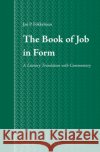
The Book of Job in Form presents to the reader a platform for a personal and intensive encounter with a great work of art. Its bilingual centre offers the text in Hebrew and English, and shows the forty poems in their original form, in 412 strophes and 165 stanzas. The commentary points out how these proportions and the remarkable precision of the poet (who counted syllables on all text levels) affect the thematics of the book, so that the portrait of the hero can be redrawn; his stubbornly defended integrity meets vindication and his last words, generally misunderstood, require a...
The Book of Job in Form presents to the reader a platform for a personal and intensive encounter with a great work of art. Its bilingual centre...
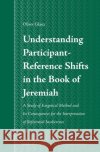
In Understanding Participant-Reference Shifts in the Book of Jeremiah methodological reflections lead to a text-phenomenological investigation of the origins and functions of participant-reference shifts.
In Understanding Participant-Reference Shifts in the Book of Jeremiah methodological reflections lead to a text-phenomenological investigation of the ...
In The Role of Zion/Jerusalem in Isaiah 40-55: A Corpus-Linguistic Approach Reinoud Oosting offers a linguistic and literary analysis of the Biblical Hebrew text of Isaiah 40-55, focusing on the depiction of Zion/Jerusalem in these chapters. The analysis shows that the designations 'Zion' and 'Jerusalem' are not used interchangeably but are instead two sides of the same coin. The name 'Zion' is related to the return of the Israelite exiles from Babylon, while the name 'Jerusalem' is related to the rebuilding of the city of Jerusalem. Concentrating on the linguistic and literary...
In The Role of Zion/Jerusalem in Isaiah 40-55: A Corpus-Linguistic Approach Reinoud Oosting offers a linguistic and literary analysis of the Bi...
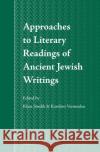
In this volume twelve contributions discuss the relevance, accuracy, potential, and possible alternatives to a literary reading of ancient Jewish writings, especially the Hebrew Bible. Drawing on different academic fields (biblical studies, rabbinic studies, and literary studies) and on various methodologies (literary criticism, rhetorical criticism, cognitive linguistics, historical criticism, and reception history), the essays form a state-of-the-art overview of the current use of the literary approach toward ancient Jewish texts. The volume convincingly shows that the latest approaches to...
In this volume twelve contributions discuss the relevance, accuracy, potential, and possible alternatives to a literary reading of ancient Jewish writ...