Two representative and important works in one volume by one of the greatest German philosophers. The Birth of Tragedy (1872) was Nietzsche's first book. Its youthful faults were exposed by Nietzsche in the brilliant -Attempt at a Self-Criticism- which he added to the new edition of 1886. But the book, whatever its excesses, remains one of the most relevant statements on tragedy ever penned. It exploded the conception of Greek culture that was prevalent down through the Victorian era, and it sounded themes developed in the twentieth century by classicists, existentialists,...
Two representative and important works in one volume by one of the greatest German philosophers. The Birth of Tragedy (1872) was Nietzsche'...
Represents a selection from Nietzche's notebooks to find out what he wrote on nihilism, art, morality, religion, and the theory of knowledge, among others. Nietzsche's notebooks, kept by him during his most productive years, offer a fascinating glimpse into the workshop and mind of a great thinker, and compare favorably with the notebooks of Gide and Kafka, Camus and Wittgenstein. The Will to Power, compiled from the notebooks, is one of the most famous boooks of the philosophy. Here is the first critical edition in any language. Down through the Nazi period The Will to...
Represents a selection from Nietzche's notebooks to find out what he wrote on nihilism, art, morality, religion, and the theory of knowledge, among ot...
Nietzsche called The Gay Science -the most personal of all my books.- It was here that he first proclaimed the death of God--to which a large part of the book is devoted--and his doctrine of the eternal recurrence. Walter Kaufmann's commentary, with its many quotations from previously untranslated letters, brings to life Nietzsche as a human being and illuminates his philosophy. The book contains some of Nietzsche's most sustained discussions of art and morality, knowledge and truth, the intellectual conscience and the origin of logic. Most of the book was written just before...
Nietzsche called The Gay Science -the most personal of all my books.- It was here that he first proclaimed the death of God--to which a large p...
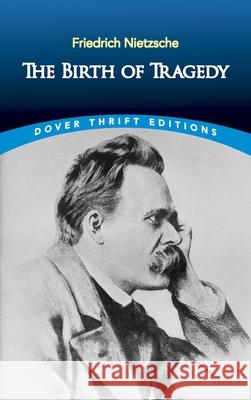
Among the most influential philosophers of modern times, Friedrich Nietzsche (1844-1900) declared in this classic study that Greek tragedy achieved greatness through a fusion of elements of Apollonian restraint and control with Dionysian components of passion and the irrational. In Nietzsche's eyes, however, Greek tragedy had been destroyed by the rationalism and optimism of thinkers like Socrates. Nevertheless, he found in these ancient works the life-affirming concept that existence is still beautiful, however grim and depressing it may sometimes be. These and many other ideas are argued...
Among the most influential philosophers of modern times, Friedrich Nietzsche (1844-1900) declared in this classic study that Greek tragedy achieved gr...
After kicking open the doors to twentieth-century philosophy in Thus Spake Zarathustra, Friedrich Nietzsche refined his ideal of the superman with the 1886 publication of Beyond Good and Evil. Conventional morality is a sign of slavery, Nietzsche maintains, and the superman goes beyond good and evil in action, thought, and creation. Nietzsche especially targets what he calls a "slave morality" that fosters herdlike quiescence and stigmatizes the "highest human types." In this pathbreaking work, Nietzsche's philosophical and literary powers are at their height: with...
After kicking open the doors to twentieth-century philosophy in Thus Spake Zarathustra, Friedrich Nietzsche refined his ideal of the superman ...
Written in response to a book on the origins of morality by his erstwhile friend Paul Ree, the three essays comprising The Genealogy of Morals -- all three advancing the critique of Christian morality set forth in Beyond Good and Evil -- are among Nietzsche's most sustained and cohesive work. In the first essay -- starting from a linguistic analysis of words such as "good," "bad," and "evil" -- Nietzsche sets up a contrast between what he calls "master" morality and "slave" morality and shows how strength and action have often been replaced by passivity and nihilism. The...
Written in response to a book on the origins of morality by his erstwhile friend Paul Ree, the three essays comprising The Genealogy of Morals
Friedrich Nietzsche, Raymond Geuss (University of Cambridge), Ronald Speirs (University of Birmingham)
The Birth of Tragedy is one of the seminal philosophical works of the modern period. The theories developed in this relatively short text have had a profound influence on the philosophy, literature, music and politics of the twentieth century. This edition presents a new translation by Ronald Speirs and an introduction by Raymond Geuss that sets the work in its historical and philosophical context. The volume also includes two essays on related topics that Nietzsche wrote during the same period.
The Birth of Tragedy is one of the seminal philosophical works of the modern period. The theories developed in this relatively short text have had a p...
Friedrich Nietzsche, Bernard Williams (University of Oxford), Josefine Nauckhoff (Wake Forest University, North Carolina
Nietzsche wrote The Gay Science, which he later described as "perhaps my most personal book," when he was at the height of his intellectual powers, and the reader will find it an extensive and sophisticated treatment of the philosophical themes and views most central to Nietzsche's own thought and most influential on later thinkers. This volume presents the work in a new translation by Josefine Nauckhoff, with an introduction by Bernard Williams that elucidates the work's main themes and discusses their continuing importance.
Nietzsche wrote The Gay Science, which he later described as "perhaps my most personal book," when he was at the height of his intellectual powers, an...
Friedrich Nietzsche, Rolf-Peter Horstmann (Humboldt-Universität zu Berlin), Judith Norman (Trinity University, Texas)
This is a major work by the philosopher Friedrich Nietzsche, whose writings have been deeply influential on subsequent generations of philosophers. It is offered here in a new translation by Judith Norman, with an introduction by Rolf Peter Horstmann that places the work in its historical and philosophical context.
This is a major work by the philosopher Friedrich Nietzsche, whose writings have been deeply influential on subsequent generations of philosophers. It...
Friedrich Nietzsche's most accessible and influential philosophical work, misquoted, misrepresented, brilliantly original and enormously influential, Thus Spoke Zarathustra is translated from the German by R.J. Hollingdale in Penguin Classics. Nietzsche was one of the most revolutionary and subversive thinkers in Western philosophy, and Thus Spoke Zarathustra remains his most famous and influential work. It describes how the ancient Persian prophet Zarathustra descends from his solitude in the mountains to tell the world that God is dead and that the Superman, the human embodiment of...
Friedrich Nietzsche's most accessible and influential philosophical work, misquoted, misrepresented, brilliantly original and enormously influential, ...