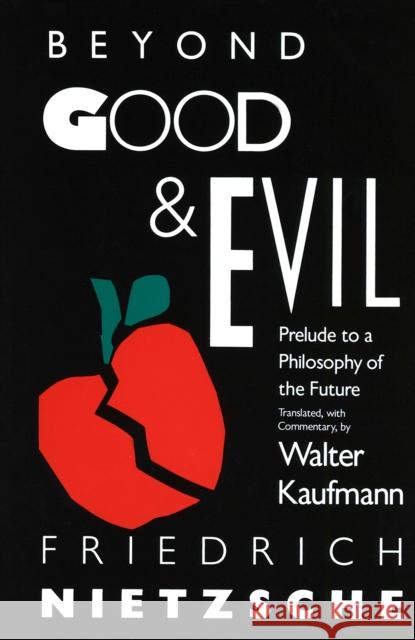
Represents Nietzsche's attempt to sum up his philosophy. In nine parts the book is designed to give the reader a comprehensive idea of Nietzsche's thought and style: they span "The Prejudices of Philsophers," "The Free Spirit," religion, morals, scholarship, "Our Virtues," "Peoples and Fatherlands," and "What Is Noble," as well as epigrams and a concluding poem. Beyond Good and Evil is one of the most remarkable and influential books of the nineteenth century. This translation by Walter Kaufmann has become the standard one, for accuracy and fidelity to the eccentricities and grace...
Represents Nietzsche's attempt to sum up his philosophy. In nine parts the book is designed to give the reader a comprehensive idea of Nietzsche's tho...
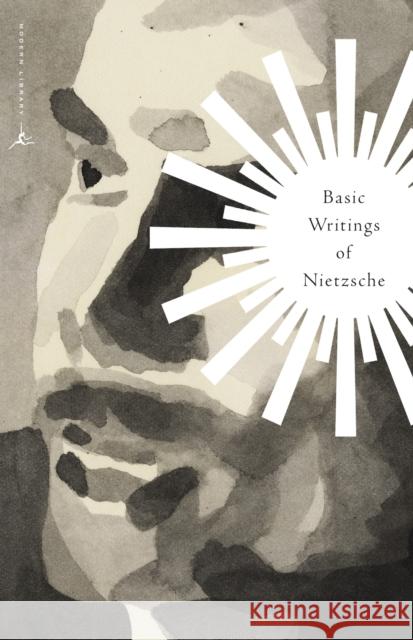
Introduction by Peter Gay Translated and edited by Walter Kaufmann Commentary by Martin Heidegger, Albert Camus, and Gilles Deleuze One hundred years after his death, Friedrich Nietzsche remains the most influential philosopher of the modern era. Basic Writings of Nietzsche gathers the complete texts of five of Nietzsche's most important works, from his first book to his last: The Birth of Tragedy, Beyond Good and Evil, On the Genealogy of Morals, The Case of Wagner, and Ecce Homo. Edited and translated by the great Nietzsche...
Introduction by Peter Gay Translated and edited by Walter Kaufmann Commentary by Martin Heidegger, Albert Camus, and Gilles...
Friedrich Nietzsche, a German psychologist and philosopher is one of the most controversial minds of the 19th century. Beyond "Good and Evil" is one of his most important works and in this book he segments his views on religion, morality, virtue, nationalism and gender relationships - it is power packed! Nietzsche seeks to deliver his philolosphy to the masses. A Collector's Edition.
Friedrich Nietzsche, a German psychologist and philosopher is one of the most controversial minds of the 19th century. Beyond "Good and Evil" is one o...
This collection of more than two hundred of Nietzsche's letters offers a representative body of correspondence on subjects of main concern to him--philosophy, history, morals, music and literature. Also included are letters of biographical interest which, in Middleton's words, mark the stresses and turnings of his life. Among the addressees are Richard Wagner, Erwin Rohde, Jacob Burkhardt, Lou Salome, his mother, and his sister Elisabeth. The annihilating split in Nietzsche's personality that has been associated with his collapse on a street in Turin in 1889 is described in a moving letter...
This collection of more than two hundred of Nietzsche's letters offers a representative body of correspondence on subjects of main concern to him--...
Translated by Antony M. Ludovici. With an Introduction by Ray Furness.
The three works in this collection, all dating from Nietzsche's last lucid months, show him at his most stimulating and controversial: the portentous utterances of the prophet (together with the ill-defined figure of the Ubermensch) are forsaken, as wit, exuberance and dazzling insights predominate, forcing the reader to face unpalatable insights and to rethink every commonly accepted 'truth'. Thinking with Nietzsche, in Jaspers' words, means holding one's own against him, and we are indeed...
Translated by Antony M. Ludovici. With an Introduction by Ray Furness.
The three works in this collection, all dating from ...
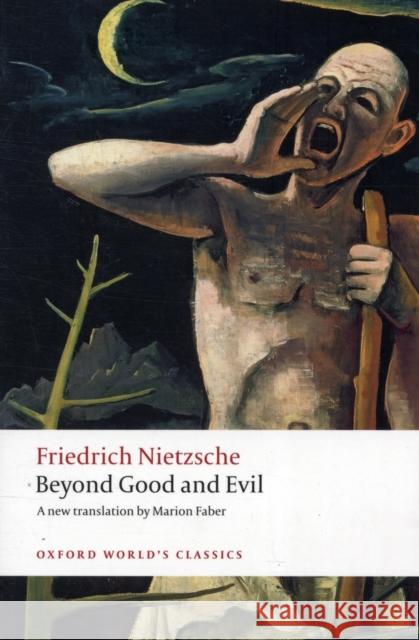
Nietzsche's mature masterpiece, Beyond Good and Evil considers the origins and nature of Judeo-Christian morality; the end of philosophical dogmatism and beginning of perspectivism; the questionable virtues of science and scholarship; liberal democracy, nationalism, and women's emancipation. A superb new translation by Marion Faber, this highly annotated edition is complemented by a lucid introduction by one of the most eminent of Nietzsche scholars, Robert C. Holub. About the Series: For over 100 years Oxford World's Classics has made available the broadest spectrum of literature from...
Nietzsche's mature masterpiece, Beyond Good and Evil considers the origins and nature of Judeo-Christian morality; the end of philosophical dogmatism ...
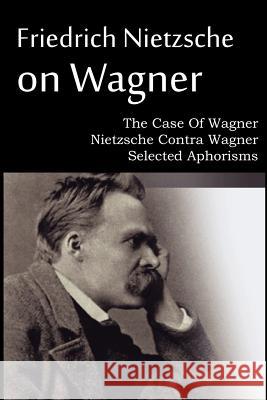
In reading these essays we are apt to be deceived, by their virulent and forcible tone, into believing that the whole matter is a mere cover for hidden fire, -a mere blind of aesthetic discussion concealing a deep and implacable personal feud which demands and will have vengeance. In spite of all that has been said to the contrary, many people still hold this view of the two little works before us; and, as the actual facts are not accessible to everyone, and rumours are more easily believed than verified, the error of supposing that these pamphlets were dictated by personal animosity, and...
In reading these essays we are apt to be deceived, by their virulent and forcible tone, into believing that the whole matter is a mere cover for hidde...
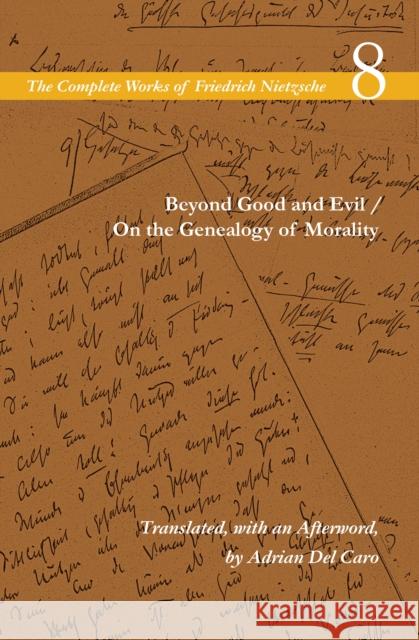
Beyond Good and Evil is Nietzsche's first sustained philosophical treatment of issues important to him. Unlike the expository prose of the essayistic period (1872-76), the stylized forays and jabs of the aphoristic period (1878-82), and the lyrical-philosophical rhetoric of the Zarathustra-period (1882-85), Beyond Good and Evil inscribes itself boldly into the history of philosophy, challenging ancient and modern notions of philosophy's achievements and insisting on a new task for -new philosophers.- This is a watershed book for Nietzsche and for philosophy in the modern era....
Beyond Good and Evil is Nietzsche's first sustained philosophical treatment of issues important to him. Unlike the expository prose of the essa...