Friedrich Nietzsche's most accessible and influential philosophical work, misquoted, misrepresented, brilliantly original and enormously influential Nietzsche was one of the most revolutionary and subversive thinkers in Western philosophy, and Thus Spoke Zarathustra remains his most famous and influential work. It describes how the ancient Persian prophet Zarathustra descends from his solitude in the mountains to tell the world that God is dead and that the Superman, the human embodiment of divinity, is his successor. Nietzsche's utterance 'God is dead', his insistence that the...
Friedrich Nietzsche's most accessible and influential philosophical work, misquoted, misrepresented, brilliantly original and enormously influentia...
The literary career of Friedrich Nietzsche (1844-1900) spanned less than twenty years, but no area of intellectual inquiry was left untouched by his iconoclastic genius. The philosopher who announced the death of God in The Gay Science (1882) and went on to challenge the Christian code of morality in Beyond Good and Evil (1886), grappled with the fundamental issues of the human condition in his own intense autobiography, Ecce Homo (1888). Most notorious of all, perhaps, his idea of the triumphantly transgressive ubermann ('superman') is developed in the extreme, yet poetic words of Thus Spake...
The literary career of Friedrich Nietzsche (1844-1900) spanned less than twenty years, but no area of intellectual inquiry was left untouched by his i...
'One must be superior to mankind in force, in loftiness of soul--in contempt'
In these two devastating works, Nietzsche offers a sustained and often vitriolic attack on the morality and the beliefs of his time, in particular those of Hegel, Kant and Schopenhaur. Twilight of the Idols is a 'grand declaration of war' on reason, psychology and theology that combines highly charged personal attacks on his contemporaries with a lightning tour of his own philosophy. It also paves the way for The Anti-Christ, Nietzche's final assault on institutional Christianity, in which he...
'One must be superior to mankind in force, in loftiness of soul--in contempt'
In these two devastating works, Nietzsche offers a sustained and often...
In late 1888, only weeks before his final collapse into madness, Nietzsche (1844-1900) set out to compose his autobiography, and 'Ecce Homo' remains one of the most intriguing yet bizarre examples of the genre ever written.
In late 1888, only weeks before his final collapse into madness, Nietzsche (1844-1900) set out to compose his autobiography, and 'Ecce Homo' remains o...
A series of 638 aphorisms and discourses on subjects ranging from art, arrogance and boredom to passion, science, vanity, women and youth. Nietzsche himself described this work as the monument of a crisis, since it was written at a time of major upheaval in his life.
A series of 638 aphorisms and discourses on subjects ranging from art, arrogance and boredom to passion, science, vanity, women and youth. Nietzsche h...
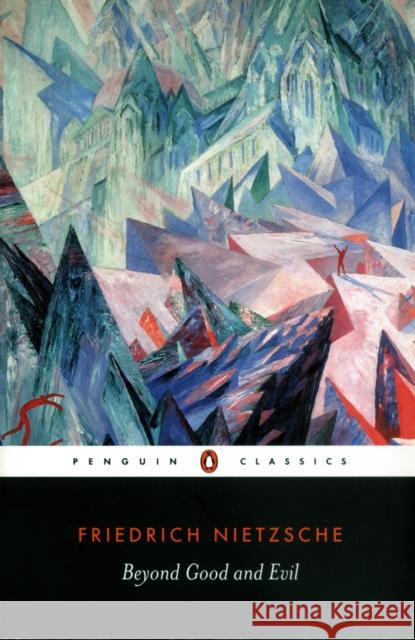
This work dramatically rejects the tradition of Western thought with its notions of truth and God, good and evil. Nietzsche demonstrates that the Christian world is steeped in a false piety and infected with a slave morality. With wit and energy, he turns from this critique to a philosophy that celebrates the present and demands that the individual imposes their own will to power upon the world.
This work dramatically rejects the tradition of Western thought with its notions of truth and God, good and evil. Nietzsche demonstrates that the Chri...
Throughout history, some books have changed the world. They have transformed the way we see ourselves - and each other. They have inspired debate, dissent, war and revolution. They have enlightened, outraged, provoked and comforted. They have enriched lives - and destroyed them. Now Penguin brings you the works of the great thinkers, pioneers, radicals and visionaries whose ideas shook civilization, and helped make us who we are.
Throughout history, some books have changed the world. They have transformed the way we see ourselves - and each other. They have inspired debate, dis...
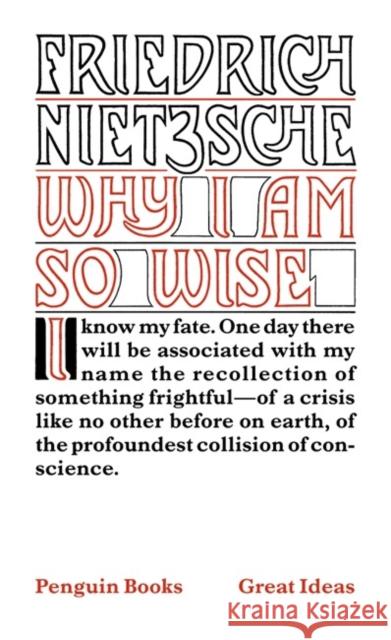
Friedrich Nietzsche was one of the most revolutionary thinkers in Western philosophy. Here he sets out his subversive views in a series of aphorisms on subjects ranging from art to arrogance, boredom to passion, science to vanity, rejecting conventional notions of morality to celebrate the individual s will to power . Throughout history, some books have changed the world. They have transformed the way we see ourselves and each other. They have inspired debate, dissent, war and revolution. They have enlightened, outraged, provoked and comforted. They have enriched lives and destroyed them. Now...
Friedrich Nietzsche was one of the most revolutionary thinkers in Western philosophy. Here he sets out his subversive views in a series of aphorisms o...
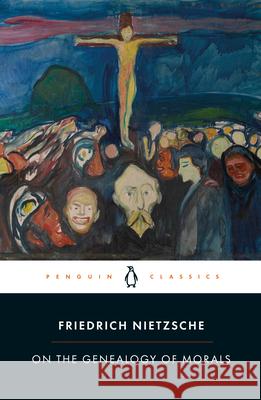
For the first time in Penguin Classics: Nietzsche's accessible exploration of key ideas in his landmark Beyond Good and Evil--in a lucid new translation Friedrich Nietzsche claimed that the purpose of On the Genealogy of Morals was to call attention to his previous writings. But in fact the book does much more than that, elucidating and expanding on the cryptic aphorisms of Beyond Good and Evil, and presenting a coherent discussion of morality in a work that is more accessible than much of his previous writings. For more than sixty-five years, Penguin has...
For the first time in Penguin Classics: Nietzsche's accessible exploration of key ideas in his landmark Beyond Good and Evil--in a lucid new...
On the Genealogy of Morals (1887) is a book about interpretation and the history of ethics which raises profoundly disquieting issues about the violence of both. This is the most sustained of Nietzsche's later works and offers one of the fullest expressions of his characteristic concerns. The introduction places his ideas within the cultural context of his own time and stresses the relevance of his work for a contemporary audience. About the Series: For over 100 years Oxford World's Classics has made available the broadest spectrum of literature...
On the Genealogy of Morals (1887) is a book about interpretation and the history of ethics which raises profoundly disquieting issues about t...