Recently states and local communities have passed hundreds of ballot initiatives preserving open space, increasing development around transit, and providing for increased brownfield redevelopment. Each of these places has had different reasons--economic, environmental or community goals--for pursuing a chosen development path. Environmentally, these decisions can help communities reduce vehicular emissions, improve water quality, and remediate contaminated lands. States and communities are interested in accounting for the air quality benefits of their development choices. This guidance...
Recently states and local communities have passed hundreds of ballot initiatives preserving open space, increasing development around transit, and pro...
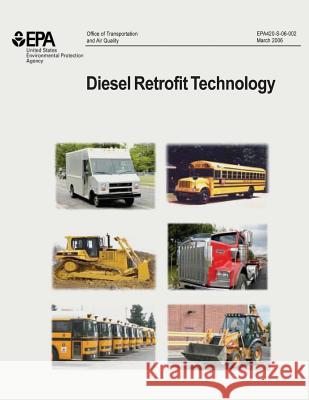
Technology is available to reduce diesel vehicle and engine emissions in a cost-effective way. The ability to use diesel emission reductions for state implementation plan (SIP) and conformity purposes gives states and localities additional incentive to implement diesel retrofit projects. Diesel retrofit technologies reduce pollution from the existing diesel engine fleet by up to 90% for particulate matter (PM), up to 75% for nitrogen oxides (NOx), and up to 90% for volatile organic compounds (VOCs). Many diesel retrofit projects are being successfully implemented around the country. Clean...
Technology is available to reduce diesel vehicle and engine emissions in a cost-effective way. The ability to use diesel emission reductions for state...
Reducing emissions from diesel engines is one of the most important public health challenges facing the country. Despite EPA's stringent diesel engine and fuel standards taking effect over the next decade, the 20 million engines already in use will continue to emit large amounts of nitrogen oxides (NOX) and particulate matter (PM)-both of which will contribute to serious public health problems for years to come. Fortunately, a variety of cost-effective technologies can dramatically reduce harmful emissions, save fuel, and help our nation meet its clean air and sustainability goals. To meet...
Reducing emissions from diesel engines is one of the most important public health challenges facing the country. Despite EPA's stringent diesel engine...
From goods movement to building construction to public transportation, diesel engines are the modern-day workhorse of the American economy. Diesel engines are extremely efficient, and they power nearly every major piece of machinery and equipment on farms, on construction sites, in ports, and on highways. However, not all diesel engines are as clean as those manufactured after 2006 and later, when EPA's stringent heavy-duty highway and non-road engine standards began coming into effect. EPA estimates that approximately 11 million older diesel engines remain in use, and will continue to emit...
From goods movement to building construction to public transportation, diesel engines are the modern-day workhorse of the American economy. Diesel eng...
Diesel engines play a vital role in key industry sectors such as goods movement, public transportation, construction, and agriculture. A unique combination of efficiency, power, reliability, and durability make diesel the technology of choice for these sectors. However, the durability of the technology does not lend itself to rapid fleet turnover and investment in new equipment that meets more stringent environmental standards. Because of this, the full air quality benefits of the very stringent new engine emission standards in the US2007 Diesel Rule ("Heavy-Duty Engine and Vehicle Standards...
Diesel engines play a vital role in key industry sectors such as goods movement, public transportation, construction, and agriculture. A unique combin...
The Environmental Protection Agency's (EPA) National Clean Diesel Campaign (NCDC) is a comprehensive initiative to reduce pollution from diesel engines throughout the country, including vehicles on highways, city streets, construction sites, and ports. The NCDC comprises both regulatory programs to address new engines and voluntary programs to address the millions of diesel engines already in use. On the regulatory side, EPA is successfully implementing emissions standards for engines in the 2007 Heavy-Duty Highway Engine Rule and the Tier 4 Nonroad Rule and developing new emission...
The Environmental Protection Agency's (EPA) National Clean Diesel Campaign (NCDC) is a comprehensive initiative to reduce pollution from diesel engine...
Air pollution from diesel emissions is a public health concern that reaches every part of the country. There are two main pollutants of concern in diesel exhaust that affect human health: nitrogen oxide (NOx) and particulate matter (PM). NOx is one of the main ingredients in the formation of ground-level ozone, which can trigger respiratory problems. Ozone can aggravate asthma and other respiratory diseases, leading to more visits to the emergency room and increased hospitalizations. Ozone can inflame and damage the lining of the lungs. This may lead to permanent changes in lung tissue and to...
Air pollution from diesel emissions is a public health concern that reaches every part of the country. There are two main pollutants of concern in die...
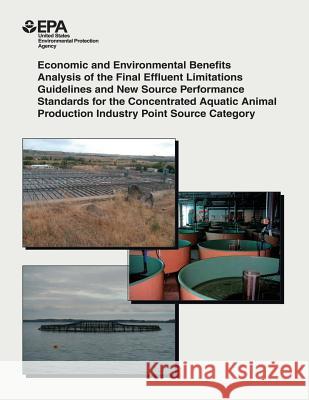
On June 30 2004, a new rule was establishing effluent limitations guidelines (ELGs) for concentrated aquatic animal production (CAAP), or aquaculture, facilities was finalized. The regulation will apply to CAAP facilities that generate wastewater from their operations and discharge that wastewater directly into waters of the United States. The CAAP ELGs will help reduce discharges of conventional pollutants, primarily total suspended solids. The regulation will also help reduce non-conventional pollutants such as nutrients. To a lesser extent, the regulation will reduce the discharge of drugs...
On June 30 2004, a new rule was establishing effluent limitations guidelines (ELGs) for concentrated aquatic animal production (CAAP), or aquaculture,...
On June 30 2004, a new rule was establishing effluent limitations guidelines (ELGs) for concentrated aquatic animal production (CAAP), or aquaculture, facilities was finalized. The regulation will apply to CAAP facilities that generate wastewater from their operations and discharge that wastewater directly into waters of the United States. The CAAP ELGs will help reduce discharges of conventional pollutants, primarily total suspended solids. The regulation will also help reduce non-conventional pollutants such as nutrients. To a lesser extent, the regulation will reduce the discharge of drugs...
On June 30 2004, a new rule was establishing effluent limitations guidelines (ELGs) for concentrated aquatic animal production (CAAP), or aquaculture,...
If you handle, manufacture, use, or store any of the toxic and flammable substances listed in 40 CFR section 68.130 above the specified threshold quantities in a process, you are required to develop and implement a risk management program rule issued by the U.S. Environmental Protection Agency (EPA). This rule, "Chemical Accident Prevention Provisions" (part 68 of Title 40 of the Code of Federal Regulations (CFR)), applies to a wide variety of facilities that handle, manufacture, store, or use toxic substances, including chlorine and ammonia and highly flammable substances such as propane....
If you handle, manufacture, use, or store any of the toxic and flammable substances listed in 40 CFR section 68.130 above the specified threshold quan...