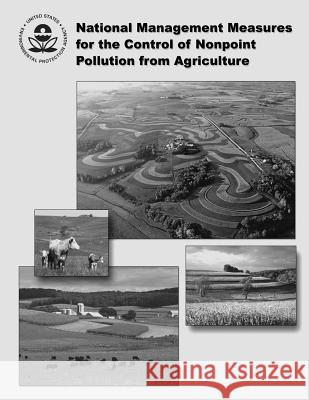
"National Management Measures to Control Nonpoint Source Pollution from Agriculture" is a technical guidance and reference document for use by State, local, and tribal managers in the implementation of nonpoint source pollution management programs. It contains information on the best available, economically achievable means of reducing pollution of surface and ground water from agriculture.
"National Management Measures to Control Nonpoint Source Pollution from Agriculture" is a technical guidance and reference document for use by State, ...
The purpose of this manual is to provide healthcare professionals with current consensus recommendations for treating patients with pesticide-related illnesses or injuries. The Office of Pesticide Programs of the U.S. Environmental Protection Agency has sponsored the series since 1973. The 5th edition of this manual was published in 1999; since then, much has changed with regard to the pesticide products on the market. Most indoor uses of organophosphates have been eliminated, and a combination of EPA risk mitigation actions has limited their use on food crops. Pyrethroids have largely...
The purpose of this manual is to provide healthcare professionals with current consensus recommendations for treating patients with pesticide-related ...
If you handle, manufacture, use, or store toxic and flammable substances above the specified threshold quantities in a process, you are required to develop and implement a risk management program rule issued by the U.S. Environmental Protection Agency (EPA). This rule, "Chemical Accident Prevention Provisions" (part 68 of Title 40 of the Code of Federal Regulations (CFR)), applies to a wide variety of facilities that handle, manufacture, store, or use toxic substances, including chlorine and ammonia and highly flammable substances such as propane; flammable substances used solely as fuels are...
If you handle, manufacture, use, or store toxic and flammable substances above the specified threshold quantities in a process, you are required to de...
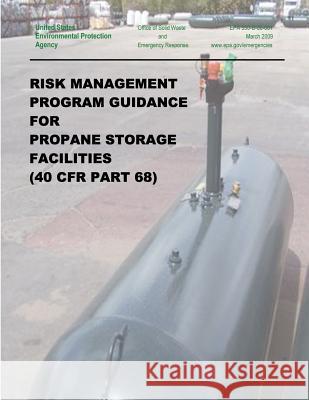
This guidance is intended for propane storage facilities, such as wholesale distribution facilities and bulk storage terminals. This document is a revision of EPA's October 1998 guidance for propane storage facilities. The document has been revised to reflect changes resulting from the 1999 Chemical Safety Information, Site Security and Fuels Regulatory Relief Act. If you have more than 10,000 pounds of propane stored in a single vessel or in a group of vessels (tanks, cylinders) that are connected or stored close together, you may need to comply with the Chemical Accident Prevention rule...
This guidance is intended for propane storage facilities, such as wholesale distribution facilities and bulk storage terminals. This document is a rev...
If you handle, manufacture, use, or store any of the toxic and flammable substances listed in 40 CFR 68.130 above the specified threshold quantities in a process, you are required to develop and implement a risk management program rule issued by the U.S. Environmental Protection Agency (EPA). This rule, "Chemical Accident Prevention Provisions" (part 68 of Title 40 of the Code of Federal Regulations (CFR)), applies to a wide variety of facilities that handle, manufacture, store, or use toxic substances, including chlorine and ammonia and highly flammable substances such as propane. This...
If you handle, manufacture, use, or store any of the toxic and flammable substances listed in 40 CFR 68.130 above the specified threshold quantities i...
Water quality standards and criteria are the regulatory and scientific foundation of programs established under the Clean Water Act to protect the Nation's waters. As such, they are among the most critical clean water programs. Due to the many new demands on the program, and since the nature of water pollution problems and required solutions have changed dramatically in recent years, water quality standards and criteria need to be made a high priority and given a renewed focus. The water quality standards and criteria program needs clear priorities to address these critical demands. This...
Water quality standards and criteria are the regulatory and scientific foundation of programs established under the Clean Water Act to protect the Nat...
The Nation's aquatic resources are among its most valuable assets. Although environmental protection programs in the United States have successfully improved water quality during the past 25 years, many challenges remain. Significant strides have been made in reducing the effects of discrete pollutant sources, such as factories and sewage treatment plants (called point sources). But aquatic ecosystems remain impaired, mostly because of complex problems caused by polluted runoff, known as nonpoint source pollution. This guidance document is intended to provide technical assistance to state...
The Nation's aquatic resources are among its most valuable assets. Although environmental protection programs in the United States have successfully i...
On June 30, 2004, the U.S. Environmental Protection Agency (EPA) completed regulations under the Clean Water Act (CWA) establishing Effluent Limitations Guidelines (ELGs) and New Source Performance Standards for the Concentrated Aquatic Animal Production (CAAP) Point Source Category. The regulations contain requirements for wastewater discharges that must be met by new and existing CAAP facilities discharging directly to U.S. waters. The CWA establishes a comprehensive program for protecting the Nation's waters. Among its core provisions, the CWA generally prohibits the discharge of...
On June 30, 2004, the U.S. Environmental Protection Agency (EPA) completed regulations under the Clean Water Act (CWA) establishing Effluent Limitatio...
This Handbook is a guide and reference for the development of Area Contingency Plans (ACPs) for environmental emergencies. While it is primarily intended for use by EPA emergency response program personnel, area contingency planning is necessarily an inter-agency process, and the use of this handbook to inform other agencies of EPA's planning process is encouraged. Because area plans are focused on specific geographic domains, with many physical and jurisdictional variables, there can be no 'one size fits all' plan format, but maintaining a national consistency in the basic content is...
This Handbook is a guide and reference for the development of Area Contingency Plans (ACPs) for environmental emergencies. While it is primarily inten...
This resource document is the third in the Air Toxics Risk Assessment (ATRA) Library series. It presents an overview of the overall process and tools for evaluating cumulative risk from multiple air toxics emitted from sources at the community level and developing and implementing risk reduction activities to bring about meaningful environmental change. Volume 1: Technical Resource Manual discusses the overall air toxics risk assessment process and the basic technical tools needed to perform these analyses. The manual addresses both human health and ecological analyses. It also provides a...
This resource document is the third in the Air Toxics Risk Assessment (ATRA) Library series. It presents an overview of the overall process and tools ...