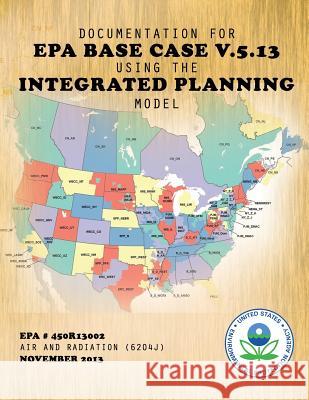
ICF developed the Integrated Planning Model (IPM) to support analysis of the electric sector. The EPA, in addition to other state air regulatory agencies, utilities, and public and private sector clients, has used IPM extensively for various air regulatory analyses, market studies, strategy planning, and economic impact assessments.
ICF developed the Integrated Planning Model (IPM) to support analysis of the electric sector. The EPA, in addition to other state air regulatory agenc...
This publications provides responses to questions received by the Environmental Protection Agency (EPA) concerning the manner in which the EPA intends to implement and assure compliance with the diesel fuel sulfur regulations at 40 CFR Part 80. This document was prepared by EPA's Office of Air and Radiation, Office of Transportation and Air Quality, and the Office of Enforcement and Compliance Assurance, Office of Regulatory Enforcement. Regulated parties may use this document to aid in achieving compliance with the diesel fuel sulfur regulations. However, this document does not in any way...
This publications provides responses to questions received by the Environmental Protection Agency (EPA) concerning the manner in which the EPA intends...
The objective of the Comprehensive Environmental Response, Compensation, and Liability Act (CERCLA) as amended by the Superfund Amendments and Reauthorization Act (SARA) is to reduce and eliminate threats to human health and the environment posed by uncontrolled hazardous waste sites. To meet this objective, CERCLA created: a hazardous waste site response program; and a comprehensive liability scheme that authorizes the government to hold persons who caused or contributed to the release of hazardous substances liable for the cost or performance of cleanups. CERCLA provides EPA with three...
The objective of the Comprehensive Environmental Response, Compensation, and Liability Act (CERCLA) as amended by the Superfund Amendments and Reautho...
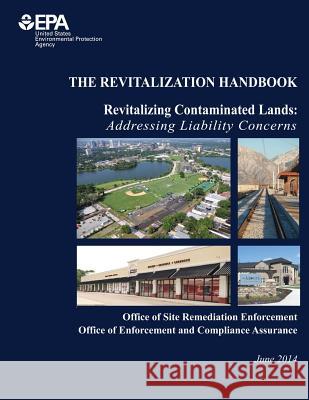
The U.S. Environmental Protection Agency's (the EPA) Office of Site Remediation Enforcement (OSRE) manages the enforcement of the nation's hazardous waste cleanup laws, including the Comprehensive Environmental Response, Compensation, and Liability Act (CERCLA, commonly known as Superfund), the corrective action and underground storage tank cleanup provisions of the Resource Conservation and Recovery Act (RCRA), and the Oil Pollution Act (OPA). The main objective of the cleanup enforcement program is to ensure prompt site cleanup and the participation of liable parties in performing and...
The U.S. Environmental Protection Agency's (the EPA) Office of Site Remediation Enforcement (OSRE) manages the enforcement of the nation's hazardous w...
In November 2003, Acting Deputy Administrator Stephen L. Johnson requested an internal review of the Superfund program (the "120-Day Study") to identify opportunities to achieve program efficiencies that would enable EPA to begin and complete more long-term cleanups with existing program resources. One of the recommendations resulting from that review was to evaluate regional PRP search programs to identify practices indicative of enforcement success and barriers to achieving it. In response to this recommendation, the Office of Site Remediation Enforcement (OSRE) undertook a PRP search...
In November 2003, Acting Deputy Administrator Stephen L. Johnson requested an internal review of the Superfund program (the "120-Day Study") to identi...
To respond to the problem of improper management of hazardous waste, Congress amended the Solid Waste Disposal Act with the Resource Conservation and Recovery Act (RCRA) of 1976. Although the Act has several objectives, Congress' overriding purpose in enacting RCRA was to establish the basic statutory framework for a national system that would ensure the proper management of hazardous waste. The penalty calculation system established through U.S. Environmental Protection Agency's RCRA Civil Penalty Policy ("Penalty Policy" or "Policy") is based upon Section 3008 of RCRA, 42 U.S.C. 6928. Under...
To respond to the problem of improper management of hazardous waste, Congress amended the Solid Waste Disposal Act with the Resource Conservation and ...
This Health Assessment Document for Diesel Engine Exhaust (DE) represents EPA's first comprehensive review of the potential health effects from ambient exposure to exhaust from diesel engines. The assessment was developed to provide information about the potential for DE to pose environmental health hazards, information that would be useful in evaluating regulatory needs under provisions of the Clean Air Act. The assessment identifies and characterizes the potential human health hazards of DE (i.e, hazard assessment) and seeks to estimate the relationship between exposure and disease response...
This Health Assessment Document for Diesel Engine Exhaust (DE) represents EPA's first comprehensive review of the potential health effects from ambien...
This guidance describes how to complete quantitative hot-spot analyses for certain highway and transit projects in PM2.5 and PM10 (PM) nonattainment and maintenance areas. This guidance describes transportation conformity requirements for hot-spot analyses, and provides technical guidance on estimating project emissions with the Environmental Protection Agency's (EPA's) MOVES model, California's EMFAC model, and other methods. It also outlines how to apply air quality models for PM hot-spot analyses and includes additional references and examples. However, the guidance does not change the...
This guidance describes how to complete quantitative hot-spot analyses for certain highway and transit projects in PM2.5 and PM10 (PM) nonattainment a...
This guidance describes how to complete quantitative hot-spot analyses for certain highway and transit projects in PM2.5 and PM10 (PM) nonattainment and maintenance areas. This guidance describes transportation conformity requirements for hot-spot analyses, and provides technical guidance on estimating project emissions with the Environmental Protection Agency's (EPA's) MOVES model, California's EMFAC model, and other methods. It also outlines how to apply air quality models for PM hot-spot analyses and includes additional references and examples. However, the guidance does not change the...
This guidance describes how to complete quantitative hot-spot analyses for certain highway and transit projects in PM2.5 and PM10 (PM) nonattainment a...
Acid rain is a complex environmental problem which affects the United States and many other countries around the world. The United States Environmental Protection Agency (EPA) was established in 1970 to address environmental issues, such as acid rain. Through its programs, EPA works to protect human health and the environment in the United States by developing and enforcing regulations and studying environmental conditions. In addition, EPA is committed to informing the public about environmental topics and its efforts to solve them through written materials and its Web site. EPA frequently...
Acid rain is a complex environmental problem which affects the United States and many other countries around the world. The United States Environmenta...