This book focuses on the intersection between cell cycle regulation and embryo development. Specific modifications of the canonical cell cycle occur throughout the whole period of development and are adapted to fulfil functions coded by the developmental program. Deciphering these adaptations is essential to comprehending how living organisms develop. The aim of this book is to review the best-known modifications and adaptations of the cell cycle during development. The first chapters cover the general problems of how the cell cycle evolves, while consecutive chapters guide readers through...
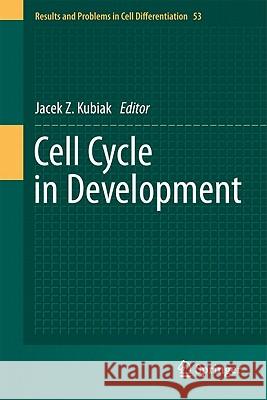
This book focuses on the intersection between cell cycle regulation and embryo development. Specific modifications of the canonical cell cycle occur t...
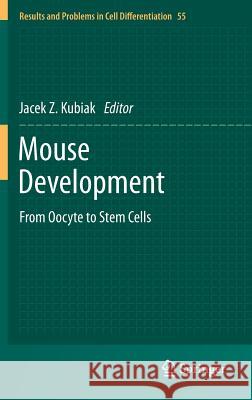
The mouse is a perfect model organism to study mammalian, and thus indirectly also human, embryology. Most scientific achievements that have had an important impact on the understanding of basic mechanisms governing embryo development in humans, originated from mouse embryology. Stem cell research, which now offers the promise of regenerative medicine, began with the isolation and culture of mouse embryonic stem cells by Martin Evans (who received the Nobel Prize in medicine in 2007 for this achievement) and Matthew Kaufman.
This book provides an overview of mouse development,...
The mouse is a perfect model organism to study mammalian, and thus indirectly also human, embryology. Most scientific achievements that have had an...
Frogs from the genus Xenopus have long been used as model organisms in basic and biomedical research. These frogs have helped unlock key fundamental developmental and cellular processes that have led to important scientific breakthroughs and have had practical application in embryology, cancer research and regenerative medicine. Xenopus Development is a vital resource on the biology and development of these key model organisms, and will be a great tool to researchers using these frogs in various disciplines of biological science.
Xenopus Development is divided into...
Frogs from the genus Xenopus have long been used as model organisms in basic and biomedical research. These frogs have helped unlock key fundam...
This book focuses on the intersection between cell cycle regulation and embryo development. Specific modifications of the canonical cell cycle occur throughout the whole period of development and are adapted to fulfil functions coded by the developmental program. Deciphering these adaptations is essential to comprehending how living organisms develop. The aim of this book is to review the best-known modifications and adaptations of the cell cycle during development. The first chapters cover the general problems of how the cell cycle evolves, while consecutive chapters guide readers through...
This book focuses on the intersection between cell cycle regulation and embryo development. Specific modifications of the canonical cell cycle occu...
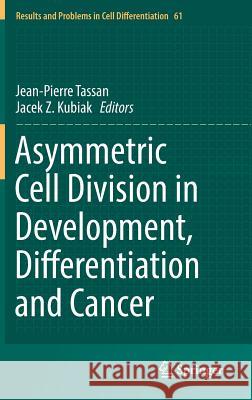
This book provides readers with an overview of the frequent occurrence of asymmetric cell division. Employing a broad range of examples, it highlights how this mode of cell division constitutes the basis of multicellular organism development and how its misregulation can lead to cancer.
To underline such developmental correlations, readers will for example gain insights into stem cell fate and tumor growth. In turn, subsequent chapters include descriptions of asymmetric cell division from unicellular organisms to humans in both physiological and pathological conditions. The book also...
This book provides readers with an overview of the frequent occurrence of asymmetric cell division. Employing a broad range of examples, it highlig...
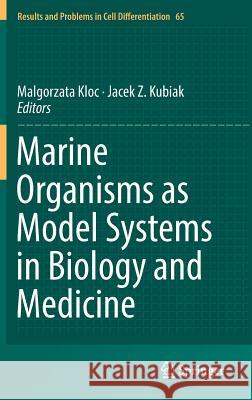
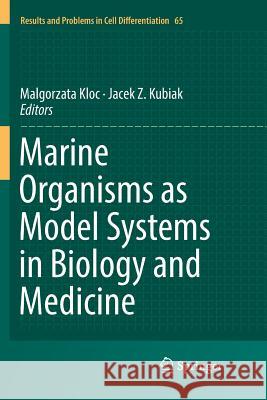
This book highlights the potential advantages of using marine invertebrates like tunicates, echinoderms, sponges and cephalopods as models in both biological and medical research.
This book highlights the potential advantages of using marine invertebrates like tunicates, echinoderms, sponges and cephalopods as models in both bio...
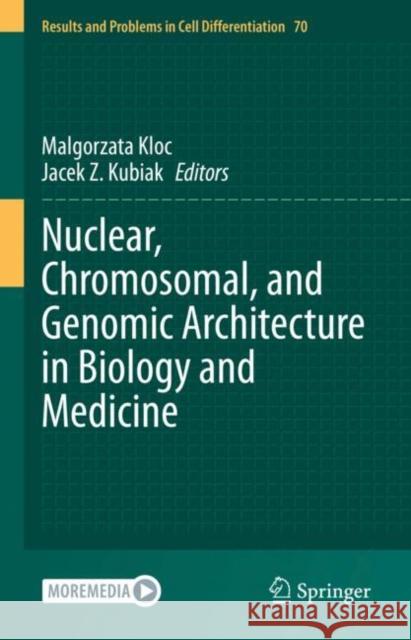
This volume reviews the latest research on the functional implications of nuclear, chromosomal and genomic organization and architecture on cell and organismal biology, and development and progression of diseases.The architecture of the cell nucleus and non-random arrangement of chromosomes, genes, and the non-membranous nuclear bodies in the three-dimensional (3D) space alters in response to the environmental, mechanical, chemical, and temporal cues. The changes in the nuclear, chromosomal, or genomic compaction and configuration modify the gene expression program and induce or inhibit...
This volume reviews the latest research on the functional implications of nuclear, chromosomal and genomic organization and architecture on cell and o...