• Wyszukiwanie zaawansowane
  • Kategorie
  • Kategorie BISAC
  • Książki na zamówienie
  • Promocje
  • Granty
  • Książka na prezent
  • Opinie
  • Pomoc
  • Załóż konto
  • Zaloguj się

Nuclear, Chromosomal, and Genomic Architecture in Biology and Medicine » książka


zaloguj się | załóż konto
Logo Krainaksiazek.pl

koszyk

konto

szukaj
topmenu
Księgarnia internetowa
Szukaj
Książki na zamówienie
Promocje
Granty
Książka na prezent
Moje konto
Pomoc
 
 
Wyszukiwanie zaawansowane
Pusty koszyk
Bezpłatna dostawa dla zamówień powyżej 20 złBezpłatna dostawa dla zamówień powyżej 20 zł

Kategorie główne

• Nauka
 [2946600]
• Literatura piękna
 [1856966]

  więcej...
• Turystyka
 [72221]
• Informatyka
 [151456]
• Komiksy
 [35826]
• Encyklopedie
 [23190]
• Dziecięca
 [619653]
• Hobby
 [140543]
• AudioBooki
 [1577]
• Literatura faktu
 [228355]
• Muzyka CD
 [410]
• Słowniki
 [2874]
• Inne
 [445822]
• Kalendarze
 [1744]
• Podręczniki
 [167141]
• Poradniki
 [482898]
• Religia
 [510455]
• Czasopisma
 [526]
• Sport
 [61590]
• Sztuka
 [243598]
• CD, DVD, Video
 [3423]
• Technologie
 [219201]
• Zdrowie
 [101638]
• Książkowe Klimaty
 [124]
• Zabawki
 [2473]
• Puzzle, gry
 [3898]
• Literatura w języku ukraińskim
 [254]
• Art. papiernicze i szkolne
 [8170]
Kategorie szczegółowe BISAC

Nuclear, Chromosomal, and Genomic Architecture in Biology and Medicine

ISBN-13: 9783031065729 / Angielski / Twarda / 2022 / 663 str.
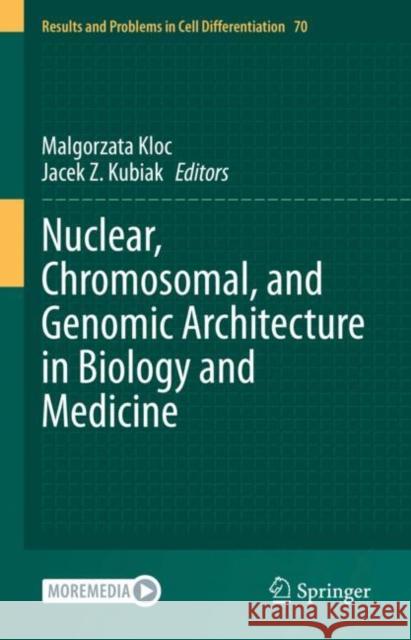
Malgorzata Kloc; Jacek Z. Kubiak
Nuclear, Chromosomal, and Genomic Architecture in Biology and Medicine Malgorzata Kloc Jacek Z. Kubiak 9783031065729 Springer - książkaWidoczna okładka, to zdjęcie poglądowe, a rzeczywista szata graficzna może różnić się od prezentowanej.

Nuclear, Chromosomal, and Genomic Architecture in Biology and Medicine

ISBN-13: 9783031065729 / Angielski / Twarda / 2022 / 663 str.

Malgorzata Kloc; Jacek Z. Kubiak
cena 928,04 zł
(netto: 883,85 VAT:  5%)

Najniższa cena z 30 dni: 886,75 zł
Termin realizacji zamówienia:
ok. 22 dni roboczych
Bez gwarancji dostawy przed świętami

Darmowa dostawa!
inne wydania

This volume reviews the latest research on the functional implications of nuclear, chromosomal and genomic organization and architecture on cell and organismal biology, and development and progression of diseases.The architecture of the cell nucleus and non-random arrangement of chromosomes, genes, and the non-membranous nuclear bodies in the three-dimensional (3D) space alters in response to the environmental, mechanical, chemical, and temporal cues. The changes in the nuclear, chromosomal, or genomic compaction and configuration modify the gene expression program and induce or inhibit epigenetic modifications. The intrinsically programmed rearrangements of the nuclear architecture are necessary for cell differentiation, the establishment of cell fate during development and maturation of tissues and organs including the immune, muscle, and nervous systems.The non-programmed changes in the nuclear architecture can lead to fragmentation of the nucleus and instability of the genome and thus cause cancer. Microbial and viral infections can lead to a clustering of centromeres, telomeres and ribosomal DNA and alter the properties of the nuclear membrane, allowing large immobile macromolecules to enter the nucleus.Recent advances in next-generation sequencing technologies combined with nucleus/chromosome conformation capture, super-resolution imaging, chromosomal contact maps methods, integrative modeling, and genetic approaches, are uncovering novel features and importance of nuclear, chromosomal and genomic architecture.This book is an interesting read for cell biologists, researchers studying the structure and function of chromosomes, and anyone else who wants to get an overview of the field of nuclear, chromosomal and genomic architecture.


This volume reviews the latest research on the functional implications of nuclear, chromosomal and genomic organization and architecture on cell and organismal biology, and development and progression of diseases.The architecture of the cell nucleus and non-random arrangement of chromosomes, genes, and the non-membranous nuclear bodies in the three-dimensional (3D) space alters in response to the environmental, mechanical, chemical, and temporal cues. The changes in the nuclear, chromosomal, or genomic compaction and configuration modify the gene expression program and induce or inhibit epigenetic modifications. The intrinsically programmed rearrangements of the nuclear architecture are necessary for cell differentiation, the establishment of cell fate during development and maturation of tissues and organs including the immune, muscle, and nervous systems.The non-programmed changes in the nuclear architecture can lead to fragmentation of the nucleus and instability of the genome and thus cause cancer. Microbial and viral infections can lead to a clustering of centromeres, telomeres and ribosomal DNA and alter the properties of the nuclear membrane, allowing large immobile macromolecules to enter the nucleus.  Recent advances in next-generation sequencing technologies combined with nucleus/chromosome conformation capture, super-resolution imaging, chromosomal contact maps methods, integrative modeling, and genetic approaches, are uncovering novel features and importance of nuclear, chromosomal and genomic architecture. This book is an interesting read for cell biologists, researchers studying the structure and function of chromosomes, and anyone else who wants to get an overview of the field of nuclear, chromosomal and genomic architecture.



Kategorie:
Nauka, Biologia i przyroda
Kategorie BISAC:
Science > Biologia molekularna
Science > Chemia
Technology & Engineering > Materials Science - General
Wydawca:
Springer
Seria wydawnicza:
Results and Problems in Cell Differentiation
Język:
Angielski
ISBN-13:
9783031065729
Rok wydania:
2022
Dostępne języki:
Numer serii:
000051605
Ilość stron:
663
Waga:
1.11 kg
Wymiary:
23.39 x 15.6 x 3.66
Oprawa:
Twarda
Dodatkowe informacje:
Wydanie ilustrowane

1. Almouzni Pettinotti Genevieve genevieve.almouzni@curie.fr 
Research center at the Institut Curie, Head of the Chromatin Dynamics team , Member of the Science Academy in France, Co-Chair of the LifeTime Initiative, website https://lifetime-fetflagship.eu 
Histone H3 variants – chaperones and their contribution to nuclear architecture

2. Borsuk Ewa, Kubiak J.Z, Kloc M
Dep. Embryology, University of Warsaw, Warsaw Poland
borsuk@biol.uw.edu.pl 
Histones modifications in mouse pronuclei and their consequences for embryo development 

3. Bridger Joanna Joanna.Bridger@brunel.ac.uk 
Brunel University London, Biosciences, Dept of Life Sciences
College of Health , Medical and Life Sciences (CHMLS), Institute Environment, Health and Societies, Brunel University London, Uxbridge, UB8 3PH, United Kingdom
T +44(0)1895 274000
Joanna M. Bridger; Annabelle Lewis, Cristina Pina, Sabrina Tosi, Paola Vagnarelli.
Alterations to genome organisation in cellular differentiation and disease.

4. Burgess Sean M.  smburgess@ucdavis.edu 
University of California Davis, One Shields Avenue, Davis, CA 95616
             Phone: 530 754 5177
Email: smburgess@ucdavis.edu 
Meiotic chromosome dynamics in zebrafish 

5. Capelson, Maya capelson@pennmedicine.upenn.edu 
Department of Cell and Developmental Biology, Penn Epigenetics Institute, Perelman School of Medicine, University of Pennsylvania, Philadelphia, PA 19104, USA
The role of nuclear envelope/nuclear pore components in gene regulation.

6. Coverley Dawn dawn.coverley@york.ac.uk; and Grace Dobbs
Department of Biology, University of York, York YO10 5DD, United Kingdom
Nuclear condensation and chromosome rearrangement in quiescence in relation to compromised functionality in cancer cells

7. Faustino Randolph S.  randolph.faustino@sanfordhealth.org 
Genetics and Genomics Group, Sanford Research, 2301 East 60th St. N, Sioux Falls, SD 57104, USA, Phone #: (605) 312-6443
Roles for nuclear pores in differentiation

8. Frietze Seth E seth.frietze@med.uvm.edu , and Karen Glass, Joeseph Boyd, Kate Quinn, Cong Gao
              University of Vermont, Burlington, VT, USA
Evaluation of chromatin regulatory factors across the molecular subtypes of breast cancer

9. Gerton, Jennifer JEG@stowers.org , and Alexandria Cockrell
      Stowers Institute for Medical Research, Kansas City, MO, USA
Nucleolar organizer regions

10. Guichet Antoine Antoine.GUICHET@ijm.fr 
Morphogenesis and Polarity Unit, Institut Jacques Monod, 75005 Paris, France; and Quantitative Image Analysis Unit, Institut Pasteur, 75724 Paris, France
Microtubules and Nuclear positioning in Drosophila

11. Hausmann Michael hausmann@kip.uni-heidelberg.de 
Kirchhoff-Institute for Physics, Heidelberg University, Im Neuenheimer Feld 227, 69120 Heidelberg, Germany
Michael Hausmann, Martin Falk, Götz Pilarczyk, Georg Hildenbrand et al.
Network and Islands of Genome Nanoarchitecture and their Potential Relevance for Radiation Biology

12. Hieda Miki (Matsumura) mikihieda@gmail.com 
Osaka University, Graduate School of Medicine and Health Science, Suita City, Osaka, Japan, and Ehime Prefectural University of Health Science, s, Tobe-cho, Ehime, Japan
The interplay between nucleoskeleton and cytoskeleton.

13. Huang Yuanjian. yhuang14@mdanderson.org; Zhang Shengzhe.SZhang23@mdanderson.org; Park Jae-Il. jaeil@mdanderson.org
Department of Experimental Radiation Oncology, University of Texas MD Anderson Cancer    Center, 6565 MD Anderson Blvd.Unit 1052, Houston, TX 77030
Nuclear Actin Dynamics in Orchestrating Gene Expression 

14. Kimura Akatsuki akkimura@nig.ac.jp ; and Dr. Takahiro Sakaue (Aoyama Gakuin University, Japan, sakaue@phys.aoyama.ac.jp 
Cell Architecture Laboratory, National Institute of Genetics, Yata 1111, Mishima, Shizuoka, 411-8540, JAPAN, Phone: +81-55-981-5854
How nuclear size affects physical properties and functions of chromatin

15. Knoch Tobias Aurelius ta.knoch@taknoch.org 
Biophysical Genomics Group, Department of Cell Biology and Genetics, Erasmus Medical Center, Dr. Molewaterplein 50, 3015 GE Rotterdam, The Netherlands
How Genomes Emerge, Function, and Evolve: Living Systems Creation - Genotype-Phenotype-Multilism - Genome/Systems Ecology, or
3D organization in respect to polymer simulations of entire cell nuclei, or
What we can learn from various experiments finalizing the 3D structure, whether we can understand this and what follows, or
New evaluation of interaction mapping data 

16. Latonen Leena leena.latonen@uef.fi 
K. Albin Johansson Cancer Research Fellow, Institute of Biomedicine, University of Eastern Finland, PO BOX 1627, 70211 Kuopio, Finland, tel: +358-50-3465553
leena.latonen@uef.fi 
Nuclear organization, especially focusing on responses to stress and drug treatments

17. Lele Tanmay P tanmay.lele@tamu.edu 
Texas A&M University Department of Biomedical Engineering, College Station, Texas
Nuclear structure in cancer 

18. Maiuri Paolo paolo.maiuri@ifom.eu ; and Paulina Nastaly\
IFOM, the FIRC Institute of Molecular Oncology, Via Adamello 16, 20139 Milan, Italy
Transmitting the cell polarity to the nucleus

19. Mullins Dyche R. dyche.mullins@ucsf.edu 
University of California, San Francisco, Howard Hughes Medical Institutes
Tel. 415-502-4838 
Title???

20. O'Sullivan Justin justin.osullivan@auckland.ac.nz 
            The Liggins Institute, The University of Auckland, Auckland, New Zealand
Integrating multimorbidity into a whole of body understanding of disease using spatial genomics.

21. Percipalle Piergiorgio pp69@nyu.edu 
Department of Cell and Molecular Biology, Medical Nobel Institute, Karolinska Institute, Stockholm SE-171 77, Sweden
The role of cytoskeletal proteins in genomic architecture during differentiation

22. Ruan Yijun Yijun.Ruan@jax.org 
The Jackson Laboratory for Genomic Medicine, Farmington, CT 06032, USA,
and Department of Genetics and Genome Sciences, University of Connecticut Health Center, Farmington, CT 06030, USA
Exploring the topological architecture in complex genetics of polygenic traits and diseases

23. Stein Gary S Gary.Stein@med.uvm.edu 
Department of Biochemistry and University of Vermont Cancer Center, Robert Larner College of Medicine, University of Vermont, Burlington, VT 05405, USA
Epigenetic-mediated regulation of gene expression for biological control and cancer

24. Takizawa Takumi takizawt@gunma-u.ac.jp 
Department of Pediatrics, Graduate School of Medicine, Gunma University  
3-39-22 Showa-machi, Maebashi, Gunma, 371-8511, Japan
Phone: +81-27-220-8203 / 8479
Nuclear architecture in the nervous system

25. Takashi Mikawa Takashi.Mikawa@ucsf.edu 
University of California San Francisco, Cardiovascular Research Institute, 555 Mission Bay Blvd South, MC3120, Room 352Z, PO Box 589001, San Francisco, CA 94158-9001
Office:415-476-3230. Lab:415-476-3231
Positioning of paternal and maternal chromosome sets

26. Tsuchiya Masa tsuchiya.masa@gmail.com 
Systems Biology Program, School of Media and Governance, Keio University, Fujisawa, Japan
Genomic Control Mechanism of Cell-Fate Changes

27. Ward Steven W. wward@hawaii.edu 
Institute for Biogenesis Research, Dept. Anatomy, Biochemistry & Physiology, Chief, Research Division Lakshmi Devi and Devraj Sharma Endowed Chair, Dept. OB/GYN and Women's Health John A. Burns School of Medicine, University of Hawaii at Manoa, 1960 East-West Rd. Honolulu, HI 96822 Tel:  808-956-5189
Functional Aspects of Sperm Chromatin Organization.

28. Uversky, Vladimir vuversky@usf.edu  NOT CONFIRMED

Malgorzata Kloc: Prior to completing her postdoctoral training in Canada, Dr. Malgorzata Kloc was a tenured Associate Professor in the Department of Zoology at the University of Warsaw, Poland. She also served as a Research Associate in the Department of Biology at Carleton University in Ottawa, Canada. While completing her postdoctoral training, Dr. Kloc earned the AHFMR Research Award from the University of Calgary and the MRC Biotechnology Training Award from Dalhousie University. She joined the University of Texas M.D. Anderson Cancer Center as a Research Scientist in the Department of Molecular Genetics in 1987, and became an Associate Professor in the Department of Biochemistry and Molecular Biology there in 2006. Dr. Kloc joined the Houston Methodist Research Institute in 2008. Currently, Dr. Kloc is the Weill Cornell Professor of Cell and Molecular Biology at The Houston Methodist Hospital and the Adjunct Professor at Department of Genetics, University of Texas, M D Anderson Cancer Center.

Dr. Jacek Z. Kubiak is the Research Director (Full Professor) at the French CNRS in Rennes, France. His research is devoted to molecular mechanisms of early embryo development, cell cycle regulation, stem cells, cancer cells and the role of macrophages in the innate immune response. He is the author of 180 highly cited scientific articles and the editor or co-editor of 6 books. He has graduated from the Warsaw University, Poland and worked at the University of Wisconsin-Madison, USA and Marine Biological Laboratory in Woods Hole, USA. He collaborates with research institutes in Poland combining stem cells and cancer research with with the prospective in medical applications. Since the COVID-19 outbreak, he co-ordinates an international research group focused on SARS-CoV-2 infection in paediatric patients in WIM institute, Warsaw, Poland.

This volume reviews the latest research on the functional implications of nuclear, chromosomal and genomic organization and architecture on cell and organismal biology, and development and progression of diseases.

The architecture of the cell nucleus and non-random arrangement of chromosomes, genes, and the non-membranous nuclear bodies in the three-dimensional (3D) space alters in response to the environmental, mechanical, chemical, and temporal cues. The changes in the nuclear, chromosomal, or genomic compaction and configuration modify the gene expression program and induce or inhibit epigenetic modifications. The intrinsically programmed rearrangements of the nuclear architecture are necessary for cell differentiation, the establishment of cell fate during development and maturation of tissues and organs including the immune, muscle, and nervous systems.

The non-programmed changes in the nuclear architecture can lead to fragmentation of the nucleus and instability of the genome and thus cause cancer. Microbial and viral infections can lead to a clustering of centromeres, telomeres and ribosomal DNA and alter the properties of the nuclear membrane, allowing large immobile macromolecules to enter the nucleus.  

Recent advances in next-generation sequencing technologies combined with nucleus/chromosome conformation capture, super-resolution imaging, chromosomal contact maps methods, integrative modeling, and genetic approaches, are uncovering novel features and importance of nuclear, chromosomal and genomic architecture. 

This book is an interesting read for cell biologists, researchers studying the structure and function of chromosomes, and anyone else who wants to get an overview of the field of nuclear, chromosomal and genomic architecture.



Udostępnij

Facebook - konto krainaksiazek.pl


Opinie o Krainaksiazek.pl na Opineo.pl

Partner Mybenefit

Krainaksiazek.pl w programie rzetelna firma Krainaksiaze.pl - płatności przez paypal

Czytaj nas na:

Facebook - krainaksiazek.pl
  • książki na zamówienie
  • granty
  • książka na prezent
  • kontakt
  • pomoc
  • opinie
  • regulamin
  • polityka prywatności

Zobacz:

  • Księgarnia czeska

  • Wydawnictwo Książkowe Klimaty

1997-2025 DolnySlask.com Agencja Internetowa

© 1997-2022 krainaksiazek.pl
     
KONTAKT | REGULAMIN | POLITYKA PRYWATNOŚCI | USTAWIENIA PRYWATNOŚCI
Zobacz: Księgarnia Czeska | Wydawnictwo Książkowe Klimaty | Mapa strony | Lista autorów
KrainaKsiazek.PL - Księgarnia Internetowa

Polityka prywatnosci - link
Krainaksiazek.pl - płatnośc Przelewy24
Przechowalnia Przechowalnia




