Comprehensive conservation plans provide long term guidance for management decisions and set forth goals, objectives, and strategies needed to accomplish refuge purposes and identify the Service's best estimate of future needs. These plans detail program planning levels that are sometimes substantially above current budget allocations and, as such, are primarily for Service strategic planning and program prioritization purposes. The plans do not constitute a commitment for staffing increases, operational and maintenance increases, or funding for future land acquisition.
Comprehensive conservation plans provide long term guidance for management decisions and set forth goals, objectives, and strategies needed to accompl...
The wild life land that today is the Seney National Wildlife Refuge has not always appeared so wild. This is a land that was once heavily logged, burned, ditched, drained, and cultivated. Despite repeated attempts, the soils and harsh conditions of this country could not provide a hospitable environment for sustained settlement and agriculture.
The wild life land that today is the Seney National Wildlife Refuge has not always appeared so wild. This is a land that was once heavily logged, burn...
The Draft Comprehensive Conservation Plan and the Environmental Assessment analyzes three alternative for managing the 3,106 acre Supawna Meadows National Wildlife Refuge over the next 15 years. This document also continues seven appendixes that provide additional information supporting our analysis.
The Draft Comprehensive Conservation Plan and the Environmental Assessment analyzes three alternative for managing the 3,106 acre Supawna Meadows Nati...
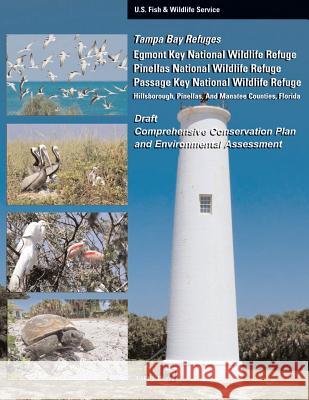
This Draft Comprehensive Conservation Plan and Environmental Assessment (Draft CCP/EA) for Egmont Key, Passage Key, and Pinellas National Wildlife Refuges, also known as the Tampa Bay Refuges, was prepared to guide management actions and direction for these refuges. Fish and wildlife conservation will receive first priority in refuge management; wildlife-dependent recreation will be allowed and encouraged as long as it is compatible with, and does not detract from, the mission of the refuges or the purposes for which they were established.
This Draft Comprehensive Conservation Plan and Environmental Assessment (Draft CCP/EA) for Egmont Key, Passage Key, and Pinellas National Wildlife Ref...
This Draft Comprehensive Conservation Plan and Environmental Assessment (Draft CCP/EA) for Mandalay National Wildlife Refuge (NWR) was prepared to guide management actions and direction for the refuge. Fish and wildlife conservation will receive first priority in refuge management; wildlife dependent recreation will be allowed and encouraged as long as it is compatible with, and does not detract from, the mission of the refuge or the purposes for which it was established.
This Draft Comprehensive Conservation Plan and Environmental Assessment (Draft CCP/EA) for Mandalay National Wildlife Refuge (NWR) was prepared to gui...
The U.S. Fish and Wildlife Service (Service) and U.S. Army (Army) have negotiated a Memorandum of Agreement (MOA) under which much of the former Savanna Army Depot (Depot) in Northwestern Illinois will become Lost Mound National Wildlife Refuge (Lost Mound Refuge). The area is notable for its immense grasslands (4000 acres) and bottomland forest (5000 acres) habitats. Lost Mound Refuge supports endangered Higginsii Pearly Mussel (Lampsilis higginsii) and the threatened Bald Eagle (Haliaeetus leucocephalus). The Service has negotiated a Cooperative Agreement with the Illinois Department of...
The U.S. Fish and Wildlife Service (Service) and U.S. Army (Army) have negotiated a Memorandum of Agreement (MOA) under which much of the former Savan...
This Comprehensive Conservation Plan (CCP) for Mandalay National Wildlife Refuge (NWR) was prepared to guide management actions and direction of the refuge. Fish and wildlife conservation will receive first priority in refuge management; wildlife-dependent recreation will be allowed and encouraged as long as it is compatible with, and does not detract from, the mission of the refuge or the purposes for which it was established.
This Comprehensive Conservation Plan (CCP) for Mandalay National Wildlife Refuge (NWR) was prepared to guide management actions and direction of the r...
The goal of wildland fire management is to plan and implement actions that help accomplish the mission of the National Wildlife Refuge System, which is to administer a national network of lands and waters for the conservation, management, and, where appropriate, restoration of the fish, wildlife, and plant resources and their habitats within the United States for the benefit of present and future generations of Americans.
The goal of wildland fire management is to plan and implement actions that help accomplish the mission of the National Wildlife Refuge System, which i...
Every spring and fall, the big sky country of northeast Montana is fi lled with the clamor of bird calls. Many migrating birds stop along the glaciated rolling plains between the Missouri River and the Canadian border, at the Medicine Lake National Wildlife Refuge (NWR), the Northeast Montana Wetland Management District (WMD), and the Lamesteer National Wildlife Refuge (NWR), which are managed together as one refuge complex. With a bird list that includes some 283 species, the refuge complex has been designated as one of the top 100 globally important bird areas in the United States by the...
Every spring and fall, the big sky country of northeast Montana is fi lled with the clamor of bird calls. Many migrating birds stop along the glaciate...
To secure lands for migratory birds, the United States Congress established the Migratory Bird Conservation Fund to acquire lands for conservation, to maintain acquired lands for habitat preservation, and to fund expenses necessary for the administration, development, and maintenance of such areas. Associated activities include construction of dams, dikes, ditches, spillways, and flumes for improving habitat and mitigation of pollution threats to waterfowl and migratory birds. The refuges protect habitat with primarily two tools: fee-title ownership and conservation easements.
To secure lands for migratory birds, the United States Congress established the Migratory Bird Conservation Fund to acquire lands for conservation, to...