The ten chapters of -Proverbs Speak Louder Than Words- present a composite picture of the richness of proverbs as significant expressions of folk wisdom as is manifest from their appearance in art, culture, folklore, history, literature, and the mass media. The first chapter surveys the multifaceted aspects of paremiology (the study of proverbs), with the second chapter illustrating the paremiological work by the American folklorist Alan Dundes. The next two chapters look at the effective role that proverbs play in the mass media, where they are cited in their traditional wording or as...
The ten chapters of -Proverbs Speak Louder Than Words- present a composite picture of the richness of proverbs as significant expressions of fo...
The wellerism--so called in English because it is a form of expression typical or reminiscent of Sam Weller or his father, two celebrated characters in Dickens's Pickwick Papers--is a major subtype of the proverb. Known since Sumerian times, it has been popular in most European languages and some African languages. As defined by folklorists and proverb scholars, a wellerism consists of three parts: a speech or statement (often a proverb), identification of the speaker, and identification of the situation, which gives the expression an ironic or humorous twist, often in the form of a...
The wellerism--so called in English because it is a form of expression typical or reminiscent of Sam Weller or his father, two celebrated characters i...
Explores research on proverbs of many cultures. More than 20 essays written by scholars of such diverse disciplines as folklore, literature, psychology, linguistics and anthropology illustrate the significance of traditional proverbs and trace variations of proverbs over time.
Explores research on proverbs of many cultures. More than 20 essays written by scholars of such diverse disciplines as folklore, literature, psycholog...
The thirteen chapters of this book comprise an intriguing and informative entry into the world of proverb scholarship, illustrating that proverbs have always been and continue to be wisdom's international currency. The first section of the book focuses on the field of paremiology (proverb studies) in general, the spread of Anglo-American proverbs in Europe, and the phenomenon of modern proverbs. The second section analyzes the use of proverbs in the world of politics, including a chapter on President Obama, while the third concentrates on the uses of proverbs in literature. The final...
The thirteen chapters of this book comprise an intriguing and informative entry into the world of proverb scholarship, illustrating that proverbs h...
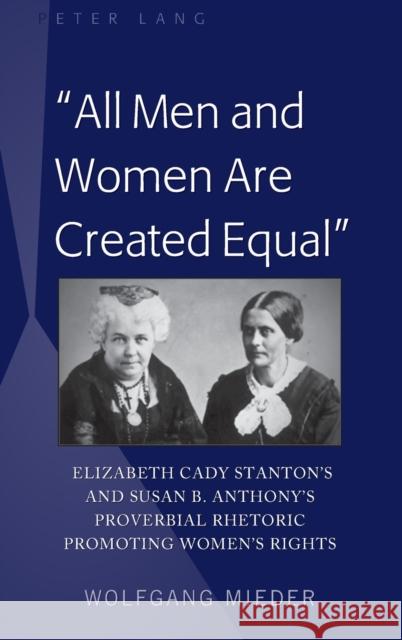
Even a cursory glance at the letters, speeches, and essays of Elizabeth Cady Stanton (1815 1902) and Susan B. Anthony (1820 1906) reveals that these two nineteenth-century feminists relied on Biblical and folk proverbs to make their relentless case for the equality of men and women before the law and in social interaction. All Men and Women Are Created Equal investigates the use and function of this proverbial language in their personal relationship and their vast correspondence, the appearance of the proverbial rhetoric in their many speeches and essays, and their innovative...
Even a cursory glance at the letters, speeches, and essays of Elizabeth Cady Stanton (1815 1902) and Susan B. Anthony (1820 1906) reveals that these t...
The twenty essays that comprise this book, which was first published in 1994, were written by leading paremiologists and folklorists from Africa, Canada, Great Britain, Germany and the US. They represent the best scholarship on proverbs in the English language, and together they give an impressive overview of the fascinating advances in the field of paremiology.
The twenty essays that comprise this book, which was first published in 1994, were written by leading paremiologists and folklorists from Africa, Cana...
In this book, first published in 1987, Wolfgang Mieder follows the intriguing trail of some of the best known pieces of folk literature, tracing them from their roots to modern uses in advertising, journalism, politics, cartoons, and poetry. He reveals both the remarkable adaptability of these tales and how each variation reflects cultural and historical changes. Fairy tales, legends, folk songs, riddles, nursery rhymes, and proverbs are passed from generation to generation, changing both in form and meaning with each use. This book will be of interest to students of literature.
In this book, first published in 1987, Wolfgang Mieder follows the intriguing trail of some of the best known pieces of folk literature, tracing th...