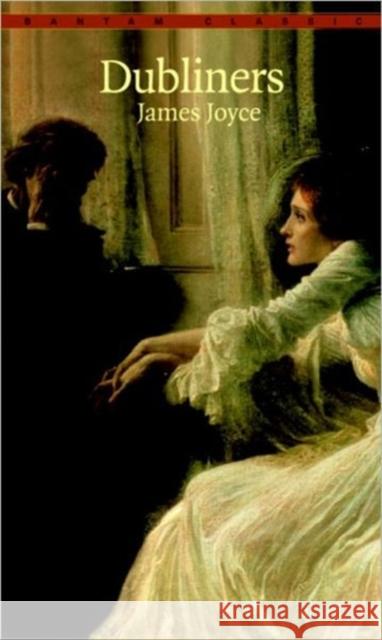
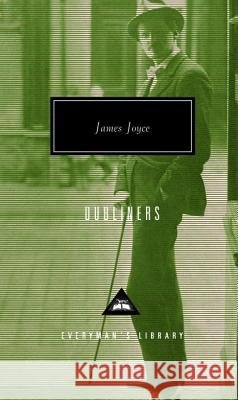
James Joyce has been hailed as one of the great literary rebels of our time. He rebelled against social and literary conventions, against Catholicism, and against Dublin, the city at the center of this magnificent collection of stories. In Dubliners, Joyce paints vivid portraits of the denizens of the city of his birth, from the young boy encountering death in the fist story, -The Sisters, - to the middle-aged Gabriel of the haunting final story, -The Dead.- This collection is both unflinchingly realistic portrait of -dear dirty Dublin- and, as Joyce himself explained, a window...
James Joyce has been hailed as one of the great literary rebels of our time. He rebelled against social and literary conventions, against Catholicism,...
(Book Jacket Status: Jacketed) Though James Joyce began these stories of Dublin life in 1904 when he was twenty-two and completed them in 1907, their unconventional themes and language led to repeated rejections by publishers and delayed publication until 1914. In the century since, his story "The Dead" has come to be seen as one of the most powerful evocations of human loss and longing that the English language possesses; all the other stories in Dubliners are as beautifully turned and as greatly admired. They remind us once again that James Joyce was not only modernism's chief...
(Book Jacket Status: Jacketed) Though James Joyce began these stories of Dublin life in 1904 when he was twenty-two and completed them in 1907, th...
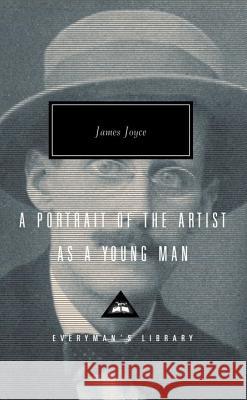
In his first and still most widely read novel, James Joyce makes a strange peace with the traditional narrative of a young man's self-discovery by respecting its substance while exploding its form, thereby inaugurating a literary revolution.
Published in 1916 when Joyce was already at work on Ulysses, A Portrait of the Artist as a Young Man is exactly what its title says and much more. In an exuberantly inventive masterpiece of subjectivity, Joyce portrays his alter ego, Stephen Dedalus, growing up in Dublin and struggling through religious and sexual guilt toward an...
In his first and still most widely read novel, James Joyce makes a strange peace with the traditional narrative of a young man's self-discovery by ...
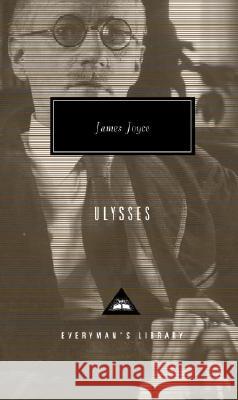
(Book Jacket Status: Jacketed) The most famous day in literature is June 16, 1904, when a certain Mr. Leopold Bloom of Dublin eats a kidney for breakfast, attends a funeral, admires a girl on the beach, contemplates his wife's imminent adultery, and, late at night, befriends a drunken young poet in the city's red-light district. An earthy story, a virtuoso technical display, and a literary revolution all rolled into one, James Joyce's Ulysses is a touchstone of our modernity and one of the towering achievements of the human mind.
(Book Jacket Status: Jacketed) The most famous day in literature is June 16, 1904, when a certain Mr. Leopold Bloom of Dublin eats a kidney for br...
This revised volume follows the complete unabridged text as corrected in 1961. Contains the original foreword by the author and the historic court ruling to remove the federal ban. It also contains page references to the first American edition of 1934.
This revised volume follows the complete unabridged text as corrected in 1961. Contains the original foreword by the author and the historic court rul...
Although Joyce later entirely rewrote his novel of a young Irishman's rebellion against church, country and family, this early version is beautifully composed, the mood being more discursive and personal than inA Portrait. Many episodes later cut for the sake of good novelistic form, especially autobiographical episodes of sensual and family life, are fully presented, with some of the most vivacious dialogue Joyce ever wrote. Between them, the two versions give us a clear example of Joyce's literary development as well as many details of his life. This edition ofStephen Hero...
Although Joyce later entirely rewrote his novel of a young Irishman's rebellion against church, country and family, this early version is beautifully ...
The surviving authors of Our Examination have very kindly asked its former publisher to contribute to the re-issue of their work a few words about its origin. Many of the essays include were first published by Eugene Jolas in his review, transition: what, therefore, could be more fitting than an introduction by Mrs. Eugene Jolas? But she has declined the honour, Mr. Stuart Gilbert has too, so it is left to me to tell how this little volume came about.
The surviving authors of Our Examination have very kindly asked its former publisher to contribute to the re-issue of their work a few words about its...
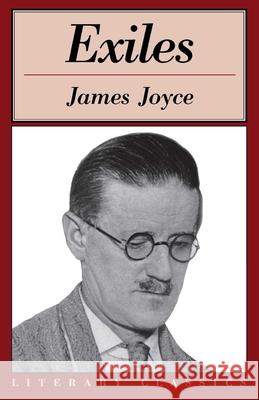
This is the only extant play by the great Irish novelist and is of interest both for its autobiographical content and for formal reasons. In the characters and their circumstances details of Joyce's life are evident. The main character, Richard Rowan, the moody, tormented writer who is at odds with both his wife and the parochial Irish society around him, is clearly a portrait of Joyce himself. The character of Rowan's wife, Bertha, is certainly influenced by Joyce's lover and later wife, Nora Barnacle, with whom he left Ireland and lived a seminomadic existence in Zurich, Rome, Trieste, and...
This is the only extant play by the great Irish novelist and is of interest both for its autobiographical content and for formal reasons. In the chara...