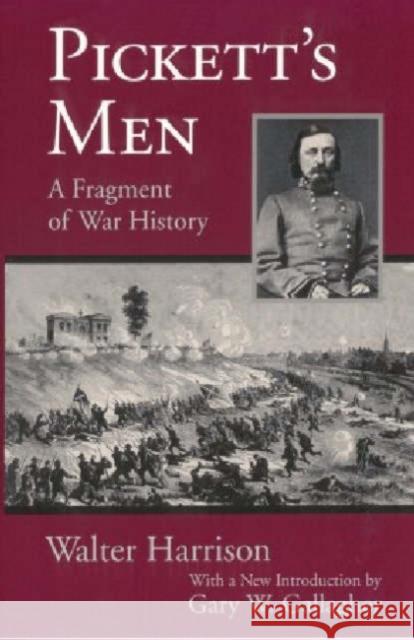
Walter Harrison admired the gallantry of the men with whom he served and sought to honour them by writing this history of one of the more famous large units in the Army of Northern Virginia. He vividly recounts the many battles and campaigns, and willingly criticizes generals and politicians.
Walter Harrison admired the gallantry of the men with whom he served and sought to honour them by writing this history of one of the more famous large...
In this collection, Civil War historian Gary W. Gallagher examines Robert E. Lee, his principal subordinates, the treatment they have received in the literature on Confederate military history, and the continuing influence of Lost Cause arguments in the late-twentieth-century United States. Historical images of Lee and his lieutenants were shaped to a remarkable degree by the reminiscences and other writings of ex-Confederates who formulated what became known as the Lost Cause interpretation of the conflict. Lost Cause advocates usually portrayed Lee as a perfect Christian warrior and...
In this collection, Civil War historian Gary W. Gallagher examines Robert E. Lee, his principal subordinates, the treatment they have received in t...
Stephen Dodson Ramseur, born in Lincolnton, North Carolina, in 1837, compiled an enviable record as a brigadier in the Army of Northern Virginia. Commissioned major general the day after his twenty-seventh birthday, he was the youngest West Pointer to achieve that rank in the Confederate army. He later showed great skill as a divisional leader in the 1864 Shenandoah Valley campaigns before he was fatally wounded at Cedar Creek on 19 October of that year. Based on Ramseur's extensive personal papers as well as on other sources, this absorbing biography examines the life of one of the South's...
Stephen Dodson Ramseur, born in Lincolnton, North Carolina, in 1837, compiled an enviable record as a brigadier in the Army of Northern Virginia. Comm...
Originally published by UNC Press in 1989, Fighting for the Confederacy is one of the richest personal accounts in all of the vast literature on the Civil War. Alexander was involved in nearly all of the great battles of the East, from First Manassas through Appomattox, and his duties brought him into frequent contact with most of the high command of the Army of Northern Virginia, including Robert E. Lee, Stonewall Jackson, and James Longstreet. No other Civil War veteran of his stature matched Alexander's ability to discuss operations in penetrating detail-- this is especially true of...
Originally published by UNC Press in 1989, Fighting for the Confederacy is one of the richest personal accounts in all of the vast literature o...
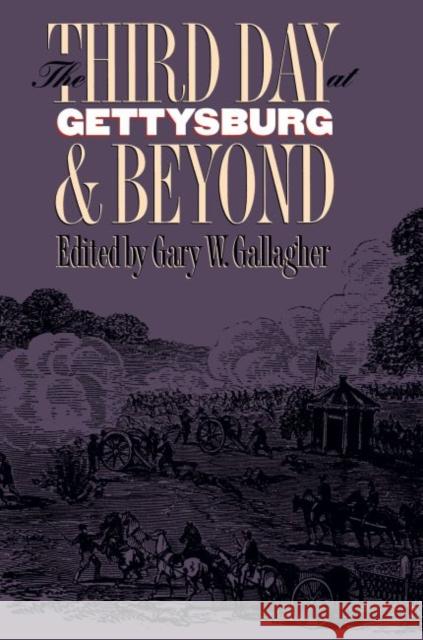
The six essays in this volume testify to the enduring impact of the Civil War on our national consciousness. Covering subjects as diverse as tactics, the uses of autobiography, and the power of myth-making in the southern tradition, they illustrate the rewards of imaginative scholarship--even for the most intensely studied battle in America's history.
The Third Day at Gettysburg and Beyond brings current research and interpretation to bear on a range of pivotal issues surrounding the final day of the battle, July 3, 1863. This revisionist approach begins by expanding our...
The six essays in this volume testify to the enduring impact of the Civil War on our national consciousness. Covering subjects as diverse as tactics, ...
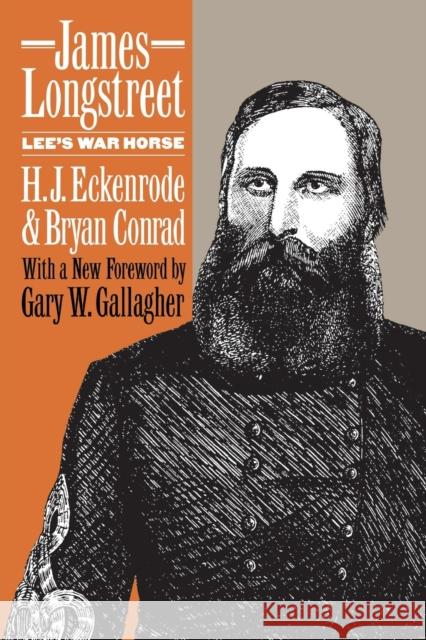
James Longstreet stood with Robert E. Lee and Stonewall Jackson in the great triumvirate of the Army of Northern Virginia. He fought from First Manassas through Appomattox and served as Lee's senior subordinate for most of that time. In this classic work, first published by UNC Press in 1936, H. J. Eckenrode and Bryan Conrad follow Longstreet from his leading role in the military history of the Confederacy through his controversial postwar career and eventual status as an outcast in Southern society. Though they acknowledge his considerable gifts as a corps commander and absolve him of guilt...
James Longstreet stood with Robert E. Lee and Stonewall Jackson in the great triumvirate of the Army of Northern Virginia. He fought from First Manass...
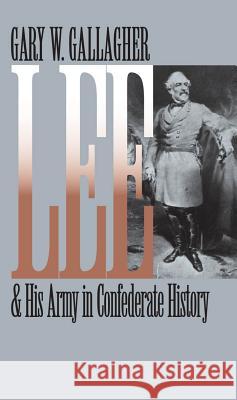
Was Robert E. Lee a gifted soldier whose only weaknesses lay in the depth of his loyalty to his troops, affection for his lieutenants, and dedication to the cause of the Confederacy? Or was he an ineffective leader and poor tactician whose reputation was drastically inflated by early biographers and Lost Cause apologists? These divergent characterizations represent the poles between which scholarly and popular opinion on Lee has swung over time. Now, in eight essays, Gary Gallagher offers his own refined thinking on Lee, exploring the relationship between Lee's operations and Confederate...
Was Robert E. Lee a gifted soldier whose only weaknesses lay in the depth of his loyalty to his troops, affection for his lieutenants, and dedication ...
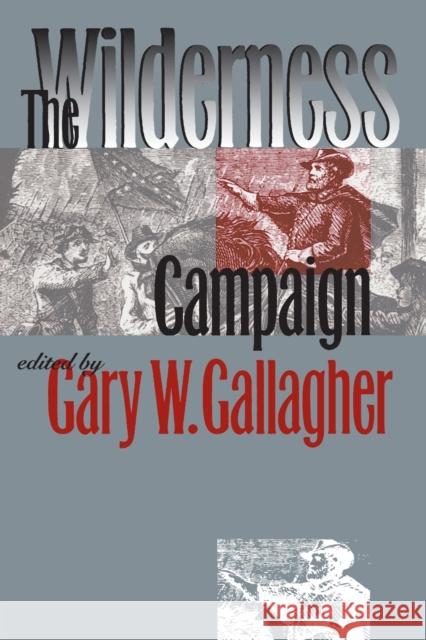
In the spring of 1864, in the vast Virginia scrub forest known as the Wilderness, Ulysses S. Grant and Robert E. Lee first met in battle. The Wilderness campaign of May 5-6 initiated an epic confrontation between these two Civil War commanders--one that would finally end, eleven months later, with Lee's surrender at Appomattox.
The eight essays here assembled explore aspects of the background, conduct, and repercussions of the fighting in the Wilderness. Through an often-revisionist lens, contributors to this volume focus on topics such as civilian expectations for the campaign,...
In the spring of 1864, in the vast Virginia scrub forest known as the Wilderness, Ulysses S. Grant and Robert E. Lee first met in battle. The Wilderne...
Crucible of the Civil War offers an illuminating portrait of the state's wartime economic, political, and social institutions. Weighing in on contentious issues within established scholarship while also breaking ground in areas long neglected by scholars, the contributors examine such concerns as the war's effect on slavery in the state, the wartime intersection of race and religion, and the development of Confederate social networks. They also shed light on topics long disputed by historians, such as Virginia's decision to secede from the Union, the development of Confederate nationalism,...
Crucible of the Civil War offers an illuminating portrait of the state's wartime economic, political, and social institutions. Weighing in on conte...
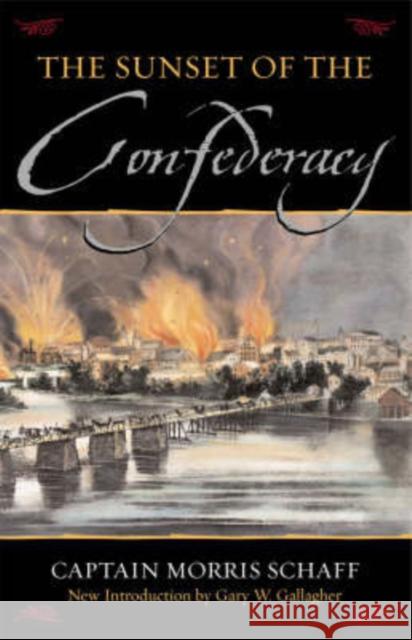
This outstanding account, written by a sympathetic Union officer and witness to the Civil War's denouement, covers the last days and downfall of the Confederate Army of Northern Virginia (led by the indomitable Robert E. Lee), from the fall of Richmond to Appomattox. Morris Schaff focuses largely on the Confederate Army's dramatic retreat and surrender in March and April, 1865, when Lee himself was compelled to admit defeat. Written in the form of letters, Schaff writes a first hand account of the people, places, and events that changed the course of history.
This outstanding account, written by a sympathetic Union officer and witness to the Civil War's denouement, covers the last days and downfall of the C...