What are the most common dreams and why do we have them? What does a dream about death mean? What do dreams of swimming, failing, or flying symbolize?
First published by Sigmund Freud in 1899, The Interpretation of Dreams considers why we dream and what it means in the larger picture of our psychological lives. Delving into theories of manifest and latent dream content, the special language of dreams, dreams as wish fulfillments, the significance of childhood experiences, and much more, Freud, widely considered the "father of psychoanalysis," thoroughly and thoughtfully examines...
What are the most common dreams and why do we have them? What does a dream about death mean? What do dreams of swimming, failing, or flying symbolize?...
Written in the decade before Freud s death, Civilization and Its Discontents may be his most famous and most brilliant work. It has been praised, dissected, lambasted, interpreted, and reinterpreted. Originally published in 1930, it seeks to answer several questions fundamental to human society and its organization: What influences led to the creation of civilization? Why and how did it come to be? What determines civilization s trajectory? Freud s theories on the effect of the knowledge of death on human existence and the birth of art are central to his work. Of the various English...
Written in the decade before Freud s death, Civilization and Its Discontents may be his most famous and most brilliant work. It has been praised, diss...
2009 reprint of 1922 edition. Beyond the Pleasure Principle marked a turning point and a major modification of Freud's previous theoretical approach. Before this essay, Freud was understood to have placed the sexual instinct, Eros, centre stage, in explaining the forces which drive us to act. In 1920, going beyond the simple pleasure principle, Freud developed his theory of drives, by adding the death instinct, often referred to as Thanatos, although Freud himself never used this term.The main importance of the essay resides in the striking picture of human beings struggling between two...
2009 reprint of 1922 edition. Beyond the Pleasure Principle marked a turning point and a major modification of Freud's previous theoretical approach. ...
2009 reprint of 1919 edition. Totem and Taboo is a collection of four essays first published in the journal Imago (1912-13) employing the application of psychoanalysis to the fields of archaeology, anthropology, and the study of religion. The four essays are entitled: The Horror of Incest; Taboo and Emotional Ambivalence; Animism, Magic and the Omnipotence of Thoughts; and The Return of Totemism in Childhood. The English translation was published in 1918; it met with an initially chilly reception from the anthropological community, reflective of a change in scholarship towards ethnography and...
2009 reprint of 1919 edition. Totem and Taboo is a collection of four essays first published in the journal Imago (1912-13) employing the application ...
In "Zukunft einer Illusion" bt Freud radikale Relgionskritik. Selbst viele Atheisten meinen, dass es zwar Gott nicht gibt, aber der Glaube an ihn eine ntzliche Funktion fr die Gesellschaft hat. Freud widerspricht auch hier: "Diese rationelle Begrndung des Verbots zu morden teilen wir aber nicht mit, sondern wir behaupten, Gott habe das Verbot erlassen. Indem wir so verfahren, umkleiden wir das Kulturverbot mit einer ganz besonderen Feierlichkeit, riskieren aber dabei, da wir dessen Befolgung von dem Glauben an Gott abhngig machen. Wenn wir diesen Schritt zurcknehmen, unseren Willen nicht mehr...
In "Zukunft einer Illusion" bt Freud radikale Relgionskritik. Selbst viele Atheisten meinen, dass es zwar Gott nicht gibt, aber der Glaube an ihn eine...
In "Der Dichter und das Phantasieren,"schreibt buecher-wiki.de, "verglich Freud literarische Texte mit Tagtrumen und interpretierte die Kreativitt des Dichters wie jede kulturelle Produktivitt als Sublimierung - eine Art der Triebabwehr, hnlich der Verdrngung, aber im Gegensatz zu jener die einzige konstruktive, weil die mit dem Trieb verbundene Energie in diesem Fall dazu genutzt wird, kulturell oder sozial etwas zu schaffen."
In "Der Dichter und das Phantasieren,"schreibt buecher-wiki.de, "verglich Freud literarische Texte mit Tagtrumen und interpretierte die Kreativitt des...
2010 reprint of 1927 first English Edition. The Ego and the Id is a foundation document in psychoanalysis first written by Freud in 1923. It is an analytical study of the human psyche outlining his theories of the psychodynamics of the id, ego, and super-ego, which is of fundamental importance in the development of psychoanalytic theory. The study was conducted over years of meticulous research and was first published in English in 1927.
2010 reprint of 1927 first English Edition. The Ego and the Id is a foundation document in psychoanalysis first written by Freud in 1923. It is an ana...
Sigmund Freud (1856-1939), born in Austria, is widely known as the founder of psychoanalysis. The History of the Psychoanalytic Movement was published in German in 1914 in the Jahrbuch der Psychoanalyse, 4 and the translation was published in 1917 in the Nervous and Mental Disease Monograph Series (No. 25). New York: Nervous and Mental Disease Pub. Co. The The Origin and Development of Psychoanalysis are 5 lectures, which were first published in American Journal of Psychology, 21, 181-218.
Sigmund Freud (1856-1939), born in Austria, is widely known as the founder of psychoanalysis. The History of the Psychoanalytic Movement was published...
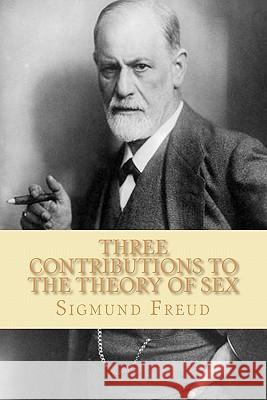
Three Essays on the Theory of Sexuality is a work which advanced Freud's theory of sexuality, in particular its relation to childhood. Both this and Interpretations of Dreams are considered Freud's most original contributions to human knowledge.
Three Essays on the Theory of Sexuality is a work which advanced Freud's theory of sexuality, in particular its relation to childhood. Both this and I...
Reprint of the 1928 edition. The Future of an Illusion is a book written by Sigmund Freud in 1927. It describes his interpretation of religion's origins, development, psychoanalysis, and its future. Freud describes religion as an illusion, as one of the wishes that are the "fulfillments of the oldest, strongest, and most urgent wishes of mankind." This title remains a landmark work of the 20th century.
Reprint of the 1928 edition. The Future of an Illusion is a book written by Sigmund Freud in 1927. It describes his interpretation of religion's origi...