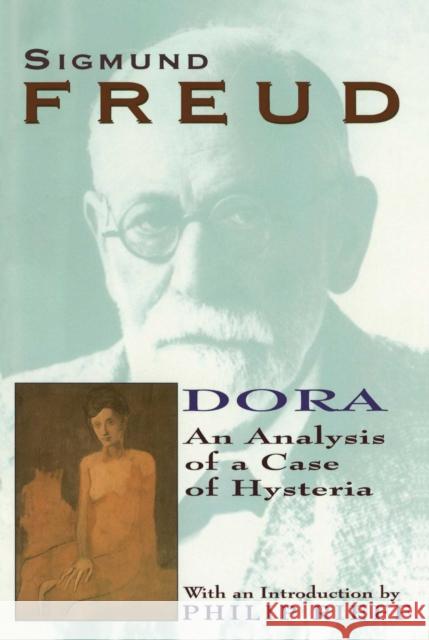
A fascinating case study that reads like a detective novel, pulling readers deep into the twisted world and dark mental corners of one of Sigmund Freud's most intriguing psychological patients. An intelligent but troubled eighteen-year-old girl to whom Freud gives the pseudonym "Dora" is at the center of this captivating case study. Freud's analysis focuses on Dora, however she is surrounded by an emotionally disturbed cast of characters that thicken the psychological intrigue. As Dora falls into the paralysis of psychological hysteria, Freud uses all of his analytical genius and literary...
A fascinating case study that reads like a detective novel, pulling readers deep into the twisted world and dark mental corners of one of Sigmund Freu...
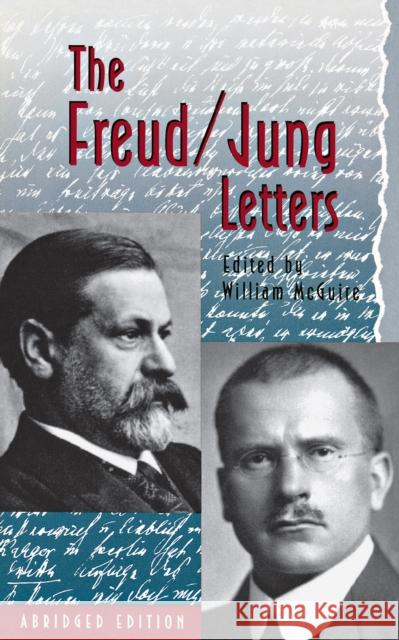
This abridged edition makes the Freud/Jung correspondence accessible to a general readership at a time of renewed critical and historical reevaluation of the documentary roots of modern psychoanalysis. This edition reproduces William McGuire's definitive introduction, but does not contain the critical apparatus of the original edition.
This abridged edition makes the Freud/Jung correspondence accessible to a general readership at a time of renewed critical and historical reevaluat...
In April 1906, Sigmund Freud wrote a brief note to C. G. Jung, initiating a correspondence that was to record the rise and fall of the close relationship between the founder of psychoanalysis and his chosen heir. This correspondence is now available for the first time, complete except for a few missing letters apparently lost long ago.
The letters, some 360 in number, span seven years and range in length from a postcard to a virtual essay of 1,500 words. In accordance with an agreement between the writers' sons, Ernst Freud and Franz Jung, the letters are published as documents,...
In April 1906, Sigmund Freud wrote a brief note to C. G. Jung, initiating a correspondence that was to record the rise and fall of the close relati...
This volume originated when William C. Bullitt began working on a book of studies of the principle personalities surrounding the Treaty of Versailles. In discussing this project with Sigmund Freud, the idea arose of a collaborative work on Woodrow Wilson. They worked on the book for ten years, reading all of Wilson's published books and speeches as well as volumes written about Wilson. After perusing this material, Bullitt and Freud realized that they could not write an analysis of Wilson's character unless they deepened their understanding of his nature with private, unpublished...
This volume originated when William C. Bullitt began working on a book of studies of the principle personalities surrounding the Treaty of Versail...
Despite Freud's enormous influence on twentieth-century interpretations of the humanities, there has never before been in English a complete collection of his writings on art and literature. These fourteen essays cover the entire range of his work on these subjects, in chronological order beginning with his first published analysis of a work of literature, the 1907 "Delusion and Dreams in Jensen's Gradiva" and concluding with the 1940 posthumous publication of "Medusa's Head." Many of the essays included in this collection have been crucial in contemporary literary and art criticism...
Despite Freud's enormous influence on twentieth-century interpretations of the humanities, there has never before been in English a complete collectio...
In a draft attached to a letter to his friend and confidante Wilhelm Fliess (May 31, 1897), Freud develops an idea: The mechanism of fiction is the same as that of hysterical fantasies. He supports this thought with a brief analysis of the biographical sources of Goethe's Werther. A few months later, on October 15, 1897, Freud mails Fliess a detailed account of remembered events from his childhood that, Freud believed, underlined the universality of Oedipus Rex and Hamlet. Freud's foray into literature initiated the beginning of a new critical approach. In Essential Papers on Literature...
In a draft attached to a letter to his friend and confidante Wilhelm Fliess (May 31, 1897), Freud develops an idea: The mechanism of fiction is the...
Sigmund Freud (1856-1939) was one of the shapers of modern consciousness through his development of the concept of the unconscious and the therapy that he evolved based on this discovery. Essential writings by Sigmund Freud, including generous excerpts of the full texts of: "Katharina," "The Method of Interpreting Dreams," "On Dreams," "Infantile Sexuality," "Freud's Psychoanalytic Procedure," "The Uncanny," "Psychopathology of Everyday Life," "A Disturbance of Memory on the Acropolis," "Dreams and Telepathy," "Delusions and Dreams in Jensen's Gradiva," "Address to the Society of B'nai...
Sigmund Freud (1856-1939) was one of the shapers of modern consciousness through his development of the concept of the unconscious and the therapy ...
Freud, the father of modern psychology, stunned the world with his work in dream analysis. Although a scientist by trade, this introductory work is written for anyone to understand and does not require a background in psychology. This volume is not only enlightening, but an entertaining guide that lays the foundation for analyzing dreams.
Freud, the father of modern psychology, stunned the world with his work in dream analysis. Although a scientist by trade, this introductory work is wr...