Desiderius Erasmus Harry Vredeveld Clarence H. Miller
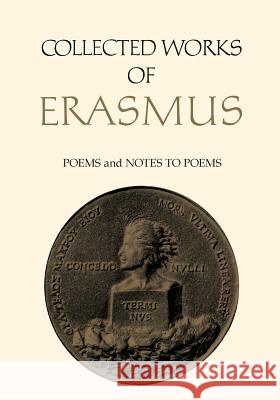
The final two volumes in the CWE contain an edition and translation of Erasmus's poetry. For Erasmus scholars this work affords the first opportunity to evaluate and analyse Erasmus' poems in English. And for those interested in Renaissance and Reformation poetry in general, these offer an intriguing look at the work of one of the towering figures of the period writing in a genre that was, for him, unusual.
The annotations include a path-breaking commentary piece by Harry Vredeveld on Erasmus' most famous poem, Poem on the Trouble of Old Age.' Another important feature is the...
The final two volumes in the CWE contain an edition and translation of Erasmus's poetry. For Erasmus scholars this work affords the first opportuni...
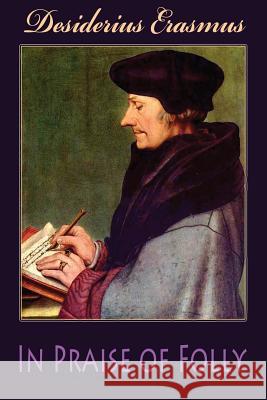
Erasmus of Rotterdam (c. 1466-1536) is one of the greatest figures of the Renaissance humanist movement, which abandoned medieval pieties in favour of a rich new vision of the individual's potential. Praise of Folly, written to amuse his friend Sir Thomas More, is Erasmus's best-known work. Its dazzling mixture of fantasy and satire is narrated by a personification of Folly, dressed as a jester, who celebrates youth, pleasure, drunkenness and sexual desire, and goes on to lambast human pretensions, foibles and frailties, to mock theologians and monks and to praise the folly' of simple...
Erasmus of Rotterdam (c. 1466-1536) is one of the greatest figures of the Renaissance humanist movement, which abandoned medieval pieties in favour of...
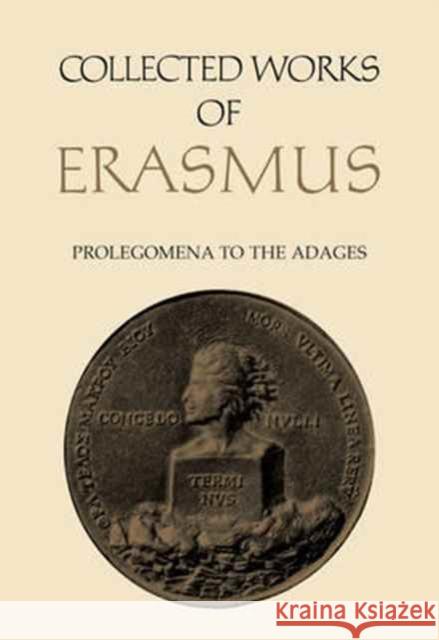
After spending several months in England, Erasmus returned to Paris in the winter of 1500 and set about compiling a small anthology of classical proverbs known as the Adagiorum collectanea. This modest work became the basis for one of Erasmus' best known and longest works, when it was expanded in 1508 into the far more substantial Adagiorum chiliades. The essay that begins this introductory volume to the Adages explores the development of the Collectanea and its transformation into the Adagiorum chiliades. It is followed by the first annotated...
After spending several months in England, Erasmus returned to Paris in the winter of 1500 and set about compiling a small anthology of classical pr...
Volume 58 in the Collected Works of Erasmus series contains, for the first time, the English translation of Erasmus' Annotations on Paul's Epistles to the Galatians and Ephesians.
Erasmus' Annotations began as marginal comments in his own copy of the New Testament and were subsequently published in 1516 as a supplement to the Novum Instrumentum. His annotations were intended to justify his changes based on the Greek text. In each successive edition, published between 1516 and 1535, the Annotations grew in size and scope providing Erasmus with the...
Volume 58 in the Collected Works of Erasmus series contains, for the first time, the English translation of Erasmus' Annotations on Paul's E...
Volume 18 in the Collected Works of Erasmus series covers the period from 1 April 1531 to 30 March 1532. The most persistent theme in the letters is the fear, to which Erasmus had long been prey, that the religious strife in Germany and Switzerland would eventually lead to armed conflict.
His Catholic and Evangelical critics continued to annoy him. In June 1531 Erasmus published his final apologia against Alberto Pio, who had accused him of being the source of the Lutheran heresy. Though Erasmus' public controversy with the Strasbourg theologians had come to an end in 1530, he...
Volume 18 in the Collected Works of Erasmus series covers the period from 1 April 1531 to 30 March 1532. The most persistent theme in the letters i...
This volume contains the surviving correspondence of Erasmus for the first seven months of 1529. For nearly eight years he had lived happily and productively in Basel. In the winter of 1528-9, however, the Swiss version of the Lutheran Reformation triumphed in the city, destroying the liberal-reformist atmosphere Erasmus had found so congenial. Unwilling to live in a place where Catholic doctrine and practice were officially proscribed, Erasmus resettled in the quiet, reliably Catholic university town of Freiburg im Breisgau,
Despite the turmoil of moving, Erasmus managed to...
This volume contains the surviving correspondence of Erasmus for the first seven months of 1529. For nearly eight years he had lived happily and pr...