Desiderius Erasmus (1466-1536) was a Dutch humanist, scholar, and social critic, and one of the most important figures of the Renaissance. The Praise of Folly is perhaps his best-known work. Originally written to amuse his friend Sir Thomas More, this satiric celebration of pleasure, youth, and intoxication irreverently pokes fun at the pieties of theologians and the foibles that make us all human, while ultimately reaffirming the value of Christian ideals. No other book displays quite so completely the transition from the medieval to the modern world, and Erasmus's wit, wisdom, and...
Desiderius Erasmus (1466-1536) was a Dutch humanist, scholar, and social critic, and one of the most important figures of the Renaissance. The P...
The letters in this volume reflect Erasmus' anxiety about the endemic warfare in Western Europe, the advance of the Ottoman Turks into Europe, and the increasing threat of armed conflict between Catholics and Protestants in Germany. Unable and unwilling to attend the Diet of Augsburg (June-November 1530), summoned by Emperor Charles V in the attempt to mediate a religious settlement, Erasmus corresponded with those in attendance, urging them (in vain) to preserve peace at all costs.
The letters also shed light on Erasmus' controversies with Catholic critics (Luis de Carvajal and...
The letters in this volume reflect Erasmus' anxiety about the endemic warfare in Western Europe, the advance of the Ottoman Turks into Europe, and ...
ERASMUS, so deservedly famous for his admirable writings, the vast extent of his learning, his great candour and moderation, and for being one of the chief restorers of the Latin tongue on this side the Alps, was born at Rotterdam, on the 28th of October, in the year 1467. The anonymous author of his life commonly printed with his Colloquies (of the London edition) is pleased to tell us that de anno quo natus est apud Batavos, non constat. And if he himself wrote the life which we find before the Elzevir edition, said to be Erasmo autore, he does not particularly mention the year in which he...
ERASMUS, so deservedly famous for his admirable writings, the vast extent of his learning, his great candour and moderation, and for being one of the ...
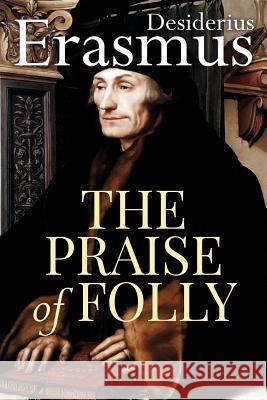
Praise of Folly is an essay written in Latin in 1509 by Desiderius Erasmus of Rotterdam and first printed in 1511. Inspired by De Triumpho Stultitiae, written by the Italian humanist Faustino Perisauli, born at Tredozio, near Forli. Praise of Folly is considered one of the most notable works of the Renaissance and played an important role in the beginnings of the Protestant Reformation."
Praise of Folly is an essay written in Latin in 1509 by Desiderius Erasmus of Rotterdam and first printed in 1511. Inspired by De Triumpho Stultitiae,...
Erasmus yearned to make the New Testament an effective instrument of reform in society, church, and everyday life, and to this end he composed the Paraphrases, in which the words of Holy Scripture provide the core of a text that was vastly expanded to embrace the reforming "philosophy of Christ." Paraphrase on Luke 1-10 contains the first half of Erasmus's Paraphrase on Luke- the second half of which appeared in this series in 2003 - and completes the set of translations of the Paraphrases into English.
In his Paraphrase on...
Erasmus yearned to make the New Testament an effective instrument of reform in society, church, and everyday life, and to this end he composed the ...
Perhaps the earliest piece of pacifist writing from the west. - Erasmus' sharp and moving treatise against war: from the Latin proverb DULCE BELLUM INEXPERTIS. - 'War's lovely - if you're not involved', or ( the succinct Latin is near-untranslatable) ' huzza for war - for others'
Perhaps the earliest piece of pacifist writing from the west. - Erasmus' sharp and moving treatise against war: from the Latin proverb DULCE BELLUM IN...
Many of the letters in this volume, which covers the period August 1530 to March 1531, reflect Erasmus' anxieties over events at the Diet of Augsburg (June-November 1530), at which the first of many attempts to achieve a negotiated settlement of the religious division in Germany came to a rancorous conclusion, thus fostering the fear that religious controversy would eventually lead to war. His other chief concerns were the continued attacks on him by Catholic critics who regarded him as a clandestine Lutheran, and the insistence of many evangelical reformers that he was their spiritual...
Many of the letters in this volume, which covers the period August 1530 to March 1531, reflect Erasmus' anxieties over events at the Diet of Augsbu...
These volumes are the first in a series containing works by Erasmus 'that concern literature and education' interests which to him were scarcely separable. The aim of Erasmian education was a civilized life, expressed in Christian piety and the fulfilment of public and private duties and embellished by learning and literature. Towards these ends the soundest training for youth was what Erasmus often called bonne litterae, 'good letters, ' a literary and rhetorical training based on Greek and Latin authors. For centuries the classical curriculum was the core of liberal education,...
These volumes are the first in a series containing works by Erasmus 'that concern literature and education' interests which to him were scarcely se...
This sixth of seven volumes devoted to the Adages in the Collected Works of Erasmus completes the translation and annotation of the more than 4000 proverbs gathered and commented on by Erasmus in his Adagiorum Chiliades (Thousands of Adages, usually known more simply as the Adagia). This volume's aim, like that of the others, is to provide a fully annotated, accurate, and readable English version of Erasmus' commentaries on these Greek and Latin proverbs, and to show how Erasmus continued to expand this work, originally published in 1508, until his death...
This sixth of seven volumes devoted to the Adages in the Collected Works of Erasmus completes the translation and annotation of the more t...