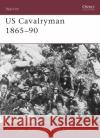
The period 1865-90 was one of unparalleled change in American frontier history. This span of 25 years witnessed the end of the traditional nomadic lifestyle of the plains Indians, the colonisation of the West by white settlers, and the first experience of the US army in fighting a form of irregular warfare for which its soldiers and commanders were untrained, and its equipment unsuited. That they acquitted themselves so well in the face of bureaucratic meddling, poor supply and appalling climatic conditions, speaks highly of the tenacity and physical toughness of the volunteers who served in...
The period 1865-90 was one of unparalleled change in American frontier history. This span of 25 years witnessed the end of the traditional nomadic lif...
This title details the culture, weapons, armour and training of the elite samurai warrior class in the fascinating Age of Battles period (1550-1600). This was a period of vital importance not only because of the political effects of the chaos but also due to the changes in warfare that occurred. In 1542 the Portuguese introduced the matchlock musket into Japanese warfare, and this book traces the effect that this important innovation had on the samurai. Life outside the field of battle is also examined, making this an unmissable book for those interested in this brave warrior caste.
This title details the culture, weapons, armour and training of the elite samurai warrior class in the fascinating Age of Battles period (1550-1600). ...
The first official German stormtroop unit was authorized on 2 March 1915 when the Supreme Command of the field army ordered the VIII Corps to form a detachment for the testing of experimental weapons and the development of approximate tactics that could break the deadlock on the Western Front. By the summer of 1915, stormtroop units were springing up throughout the German armies in the west, and by the end of 1916 official stormtroop battalions were established throughout the western armies, providing a deadly new threat for the Allies. This book examines the uniform, equipment and tactics of...
The first official German stormtroop unit was authorized on 2 March 1915 when the Supreme Command of the field army ordered the VIII Corps to form a d...
The American Civil War (1861-1865)was predominantly an infantryman's war. Artillery had improved substantially since 1815 and guns could inflict murderous losses if they had a clear field of fire. But most Civil War battlefields were characterised by sprawling forests and broken ground. Cavalry were important for reconnaissance, raiding and rearguard actions but there was little scope for sabre charges in the grand old manner when infantrymen armed with muzzle-loading rifles could face such tactics with confidence. Ultimately, the Confederacy's survival as a nation would largely depend on the...
The American Civil War (1861-1865)was predominantly an infantryman's war. Artillery had improved substantially since 1815 and guns could inflict murde...
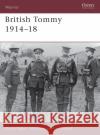
World War I (1914-1918) was a watershed in British military and social history, and even now the repercussions can still be felt. No town or village in the British Isles escaped casualty, and the creative genius of a generation was wiped out, at an incalculable loss to society. This book looks in detail at how the British soldier lived, fought and died during the traumatic war years. Enlistment, training and all aspects of life on active service are carefully examined, including discipline, relaxation and even the type and quality of food that soldiers ate. The analysis of the British...
World War I (1914-1918) was a watershed in British military and social history, and even now the repercussions can still be felt. No town or village i...
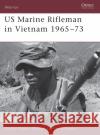
This volume provides an in-depth look at the experience of the ordinary US marine 'grunt' in Vietnam. Organisation of the corps, weaponry, equipment, uniforms, training and medical arrangements are all discussed. However, where this book differs from other similar works is not only in the detail that it goes into but also in the unifying theme of examining all these differing aspects of marine life from the point of view of a soldier serving in the conflict. The author, Charles Melson, actually served in the Vietnam War (1955-1975), and it is this personal experience that allows him to...
This volume provides an in-depth look at the experience of the ordinary US marine 'grunt' in Vietnam. Organisation of the corps, weaponry, equipment, ...
During this period, the British army earned itself a formidable reputation as a fighting force. However, due to its role as a police force at home, and demonisation by American propaganda during the American Revolution (1763-1776), the army was viewed as little removed from a penal institution run by aristocratic dilettantes. This view, still held by many today, is challenged by Stuart Reid, who paints a picture of an increasingly professional force. This was an important time of change and improvement for the British Army, and British Redcoat 1740-1793 fully brings this out in its...
During this period, the British army earned itself a formidable reputation as a fighting force. However, due to its role as a police force at home, an...
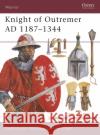
After Saladin's great victory at the Battle of Hattin in 1137, Outremer, as medieval westerners called the remaining Latin or Catholic enclaves in the eastern Mediterranean, was no longer a threat to Islam. Its military elites preferred to live in peace, focusing on trade as much as on the defence of Christendom's holy places. In this, the first book in the English language to objectively study the knights of the Latin East, David Nicolle presents a well-balanced and informed account of the Western warriors who defended the Crusader territories for so long.
After Saladin's great victory at the Battle of Hattin in 1137, Outremer, as medieval westerners called the remaining Latin or Catholic enclaves in the...
In 1783 the British army struggled home from North America in a shattered condition. It had acquitted itself well, but its regiments were now woefully understrength, and it was not until 1789 that they were again fit for service. Little more than three years later, Republican France declared war, and, apart from two short periods, the army was to be heavily engaged around the globe for the next 23 years. Beginning where Warrior 19 British Redcoat 1740-93 ends, Stuart Reid shows how the army was re-organised, re-equipped, re-trained and led from the bitter struggle in the West Indies to the...
In 1783 the British army struggled home from North America in a shattered condition. It had acquitted itself well, but its regiments were now woefully...
In the last years of the Roman Empire the infantryman who had dominated Greek and Roman warfare for centuries was gradually replaced by the mounted soldier. This well-illustrated guide draws on archaeological and iconographic evidence to examine the life and experiences of the Roman cavalryman, usually on the fringes of the empire, as well as equipment, the horse and landmark battles.
In the last years of the Roman Empire the infantryman who had dominated Greek and Roman warfare for centuries was gradually replaced by the mounted so...