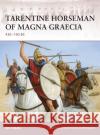
Osprey's study of the Tarentine horsemen from 430 to 190 BC. The Taras were the leading power of the scattered Greek states of southern Italy and built their reputation on the unmatched horse warriors who helped the Taras claim and maintain their power. These horsemen, who excelled in valor and wealth not only served on their home soil, but were in great demand abroad and were often exported as mercenaries. In this book, expert author Nic Fields examines the Taras horsemen in detail, using rare artifacts and contemporary sources to create an account which reveals the day to day lives of...
Osprey's study of the Tarentine horsemen from 430 to 190 BC. The Taras were the leading power of the scattered Greek states of southern Italy and b...
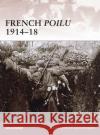
'Why, ' the Kaiser enquired of Czar Nicholas in 1913, did he wish to ally himself with France when 'the Frenchman is no longer capable of being a soldier?' Indeed, during World War I (1914-1918) the French Army was in a state of disarray, plagued by indiscipline, mutinies and desertion. The ordinary French citizens that were called upon to defend their motherland, the Poilu, were disrespected and demoralized, and the infamous mutinies of 1917 by the Poilu were not protests against the war itself, but against how the war was conducted. The rebellions sent a stark warning, forcing a reform in...
'Why, ' the Kaiser enquired of Czar Nicholas in 1913, did he wish to ally himself with France when 'the Frenchman is no longer capable of being a sold...
The North Vietnamese Army is often forgotten by the histories of the Vietnam War (1955-1975). Commonly mistaken for the locally raised Viet Cong guerrillas, the NVA was in fact an entirely different force for the Democratic Republic of Vietnam. After first supporting the VC in the Republic of Vietnam in 1958, the NVA entered into their own violent armed struggle as the war escalated. Entire divisions and vast numbers of NVA troops were sent south, conducting large-scale operations in a conventional war fought almost entirely by the NVA, and not the VC, as is often believed. Despite limited...
The North Vietnamese Army is often forgotten by the histories of the Vietnam War (1955-1975). Commonly mistaken for the locally raised Viet Cong guerr...
The Chindits were a specially organised, equipped and trained body of men employing innovative fighting methods. This book describes the origins of this elite formation, detailing their recruitment, training and specialist fighting methods, and reveals the distinctive dress, equipment and weapons used.
The Chindits were a specially organised, equipped and trained body of men employing innovative fighting methods. This book describes the origins of th...
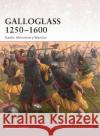
Galloglass, from the Gaelic gall_glaigh for 'young foreign warriors', were mercenaries from the Western Isles of Scotland who fought in the retinues of Irish magnates from the mid-13th century until the early 17th century. Without question, galloglass are among the most visually impressive warriors of all time: they were sketched by Albrecht D_rer, were mentioned by Shakespeare, and were discussed with awe and amazement in the correspondence of all the leading Elizabethan soldiers who served in Ireland. Thousands fought in Ireland, and yet so far there has been only one detailed account of...
Galloglass, from the Gaelic gall_glaigh for 'young foreign warriors', were mercenaries from the Western Isles of Scotland who fought in the retinues o...
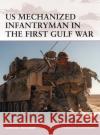
Osprey's examination of the US Mechanized Infantrymen of the First Gulf War (1990-1991), In many ways the end of the Vietnam War left the US army a spent force. Plagued by low morale, drug and race issues, and terrible public relations, the army faced an uphill climb in the effort to rebuild itself. The story of this reconstruction is mirrored in the rise of the Mechanized Infantryman. Deciding that the key to future conflict lay in highly trained and mobile warriors that could be delivered quickly to battle, the army adopted the mechanized infantryman as its frontline troops. This new,...
Osprey's examination of the US Mechanized Infantrymen of the First Gulf War (1990-1991), In many ways the end of the Vietnam War left the US army a...
Osprey's study of the Byzantine cavalrymen, who were regarded as the elite arm of the military during the Middle Byzantine period (867-1204). The cavalry executed high speed reconnaissance, agile arrow barrages and crippling blows to enemy formations. Its ranks were filled primarily through direct recruitment or hereditary service by holders of military lands, but in times of crisis irregulars would be temporarily enlisted. Few books provide any accessible study of the medieval Romaic soldier's life, and this colorful addition to the Warrior series seeks to redress this imbalance. Offering a...
Osprey's study of the Byzantine cavalrymen, who were regarded as the elite arm of the military during the Middle Byzantine period (867-1204). The cava...
Osprey's examination of the brief but colorful history of the 1st US Volunteer Cavalry, detailing the rich experiences of the men who fought in its ranks. Founded in May 1898, the unit's actions in Cuba during the Spanish-American War (1898) have passed into military and national legend. The men who volunteered for the force came from a broad spectrum of American society, including seasoned ranch hands and cowboys, college athletes, and policemen. The unit was posted to Cuba in June 1898, where the 1st US Volunteer Cavalry fought in the battles of Las Guasimas, Kettle Hill and San Juan Hill....
Osprey's examination of the brief but colorful history of the 1st US Volunteer Cavalry, detailing the rich experiences of the men who fought in its ra...
Immortalized in literature through such characters as C. S. Forester's 'Horatio Hornblower' and Patrick O'Brian's 'Jack Aubrey', the officers and midshipmen of the Royal Navy during the Revolutionary (1792-1802) and Napoleonic Wars (1799-1815) ran the ships that defended Great Britain against the threat of French invasion. This period saw the Royal Navy achieve its most momentous victories at the Nile, Copenhagen and Trafalgar, victories that laid the basis for a period of British naval and imperial supremacy that would last a century.
The men who commanded these ships went through a...
Immortalized in literature through such characters as C. S. Forester's 'Horatio Hornblower' and Patrick O'Brian's 'Jack Aubrey', the officers and m...
Oasprey's study of Ottoman infantrymen during World War I (1914-1918). The Ottoman Army was the first to employ the 'triangular division', starting from 1910, which contained three infantry regiments of three battalions supported by an artillery regiment of three battalions. This structure went on to become the world's standard. In the years immediately prior to the outbreak of World War I, the Ottoman Army undertook a massive retraining program to rebuild its forces following the Balkan Wars of 1912-13.
When World War I began, the Ottoman Army consisted of 36 combat infantry...
Oasprey's study of Ottoman infantrymen during World War I (1914-1918). The Ottoman Army was the first to employ the 'triangular division', starting...