Recently publishers on the Christian Right have been reprinting nineteenth-century children's history books and marketing them to parents as anchor texts for homeschool instruction. Why, Gregory M. Pfitzer asks, would books written more than 150 years ago be presumed suitable for educating twenty-first-century children? The answer, he proposes, is that promoters of these recycled works believe that history as a discipline took a wrong turn in the early twentieth century, when progressive educators introduced social studies methodologies into public school history classrooms, foisting upon...
Recently publishers on the Christian Right have been reprinting nineteenth-century children's history books and marketing them to parents as anchor te...
In Thinking Outside the Book, Augusta Rohrbach works through the increasing convergences between digital humanities and literary studies to explore the meaning and primacy of the book as a literary, material, and cultural artifact. Rohrbach assembles a rather unlikely cohort of nineteenth-century women writers--Jane Johnston Schoolcraft, Sojourner Truth, Hannah Crafts, Augusta Evans, and Mary Chesnut--to consider the publishing culture of their period from the perspective of our current digital age, bringing together scholarly concepts from both print culture and new media studies. In...
In Thinking Outside the Book, Augusta Rohrbach works through the increasing convergences between digital humanities and literary studies to explore th...
In 1495, the Spanish humanist Antonio de Nebrija published a Spanish-to-Latin dictionary that became a best seller. Over the next century it was revised dozens of times, in nine European cities. As these dictionaries made their way around the globe in this age of encounters, their lists of Spanish words became frameworks for dictionaries of non-Latin languages. What began as Spanish to Latin became Spanish to Arabic, French, English, Tuscan, Nahuatl, Mayan, Quechua, Aymara, Tagalog, and more.
Tracing the global influence of Nebrija's dictionary, Byron Ellsworth Hamann, in this...
In 1495, the Spanish humanist Antonio de Nebrija published a Spanish-to-Latin dictionary that became a best seller. Over the next century it was re...
Americans tend to imagine their public libraries as time-honored advocates of equitable access to information for all. Through much of the twentieth century, however, many black Americans were denied access to public libraries or allowed admittance only to separate and smaller buildings and collections. While scholars have examined and continue to uncover the history of school segregation, there has been much less research published on the segregation of public libraries in the Jim Crow South. In fact, much of the writing on public library history has failed to note these racial...
Americans tend to imagine their public libraries as time-honored advocates of equitable access to information for all. Through much of the twentiet...
Long before activists raised concerns about the dangers of commercials airing during Saturday morning cartoons, America's young people emerged as a group that businesses should target with goods for sale. As print culture grew rapidly in the nineteenth century, enterprising publishers raced to meet the widespread demand for magazines aimed at middle- and upper-class children, especially those whose families had leisure time and cultural aspirations to gentility. Advertisers realized that these children represented a growing market for more than magazines, and the editors chose stories to...
Long before activists raised concerns about the dangers of commercials airing during Saturday morning cartoons, America's young people emerged as a...
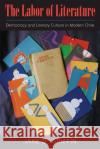
By producing literature in nontraditional forms -- books made of cardboard trash, posters in subway stations, miniature shopping bags, digital publications, and even children's toys -- Chileans have made and circulated literary objects in defiance of state censorship and independent of capitalist definitions of value. In The Labor of Literature Jane D. Griffin studies amateur and noncommercial forms of literary production in Chile that originated in response to authoritarian state politics and have gained momentum throughout the postdictatorship period. She argues that such forms advance a...
By producing literature in nontraditional forms -- books made of cardboard trash, posters in subway stations, miniature shopping bags, digital publ...
By producing literature in nontraditional forms -- books made of cardboard trash, posters in subway stations, miniature shopping bags, digital publications, and even children's toys -- Chileans have made and circulated literary objects in defiance of state censorship and independent of capitalist definitions of value. In The Labor of Literature Jane D. Griffin studies amateur and noncommercial forms of literary production in Chile that originated in response to authoritarian state politics and have gained momentum throughout the postdictatorship period. She argues that such forms advance a...
By producing literature in nontraditional forms -- books made of cardboard trash, posters in subway stations, miniature shopping bags, digital publ...
Many scholars have written about the white readers and patrons of the Harlem Renaissance, but during the period many black writers, publishers, and editors worked to foster a cadre of African American readers, or in the poet Sterling Brown's words, a "reading folk." Black newspapers featured columns that reviewed the latest African American fiction. Magazines held writing contests to urge black readers to participate in the literary culture. Through newspapers, journals, and anthologies, writers such as James Weldon Johnson, Jessie Fauset, and Gwendolyn Bennett spoke directly to their...
Many scholars have written about the white readers and patrons of the Harlem Renaissance, but during the period many black writers, publishers, and...
Franklin Publications, or Franklin Book Programs, was started in 1953 as a form of cultural diplomacy. Until it folded in the 1970s, Franklin translated, printed, and distributed American books around the world, with offices in Egypt, Indonesia, Iran, Nigeria, Afghanistan, and Pakistan. Although it was a private firm, Franklin received funding from the United States Information Agency. This was an ambitious and idealistic postwar effort that ultimately became the victim of shifting politics.
In Taking Books to the World, Amanda Laugesen tells the story of this purposeful enterprise,...
Franklin Publications, or Franklin Book Programs, was started in 1953 as a form of cultural diplomacy. Until it folded in the 1970s, Franklin trans...
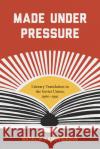
During the Cold War, determined translators and publishers based in the Soviet Union worked together to increase the number of foreign literary texts available in Russian, despite government restrictions. Based on extensive interviews with literary translators, Made Under Pressure offers an insider's look at Soviet censorship and the role translators played in promoting foreign authors.
During the Cold War, determined translators and publishers based in the Soviet Union worked together to increase the number of foreign literary texts ...