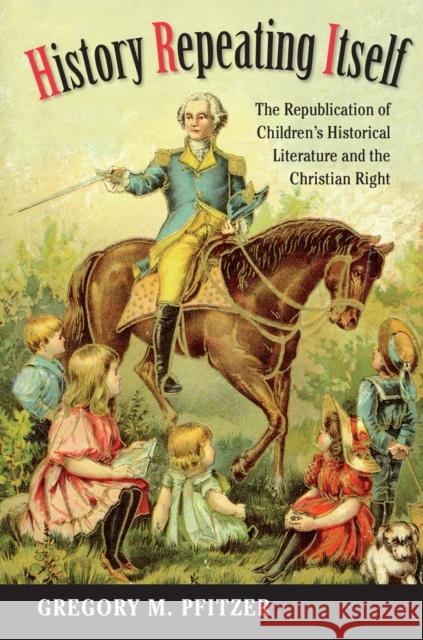
Prior to the mid-nineteenth century, most Americans "heard" rather than "read" national history. They absorbed lessons from the past more readily by attending Patriors' Day orations and anniversary commemorations than by reading expensive, multivolume works of patridian historians. By the 1840s, however, innovations in publishing led to the marketing of inexpensive, mass-produced "popular" histories that had a profound influence on historical literacy and learning in the United States. In this book, Gregory M. Pfitzer charts the rise and fall of this genre, demonstrating how and why it was...
Prior to the mid-nineteenth century, most Americans "heard" rather than "read" national history. They absorbed lessons from the past more readily by a...
Recently publishers on the Christian Right have been reprinting nineteenth-century children's history books and marketing them to parents as anchor texts for homeschool instruction. Why, Gregory M. Pfitzer asks, would books written more than 150 years ago be presumed suitable for educating twenty-first-century children? The answer, he proposes, is that promoters of these recycled works believe that history as a discipline took a wrong turn in the early twentieth century, when progressive educators introduced social studies methodologies into public school history classrooms, foisting upon...
Recently publishers on the Christian Right have been reprinting nineteenth-century children's history books and marketing them to parents as anchor te...