Explores literature's social mission at the turn of the century as defined by William Dean Howells and practiced by him and others. In a series of influential essays that appeared in "Harper s," W. D. Howells argued for literature as a vehicle for social change. Literature could and should, Howells suggested, mediate across divisions of class and region, fostering cross-cultural sympathies that would lead to comprehensive social and ethical reform. Paul R. Petrie explores the legacy of Howells s beliefs as they manifest themselves in Howell s fiction and in the works of three major...
Explores literature's social mission at the turn of the century as defined by William Dean Howells and practiced by him and others. In a series of...
Revealing episodes in the life of the elusive writer, as told by acquaintances. This book collects reminiscences by contemporaries, friends, and associates of Stephen Crane that illuminate the life of this often misunderstood and misrepresented writer. Although Crane is widely regarded as a major American author, conclusions about his life, work, and thought remain obscure due to the difficulties in separating fact from fiction. His first biographer recorded mostly vague impressions and, to mythologize his subject, invented a multitude of the episodes and letters used in his account of...
Revealing episodes in the life of the elusive writer, as told by acquaintances. This book collects reminiscences by contemporaries, friends, and assoc...
An insightful look at representations of women s bodies and female authority.
This work explores Edith Wharton's career-long concern with a 19th-century visual culture that limited female artistic agency and expression. Wharton repeatedly invoked the visual arts--especially painting—as a medium for revealing the ways that women's bodies have been represented (as passive, sexualized, infantalized, sickly, dead). Well-versed in the Italian masters, Wharton made special use of the art of the Pre-Raphaelite Brotherhood, particularly its penchant for producing not portraits of...
An insightful look at representations of women s bodies and female authority.
This work explores Edith Wharton's career-long concern w...
In Edith Wharton s works, references to architecture, interior decoration, painting, sculpture, and fashion abound. As these essays demonstrate, art and objects are for Wharton evidence of cultural belief and reflect the values, assumptions, and customs of the burgeoning consumer culture in which she lived and about which she wrote. Furthermore, her meditations about issues of architecture, design, and decoration serve as important commentaries on her vision of the literary arts.
In The Decoration of Houses she notes that furniture and bric-a-brac are often crowded into a...
In Edith Wharton s works, references to architecture, interior decoration, painting, sculpture, and fashion abound. As these essays demonstrate, ar...
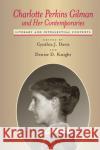
By placing Charlotte Perkins Gilman in the company of her contemporaries, this collection seeks to correct misunderstandings of the feminist writer and lecturer as an isolated radical. Gilman believed and preached that no life is ever led in isolation; indeed, the cornerstone of her philosophy was the idea that humanity is a relation. Gilman's highly public and combative stances as a critic and social activist brought her into contact and conflict with many of the major thinkers and writers of the period, including Mary Austin, Margaret Sanger, Ambrose Bierce, Grace Ellery Channing, Lester...
By placing Charlotte Perkins Gilman in the company of her contemporaries, this collection seeks to correct misunderstandings of the feminist writer an...
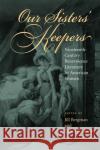
As the editors of "Our Sisters' Keepers argue, the vulnerable marginal positions occupied by many women in the 19th century fostered an empathetic sensitivity in them to the plight of the poor, and their ability to act and write in advocacy of the impoverished offered a form of empowerment not otherwise available to them. "A lively collection that offers a fresh and varied look at the theme of poverty and benevolence in the work of 19th-century American women writers, uncovering texts that have, for the most part, received little critical attention in this context. "Our Sisters' Keepers...
As the editors of "Our Sisters' Keepers argue, the vulnerable marginal positions occupied by many women in the 19th century fostered an empathetic sen...
Boeckmann links character, literary genre, and science, revealing how major literary works both contributed to and disrupted the construction of race in turn-of-the-century America. In A Question of Character, Cathy Boeckmann establishes a strong link between racial questions and the development of literary traditions at the end of the 19th century in America. This period saw the rise of "scientific racism," which claimed that the races were distinguished not solely by exterior appearance but also by a set of inherited character traits. As Boeckmann explains, this emphasis on...
Boeckmann links character, literary genre, and science, revealing how major literary works both contributed to and disrupted the construction of ra...