Conscience and Purpose: Fiction and Social Consciousness in Howells, Jewett, Chesnutt, and Cather » książka





Conscience and Purpose: Fiction and Social Consciousness in Howells, Jewett, Chesnutt, and Cather
ISBN-13: 9780817314842 / Angielski / Twarda / 2005 / 232 str.
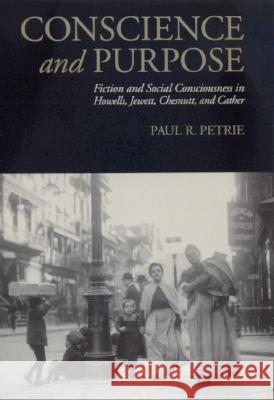
Explores literature's social mission at the turn of the century as defined by William Dean Howells and practiced by him and others.
In a series of influential essays that appeared in "Harper s," W. D. Howells argued for literature as a vehicle for social change. Literature could and should, Howells suggested, mediate across divisions of class and region, fostering cross-cultural sympathies that would lead to comprehensive social and ethical reform.
Paul R. Petrie explores the legacy of Howells s beliefs as they manifest themselves in Howell s fiction and in the works of three major American writers--Charles W. Chesnutt, Sarah Orne Jewett, and Willa Cather. Each author struggled to adapt Howells s social-ethical agenda for literature to his or her own aesthetic goals and to alternative conceptions of literary purpose. Jewett not only embraced Howells s sense of social mission but also extended it by documenting commonplace cultural realities in a language and vision that was spiritual and transcendent. Chesnutt sought to improve relations between Anglo readers and African Americans, but his work, such as "The Conjure Woman," also questions literature s ability to repair those divides.
Finally, Petrie shows how Cather, as she shifted from journalism to fiction, freed herself from Howells s influence. "Alexander s Bridge" (1912) and "O Pioneers " (1913) both make reference to social and material realities but only as groundwork for character portrayals that are mythic and heroic. The result of Petrie s exploration is a refreshing reassessment of Howells s legacy and its impact on American literature and social history at the turn of the century.
"




Czytaj nas na:
KrainaKsiazek.PL - Księgarnia Internetowa


