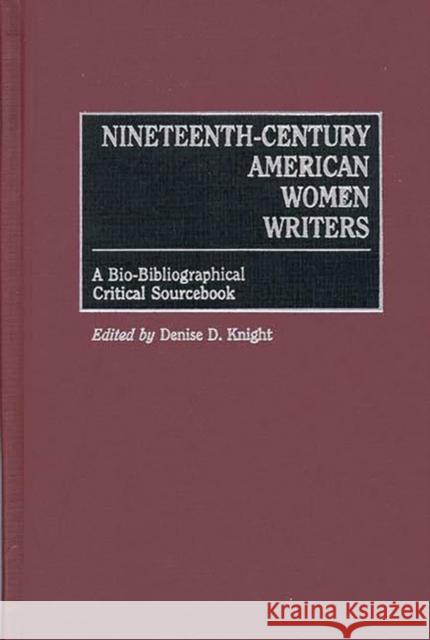
As the American literary canon has undergone revision and expansion in recent years, the influence of women writers of the nineteenth century has been reevaluated. The first book of its kind, this reference provides alphabetically arranged entries for more than 70 nineteenth-century American women writers, such as Louisa May Alcott, Margaret Fuller, Emma Lazarus, and Harriet Beecher Stowe. Each entry is written by an expert contributor and includes a biography, a discussion of the author's major works and themes, an overview of the critical studies examining the writer's works, and a...
As the American literary canon has undergone revision and expansion in recent years, the influence of women writers of the nineteenth century has b...
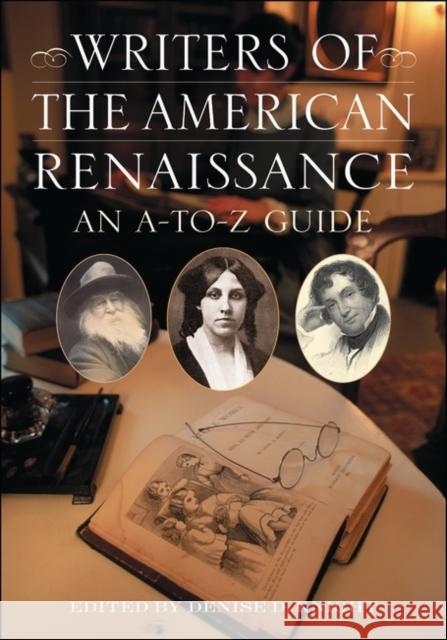
The American literary canon has undergone revision and expansion in recent years, and our notions of the 19th-century renaissance have been reevaluated. Mainstream anthologies have been revised to reflect the expanding literary canon, yet resources for readers have remained widely scattered. This book expands earlier definitions of the 19th-century American Renaissance as represented by canonical writers such as Emerson and Poe, covering writers who published popular fiction and dominated the literary marketplace of the day. Included is generous coverage of women writers and writers of...
The American literary canon has undergone revision and expansion in recent years, and our notions of the 19th-century renaissance have been reevalu...
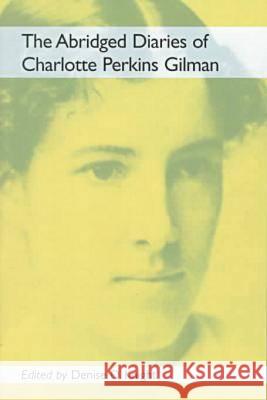
One of the leading intellectuals of first-wave feminism, Charlotte Perkins Gilman 1860-1935] was a prolific socialist writer and lecturer. Nearly forgotten in the years following her death, she has been the subject of renewed interest and appreciation in recent decades. Drawing from her previous two-volume edition of The Diaries of Charlotte Perkins Gilman, editor Denise D. Knight here makes available a streamlined version of Gilman's extensive personal diaries and journals, with representative selections from various periods of her life.
Included in this single volume are entries...
One of the leading intellectuals of first-wave feminism, Charlotte Perkins Gilman 1860-1935] was a prolific socialist writer and lecturer. Nearly ...
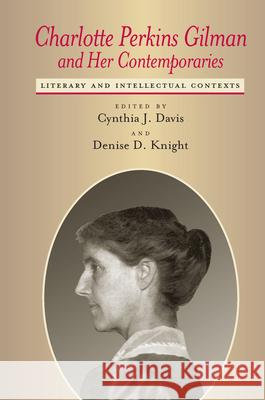
By placing Charlotte Perkins Gilman in the company of her contemporaries, this collection seeks to correct misunderstandings of the feminist writer and lecturer as an isolated radical. Gilman believed and preached that no life is ever led in isolation; indeed, the cornerstone of her philosophy was the idea that humanity is a relation. Gilman's highly public and combative stances as a critic and social activist brought her into contact and conflict with many of the major thinkers and writers of the period, including Mary Austin, Margaret Sanger, Ambrose Bierce, Grace Ellery Channing, Lester...
By placing Charlotte Perkins Gilman in the company of her contemporaries, this collection seeks to correct misunderstandings of the feminist writer an...
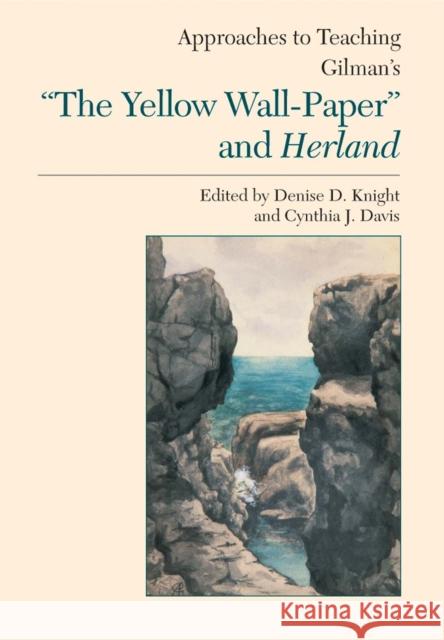
Although the rediscovery in 1973 of the long-forgotten story "The Yellow Wall-Paper" (1892), by Charlotte Perkins Gilman, met an enthusiastic reception, no one expected the enormous impact it would have, resulting in dozens of articles and books, numerous dissertations, dramatizations on stage and in film, and inclusion in college literature anthologies. Not surprisingly, then, the story, often alongside Gilman's second-most-famous work, Herland (1915), is widely taught in a variety of disciplines. This volume addresses the rewards and challenges of teaching these two works and offers a...
Although the rediscovery in 1973 of the long-forgotten story "The Yellow Wall-Paper" (1892), by Charlotte Perkins Gilman, met an enthusiastic receptio...