ABOUT THE BOOK This book outlines the development of the rifle and chronicles its use in the British Army over the past two hundred years. It takes the story of the British rifle from its earliest days in the American Revolutionary War, through its 'coming of age' in the Napoleonic War and, via the technological changes of the Victorian era, through to the present 'individual weapon', the SA80, used by British forces on service around the world. ABOUT THE AUTHOR Peter Duckers is Curator of the Shropshire Regimental Museum and has written many military books for Shire. Other...
ABOUT THE BOOK This book outlines the development of the rifle and chronicles its use in the British Army over the past two hundred years. It ta...
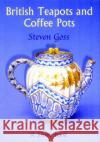
ABOUT THE BOOK From the elegant to the quirky, teapots and coffee pots come in a range of styles and designs and are among the most familiar household items. Both decorative and easily displayed, they are very collectable and can be relatively inexpensive. In this book, Steven Goss charts their development over a period of three hundred years, providing information on the materials used in their manufacture, influential factories and designers, and a guide to dating the many different styles. * In the eighteenth century a pound of tea could cost more than a week's wages for a...
ABOUT THE BOOK From the elegant to the quirky, teapots and coffee pots come in a range of styles and designs and are among the most familiar hou...
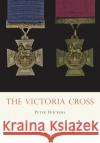
The Victoria Cross, established in 1856 during the Crimean War, has remained to this day the highest British award 'for valour' and is perhaps the most prestigious gallantry medal in the world. Though the VC confers no special title and the medal itself is plain and simple in design, it is nevertheless the hardest-won and most coveted of gallantry awards. In every theatre of war where British and Commonwealth soldiers have served over the past one hundred and fifty years, VCs have been won by men aged from sixteen to sixty-one, soldiers, sailors, airmen and civilians. Since its inception...
The Victoria Cross, established in 1856 during the Crimean War, has remained to this day the highest British award 'for valour' and is perhaps the ...
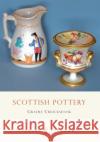
ABOUT THE BOOK Although Scottish pottery may be traced back over many centuries, it was not until the mid eighteenth century that it became an important element in the national economy, with the levels of production dramatically increasing throughout the nineteenth century. The wares produced covered the entire range of ceramics. Considerable study of the Scottish pottery industry since the mid twentieth century has revealed the diversification of production and showed that exports and innovation were more significant than previously thought. Scottish pottery is now widely recognised as...
ABOUT THE BOOK Although Scottish pottery may be traced back over many centuries, it was not until the mid eighteenth century that it became an i...
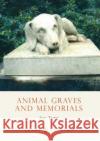
Memorials to animals are found all over the British Isles - to faithful companions, local heroes, renowned racehorses, military mascots, buried pets - and range from the famous terrier Greyfriars Bobby and the Duke of Wellington's horse Copenhagen to the modest stones commemorating Giro, the dog of the pre-war German ambassador, in central London and 'Goldie - God Bless our Bunny' in a pet cemetery. Here is a county by county gazetteer to memorials and graves of animals that have enriched homes, saved lives, won bets, inspired poets, transported munitions, endured danger, achieved...
Memorials to animals are found all over the British Isles - to faithful companions, local heroes, renowned racehorses, military mascots, buried pet...
ABOUT THE BOOK The Coade stone factory in London, which was active between 1769 and 1840, was owned and managed by Mrs Eleanor Coade, a remarkable Georgian businesswoman. Her firm produced all kinds of architectural ornaments and statues, which were used by the leading architects of the day for the embellishment of town and country houses and other important buildings. Coade stone was actually fired clay made using a special formula but it was marketed as 'artificial stone' since at that time stone was the preferred material for architectural decoration. This book charts the history of...
ABOUT THE BOOK The Coade stone factory in London, which was active between 1769 and 1840, was owned and managed by Mrs Eleanor Coade, a remarkab...
Since prehistoric times salt has been an important commodity for mankind, essential for the preservation of such foods as meat, fish and dairy products, and a necessary ingredient for breadmaking. It is also widely used in various industrial processes such as tanning and in the chemical industry, as well as for treating icy roads. Salt can be obtained by evaporation from sea water or inland from brine springs, and following the discovery of rock salt deposits it has also been mined. This book explains the various processes by which salt is obtained and traces the history of the industry...
Since prehistoric times salt has been an important commodity for mankind, essential for the preservation of such foods as meat, fish and dairy prod...
Wattle and daub is possibly one of the oldest building methods in the world. Ever since man first erected a hut in which to shelter, sticks (wattles) and clay or earth (daub) have been used to fill in the gaps in the wooden framework, to keep out the cold, wind and rain, or the heat during summer. Wattle and daub can still be seen today as infill panels between the timbers of thousands of ancient timber-framed buildings throughout Great Britain. Its longevity is remarkable, as it may last for more than five hundred years in many situations. The author sets out to explain some of the...
Wattle and daub is possibly one of the oldest building methods in the world. Ever since man first erected a hut in which to shelter, sticks (wattle...
Watermills were once commonplace but, because of their domestic scale and their often picturesque, waterside locations, many have now lost their waterwheels and machinery and the buildings have been converted to other uses. Their place in the townscapes and countryside of Britain is a significant one, however, as each mill required its own water supply, which usually had a noticeable effect on its immediate surroundings. Water power has been in use for over two thousand years, initially for grinding grain and pumping water, and later for driving processing machinery for a wide variety of...
Watermills were once commonplace but, because of their domestic scale and their often picturesque, waterside locations, many have now lost their wa...
Pub mugs form an interesting aspect of Britain's history. They were not just drinking vessels, but also measures, and as such the subject of much regulation, because drinkers wanted to be sure of receiving what they had paid for. The pint itself has a chequered history and is an anomaly alongside today's metric system. The question of a fair pint has never been resolved: should it include the 'head' or not? Drawing from a wide range of sources, the author has brought together all these strands to give the first ever overview of 350 years of beer mug history.
Pub mugs form an interesting aspect of Britain's history. They were not just drinking vessels, but also measures, and as such the subject of much regu...