George Stephenson is among the most famous engineers of all time. His rise from 'rags to riches' is a stirring story of its kind, but many of the works attributed to him should in fact be credited to young subordinates, not least his son, Robert. But much of the work of innovative engineers for his period lay not in the work itself but in persuading people that such work was desirable and necessary. It was in this field that George Stephenson excelled, providing openings in which his young proteges could change the world. They did not let him down, and we should give him full credit for...
George Stephenson is among the most famous engineers of all time. His rise from 'rags to riches' is a stirring story of its kind, but many of the w...
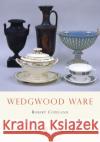
ABOUT THE BOOK Josiah Wedgwood I was born into a family of potters; his pioneering spirit built up the most important English pottery business of the eighteenth century so that the name Wedgwood became a generic word for fine earthenware. He is justly famous for perfecting the Black Basalt and Jasper stoneware bodies and for producing many designs based on the antique artefacts excavated at Pompeii and Herculaneum. This book also reviews and illustrates the firm's products through the nineteenth century, the designs of Lessore, Dresser, Crane and Barnard, the resurgence after 1904 when...
ABOUT THE BOOK Josiah Wedgwood I was born into a family of potters; his pioneering spirit built up the most important English pottery business o...
Elgar was one of Britain's greatest composers, but it is not always realised how great a struggle he had to achieve the fame and recognition that he eventually received. Through one tune, Land of Hope and Glory, for years a regular feature of the Last Night of the Proms, Elgar is irrevocably linked with old-fashioned concepts of 'Empire' and narrow nationalism, but there is far more to the man than that. He become the most famous British composer of his generation, receiving many of the highest honours that the nation could bestow upon him. His first great success was in 1899 with the...
Elgar was one of Britain's greatest composers, but it is not always realised how great a struggle he had to achieve the fame and recognition that h...
ABOUT THE BOOK In this book Jeffery W. Whitelaw defines what a folly is and shows that these architectural curiosities are to be found all over England. Many follies were built in the eighteenth century when great landowners, after their Grand Tour of Europe, returned to their estates with visions of putting up romantic ruins to satisfy a yearning for the past. At the same time many of these great estates were being landscaped in the contemporary fashion and the landscape architects were able to crown their grand designs with some sort of eyecatcher for the mansion - a folly, in fact -...
ABOUT THE BOOK In this book Jeffery W. Whitelaw defines what a folly is and shows that these architectural curiosities are to be found all over ...
Delightful, eccentric, capricious, bizarre - the English Rococo garden, an intriguing branch of eighteenth-century horticulture, was all these and more. This book relates the components of the Rococo garden to movements in art and architecture that had developed in Britain and in Europe, and shows its particular appeal to amateur designers and owners. It was an expression of a period in time, following Baroque and neo-Palladian and anticipating Romanticism in its sense of freedom. Most of the enchanting scenes depicted in Thomas Robins' watercolours have disappeared, but there are many garden...
Delightful, eccentric, capricious, bizarre - the English Rococo garden, an intriguing branch of eighteenth-century horticulture, was all these and mor...
War memorials are a feature of Britain's landscape, often taken for granted, and part of the fabric of its history as a nation. The Imperial War Museum's National Inventory has sixty thousand war memorials spanning two millennia. They include works of art and the artless, the sacred and the secular, vernacular and abstract forms, all redolent with symbolism ancient and modern. The examples shown here are an eclectic mix with, perhaps, a few surprises. They are intended as a tribute to the victims of war and as tangible reminders of significant events, deserving remembrance and...
War memorials are a feature of Britain's landscape, often taken for granted, and part of the fabric of its history as a nation. The Imperial War Mu...
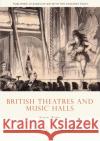
After decades of neglect, British theatres are now recognized as significant records of the society that produced them and as valuable cultural resources. This book outlines the history of theatres and music halls from the late sixteenth century to the present, nothing the changing fashions in entertainment and evolving offical attitudes to safety that have influenced the architectural character of the buildings. Particular attention is given to the thirty-five years before the First World War, when music hall and variety entertainment developed rapidly and gave rise to a massive surge in...
After decades of neglect, British theatres are now recognized as significant records of the society that produced them and as valuable cultural resour...
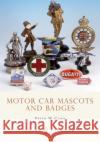
A motor car mascot (or 'hood ornament' in North America) is a decoration for the car and a talisman for the owner, and the quality of artisanship involved in the numerous designs and models has made them eagerly sought-after by collectors. This book surveys the huge variety of mascots and badges available in Europe and North America, introduces the designers, outlines the manufactorers and discusses forgeries and reproductions, as well as the problem of restoration.
A motor car mascot (or 'hood ornament' in North America) is a decoration for the car and a talisman for the owner, and the quality of artisanship invo...
In a bygone age when few people travelled far from their homes and almost any journey was an adventure the drovers regularly made the long and perilous trip from the Scottish highlands and islands or from the Welsh mountains to the south-east of England. They brought vast herds of cattle from the hill farms of the north and west to the markets of London and other towns. Sheep, pigs, geese and turkeys were also driven to the towns. In this book Shirley Toulson tells of these hardworking and resourceful men and of the dangers and hardships they faced. She describes the animals they drove and...
In a bygone age when few people travelled far from their homes and almost any journey was an adventure the drovers regularly made the long and peri...
The original purpose of canals was to link regions of industry to major rivers and ports at a time when poor quality roads and packhorses was the only method of transport. Built a half a century before the arrival of the railways, the canals provided a watery artery for trade and commerce that made possible the Industrial Revolution. They remain as a constant reminder of that turning point of Britain's history when an agricultural way of life that had existed for centuries gave way to an industrial economy. This book looks at the wonderful variety of structures that made the canals work in...
The original purpose of canals was to link regions of industry to major rivers and ports at a time when poor quality roads and packhorses was the o...