Of the millions of enamel advertising signs produced between 1850 and 1950, only a few thousand survived and the authors describe and illustrate over 100 samples from their own collection.
Of the millions of enamel advertising signs produced between 1850 and 1950, only a few thousand survived and the authors describe and illustrate over ...
Breeds of livestock on British farms are changing constantly. New breeds emerge, foreign breeds are imported, while some native breeds lose popularity and become endangered. More than half the native breeds in Britain are rare and potentially threatened with extinction, yet they are an integral part of our history and heritage. Many of them are distinctive animals, and some possess special characteristics that could be of value to the livestock industry. A return to more traditional values was seen towards the end of the twentieth century, and this will serve to enhance the value of native...
Breeds of livestock on British farms are changing constantly. New breeds emerge, foreign breeds are imported, while some native breeds lose popularity...
When launched in 1962, the Ford Cortina was an entirely new type of British car. Compared with its rivals - and with earlier Fords - it was light yet strong, inexpensive yet roomy, mechanically simple and cheap to maintain. It quickly established a totally new class of car, which even its rivals admitted should be called the 'Cortina class'. Not only did it sell well, but it was very profitable for Ford, which expanded considerably, and it became the most successful British car of the 1960s and 1970s. About the author Graham Robson has been a motoring writer for many years and has...
When launched in 1962, the Ford Cortina was an entirely new type of British car. Compared with its rivals - and with earlier Fords - it was light y...
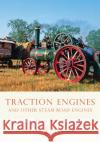
Traction engines developed in the mid 1860s and were usually dirty, noisy and somewhat crude to handle. They were driven initially by men who were perhaps not very skilled in handling them but these men were not just drivers - they developed the task into an art. This book brings together much information about these engines, from the earliest to the latest. Attention is also given to the various derivatives of the traction engine - the humble portable, the well-known steam roller, the little steam tractor, majestic road locomotives and ploughing engines and, not least, the King of the...
Traction engines developed in the mid 1860s and were usually dirty, noisy and somewhat crude to handle. They were driven initially by men who were ...
Erected to inform travellers how far they have come and how far they still have to go, milestones are a relic of a time when life moved more slowly. This book tells the story of milestones and the technology they reflect, as well as road measurement. It uses the great variety of designs and styles to argue the historical importance of conservation and to illustrate the compelling fascination of the subject.Mervyn Benford has worked in education all his professional life and has a consuming interest in history. Concerned at the rate at which evidence of the past disappears, often inadequately...
Erected to inform travellers how far they have come and how far they still have to go, milestones are a relic of a time when life moved more slowly. T...
Road signs have never attracted the interest that railway signs have, perhaps because they are so commonplace. There have been direction signs ever since man began to travel, and boundary signs, too, have a long history. Warning signs, however, did not become necessary until cycling and motoring became established at the end of the nineteenth century. Since then the British government has sought to regulate all aspects of traffic signage, and signs are often altered to keep abreast of developments, but nevertheless signs from bygone days can still be observed along Britain's highways...
Road signs have never attracted the interest that railway signs have, perhaps because they are so commonplace. There have been direction signs ever...
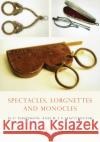
Spectacles have been used since the thirteenth century, at first by the few people who needed to read, such as churchmen and clerks. This book traces the development and use of eyeglasses from the fourteenth century onwards. It is illustrated with many colour photographs.
Spectacles have been used since the thirteenth century, at first by the few people who needed to read, such as churchmen and clerks. This book traces ...
This book provides a glimpse into the complex, multi-layered and evolving institution and offers an introduction to the uniforms, arms and services of the Indian Army at the height of the Raj.
This book provides a glimpse into the complex, multi-layered and evolving institution and offers an introduction to the uniforms, arms and services of...
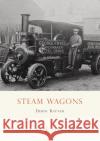
Steam wagons steam engines that carry goods on the roads developed considerably later than traction engines and steam rollers, which had started to appear in the mid 1860s. This book tells the story of steam wagons from the earliest designs through to the last models. It explains how they worked and what they did. An informative text is combined with a selection of photographs to illustrate steam wagons both at work in their heyday in the early twentieth century and in action more recently in the period in which they have become valued historical artefacts.
Steam wagons steam engines that carry goods on the roads developed considerably later than traction engines and steam rollers, which had started to ap...
Chimney sweeping is an ancient trade dating from the twelfth century. This social history, covering five centuries, draws on source material from original manuscripts and autobiographies by master sweeps. Reference is made to the origin, development, demise and subsequent reinstatement of the chimney, the sweeping of which became central to a controversy lasting one hundred years. The book deals with all aspects of the trade the lives sweeps led, the difficulties their apprentices encountered, the way they worked and the invention of sweeping 'machines'.
Chimney sweeping is an ancient trade dating from the twelfth century. This social history, covering five centuries, draws on source material from orig...