Josiah Wedgwood not only transformed the manufacture of pottery and the methods of its distribution but also revolutionised industry generally. He originated mass-production to increase efficiency and reduce waste, thus providing a product that more people could afford, and pioneered techniques of salesmanship, attracting the custom of royalty and maintaining the same high standard in all his ware. He treated his employees with benevolence, introducing unprecedented methods of management. Despite having a leg amputated at the prime of life, Wedgwood nonetheless continued to devote his...
Josiah Wedgwood not only transformed the manufacture of pottery and the methods of its distribution but also revolutionised industry generally. He ...
One of the most basic of agricultural operations, ploughing enriches and aerates the soil, producing a fertile seed bed ideal for the germination and growth of a new crop. The technology of ploughs has progressed a long way from the primitive prehistoric ard to the tractor-mounted power-controlled multi-furrow reversible plough of today but the process of ploughing remains essentially the same. This book examines the development of ploughs and their motive power (including oxen, horses, steam engines and tractors) from earliest times and shows how ploughing has evolved as man's...
One of the most basic of agricultural operations, ploughing enriches and aerates the soil, producing a fertile seed bed ideal for the germination a...
Flax has been cultivated for thousands of years to produce the fibre to make linen. This book gives an account of the processes and tools involved in the production of linen from flax. The traditional methods, when the work was done by hand, are described, as well as some of the improvements and machines that have been developed.
Flax has been cultivated for thousands of years to produce the fibre to make linen. This book gives an account of the processes and tools involved in ...
Whether they are still operational or long abandoned, quarries are often dismissed as eyesores. Despite this, they can be fascinating to visit, and provide an interesting link to a once powerful and necessary industry. Although the Romans worked quarries, it was not until the middle-ages that the industry became established on a large scale. It then achieved its height during the nineteenth century in response to industrialization and the associated demand for stone. The book deals with the extraction methods of various types of stone and the rise and slow decline of quarrying across the UK....
Whether they are still operational or long abandoned, quarries are often dismissed as eyesores. Despite this, they can be fascinating to visit, and pr...
This book describes the rapid growth of the charcoal industry up to the seventeenth and eighteenth centuries and how the emphasis of development changed to the production and refining of charcoal's by-products - acetic acid, tar and wood spirit - for the textile industry and the rapidly growing chemical industries.
This book describes the rapid growth of the charcoal industry up to the seventeenth and eighteenth centuries and how the emphasis of development chang...
This book examines those railways in Britain that served industry and had a track gauge smaller than the British 'standard gauge' of 4 feet 81/2 inches. Whether they were temporary contractor's lines or more permanent installations, these meandering, often poorly maintained railways have a special fascination. This book deals in turn with the locomotives, the rolling stock and the track, describing their development. It pays tribute to the inventors of an earlier age and to the more recent groups of enthusiasts who have been keeping the 'narrow' tradition alive. About the author Ian...
This book examines those railways in Britain that served industry and had a track gauge smaller than the British 'standard gauge' of 4 feet 81/2 in...
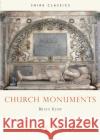
This book provides a basic introduction to the subject of English church monuments. An enormous number of monuments dating from the twelfth century to the twentieth century can be seen in cathedrals and churches throughout England. In addition to making visits to these places more interesting and rewarding, taken together they make up a valuable part of the country's cultural heritage. Not only are they often important as works of art but they also throw light on many aspects of English history and life. After dealing with matters such as conservation the book considers the historical...
This book provides a basic introduction to the subject of English church monuments. An enormous number of monuments dating from the twelfth century...
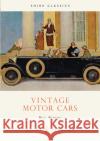
This book tells of those fascinating makes and models that were manufactured between 1919 and 1930, from the crude and inexpensive cyclecars and popular light cars like the Austin Seven and Bullnose Morris Cowley to the Rolls-Royce and Daimler luxury limousines and the exciting sports cars such as the Frazer Nash, 12/50 Alvis and Bentley and 30/98 Vauxhall. It is intended for all those fascinated with the vintage era, whether they were motorists in those days of inexpensive petrol and uncongested roads or younger enthusiasts who have become aware of the joys of driving these cars in more...
This book tells of those fascinating makes and models that were manufactured between 1919 and 1930, from the crude and inexpensive cyclecars and po...
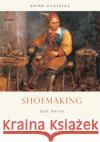
Before the 1920s everyone knew the local cobbler, a worthy representative of the ‘gentle craft’, who repaired shoes and made them look like new for a few pence. This book tells the story of shoemaking from the days of the isolated shoemaker, who made a shoe right through, to the groups of men who worked with apprentices in larger towns and served the customer direct. It shows the growth of mass production in the seventeenth century. Finally the book shows the late development of mechanisation in the 1850s and the rigidity it imposed.
Before the 1920s everyone knew the local cobbler, a worthy representative of the ‘gentle craft’, who repaired shoes and made them look like new fo...
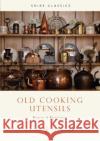
How we equip and use our kitchen has changed irrevocably over the centuries, the twentieth century has seen far-reaching technological and social changes making their mark; the kitchen fire, for many a century the focal point of the house, has given way to electricity and gas. David J. Eveleigh looks at the kitchen that centered on the open hearth or range and surveys the equipment used for storing and preserving, preparing, boiling, roasting and baking food. This is an intriguing topic, shedding light on how the routine of our lives can be influenced by new inventions and on how we are...
How we equip and use our kitchen has changed irrevocably over the centuries, the twentieth century has seen far-reaching technological and social chan...