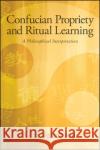
Geir Sigurosson offers a reconsideration of li, often translated as "ritual" or "ritual propriety," one of the most controversial concepts in Confucian philosophy. Strong associations with the Zhou period during which Confucius lived have put this concept at odds with modernity's emphasis on progressive rationality and liberation from the yoke of tradition. Sigurosson notes how the Confucian perspective on learning provides a more balanced understanding of li. He goes on to discuss the limitations of the critique of tradition and of rationality's claim to authority, referencing several...
Geir Sigurosson offers a reconsideration of li, often translated as "ritual" or "ritual propriety," one of the most controversial concepts in C...
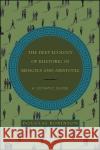
Mencius (385-303/302 BCE) and Aristotle (384-322 BCE) were contemporaries, but are often understood to represent opposite ends of the philosophical spectrum. Mencius is associated with the ecological, emergent, flowing, and connected; Artistotle with the rational, static, abstract, and binary. Douglas Robinson argues that in their conceptions of rhetoric, at least, Mencius and Aristotle are much more similar than different: both are powerfully socio-ecological, espousing and exploring collectivist thinking about the circulation of energy and social value through groups. The agent performing...
Mencius (385-303/302 BCE) and Aristotle (384-322 BCE) were contemporaries, but are often understood to represent opposite ends of the philosophical sp...
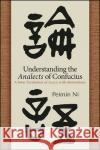
The Analects of Confucius is arguably the single most influential work of China's cultural heritage. In this new English translation, Peimin Ni accomplishes the rare feat of simultaneously providing a faithful translation of the text, offering his own reading based on gongfu (practice) perspective, and presenting major alternative readings to help the reader understand how diverse interpretations and controversies arise. In addition to the inclusion of the original Chinese text, Ni adds a comprehensive introduction, a discussion of key terms, annotations, and extensive...
The Analects of Confucius is arguably the single most influential work of China's cultural heritage. In this new English translation, Peimin Ni...
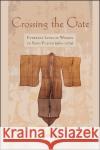
In Crossing the Gate, Man Xu examines the lives of women in the Chinese province of Fujian during the Song dynasty. Tracking women's life experience across class lines, outside as well as inside the domestic realm, Xu challenges the accepted wisdom about women and gender roles in medieval China. She contextualizes women in a much broader physical space and social network, investigating the gaps between ideals and reality and examining women's own agency in gender construction. She argues that women's autonomy and mobility, conventionally attributed to Ming-Qing women of late imperial...
In Crossing the Gate, Man Xu examines the lives of women in the Chinese province of Fujian during the Song dynasty. Tracking women's life exper...
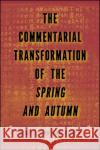
The Spring and Autumn is among the earliest surviving Chinese historical records, covering the period 722-479 BCE. It is a curious text: the canonical interpretation claims that it was composed by Confucius and embodies his moral judgments, but this view appears to be contradicted by the brief and dispassionate records themselves. Newell Ann Van Auken addresses this puzzling discrepancy through an examination of early interpretations of the Spring and Autumn, and uncovers a crucial missing link in two sets of commentarial remarks embedded in the Zuǒ Tradition. These...
The Spring and Autumn is among the earliest surviving Chinese historical records, covering the period 722-479 BCE. It is a curious text: the ca...
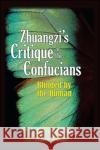
The Daoist Zhuangzi has often been read as a mystical philosopher. But there is another tradition, beginning with the Han dynasty historian Sima Qian, which sees him as a critic of the Confucians. Kim-chong Chong analyzes the Inner Chapters of the Zhuangzi, demonstrating how Zhuangzi criticized the pre-Qin Confucians through metaphorical inversion and parody. This is indicated by the subtitle, "Blinded by the Human," which is an inversion of the Confucian philosopher Xunzi's remark that Zhuangzi was "blinded by heaven and did not know the human." Chong compares Zhuangzi's Daoist...
The Daoist Zhuangzi has often been read as a mystical philosopher. But there is another tradition, beginning with the Han dynasty historian Sima Qian,...
This book presents a comprehensive analysis of the accounts of change of rule in Chinese texts from 600 to 100 BC, including the core philosophical works of the Chinese tradition attributed to Confucius, Mozi, Mencius, Xunzi, Hanfeizi, and Zhuangzi. Drawing from the early structuralism of Claude Levi-Strauss, Sarah Allan demonstrates that similar motifs repeat in every period, and argues that they serve, like myth, to mediate the inherent social conflict between kinship relations and that of the larger community. This conflict is embodied in the idea of a dynastic cycle, founded by a virtuous...
This book presents a comprehensive analysis of the accounts of change of rule in Chinese texts from 600 to 100 BC, including the core philosophical wo...