Majken, a female vampyric person of indeterminate age, comes to Trenton seeking a new life. Appearing as a young woman, she chooses a college to live and a friendly young athlete to help her meet and select the people on whom she depends for fresh blood. Her boyfriend Thomas Kline does not know who or what she really is and falls in love with her student alias. But an obsessed blood donor, a killer vampyr in the city reigning terror, and an angry college professor trying to uncover her past makes it impossible for her to keep her secret and places her and Thomas in the crossfire where she...
Majken, a female vampyric person of indeterminate age, comes to Trenton seeking a new life. Appearing as a young woman, she chooses a college to live ...
Thomas, exposed once to Majken's blood during her fight with John to save his life, is becoming vampyric. Soon the symptoms are so bad he is unable to deny he is changing. As his naive but brilliant sister Kimberly unearths what happened to him in Trenton, Jeanine, a young vampyric girl across the country, flees with the seven-year-old daughter of a blood cult leader to save her life; Nolan wishes to sacrifice his own daughter. Yet dangers abide in the darkness where Thomas is unaware. Once Thomas is entrapped with Jeanine and Alecia, Majken must pursue him into darkness itself to save him...
Thomas, exposed once to Majken's blood during her fight with John to save his life, is becoming vampyric. Soon the symptoms are so bad he is unable to...
In this book, Douglas Robinson introduces a new distinction between 'constative' and 'performative' linguistics, arguing that Austin's distinction can be used to understand linguistic methodologies. Constative linguistics, Robinson suggests, includes methodologies aimed at 'freezing' language as an abstract sign system, while performative linguistics explores how language is used or 'performed' in those speech situations. Robinson then tests his hypothesis on the act of translation. Drawing on a range of language scholars and theorists, Performative Linguistics consolidates the many disparate...
In this book, Douglas Robinson introduces a new distinction between 'constative' and 'performative' linguistics, arguing that Austin's distinction can...
Majken, a female vampyric person of indeterminate age, comes to Trenton seeking a new life. Appearing as a young woman, she chooses a college to live and a friendly young athlete to help her meet and select the people on whom she depends for fresh blood. Her boyfriend Thomas Kline does not know who or what she really is and falls in love with her student alias. But an obsessed blood donor, a killer vampyr in the city reigning terror, and an angry college professor trying to uncover her past makes it impossible for her to keep her secret and places her and Thomas in the crossfire where she...
Majken, a female vampyric person of indeterminate age, comes to Trenton seeking a new life. Appearing as a young woman, she chooses a college to live ...
Thomas, exposed once to Majken's blood during her fight with John to save his life, is becoming vampyric. Soon the symptoms are so bad he is unable to deny he is changing. As his naive but brilliant sister Kimberly unearths what happened to him in Trenton, Jeanine, a young vampyric girl across the country, flees with the seven-year-old daughter of a blood cult leader to save her life; Nolan wishes to sacrifice his own daughter. Yet dangers abide in the darkness where Thomas is unaware. Once Thomas is entrapped with Jeanine and Alecia, Majken must pursue him into darkness itself to save him...
Thomas, exposed once to Majken's blood during her fight with John to save his life, is becoming vampyric. Soon the symptoms are so bad he is unable to...
This book offers an introduction for Translation Studies (TS) scholars to Critical Translation Studies (CTS), a cultural-studies approach to the study of translation spearheaded by Sakai Naoki and Lydia H. Liu, with an implicit focus on translation as a social practice shaped by power relations in society. The central claim in CTS is that translators help condition what TS scholars take to be the primal scene of translation: two languages, two language communities, with the translator as mediator. According to Sakai, intralingual translation is primal: we are all foreigners to each other,...
This book offers an introduction for Translation Studies (TS) scholars to Critical Translation Studies (CTS), a cultural-studies approach to the st...
Mencius (385-303/302 BCE) and Aristotle (384-322 BCE) were contemporaries, but are often understood to represent opposite ends of the philosophical spectrum. Mencius is associated with the ecological, emergent, flowing, and connected; Artistotle with the rational, static, abstract, and binary. Douglas Robinson argues that in their conceptions of rhetoric, at least, Mencius and Aristotle are much more similar than different: both are powerfully socio-ecological, espousing and exploring collectivist thinking about the circulation of energy and social value through groups. The agent performing...
Mencius (385-303/302 BCE) and Aristotle (384-322 BCE) were contemporaries, but are often understood to represent opposite ends of the philosophical sp...
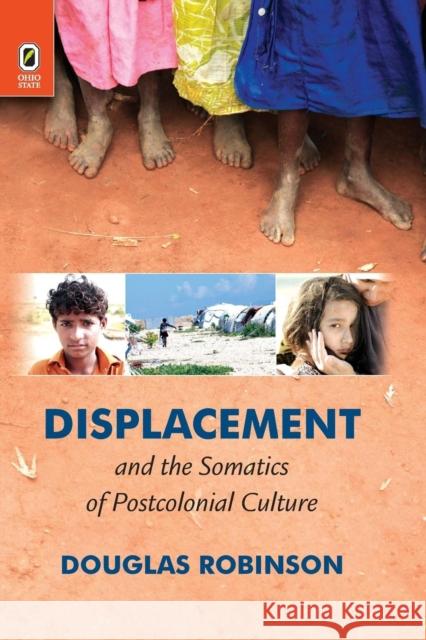
Displacement and the Somatics of Postcolonial Culture is Douglas Robinson's study of postcolonial affect--specifically, of the breakdown of the normative (regulatory) circulation of affect in the refugee experience and the colonial encounter, the restructuring of that regulatory circulation in colonization, and the persistence of that restructuring in decolonization and intergenerational trauma. Robinson defines "somatics" as a cultural construction of "reality" and "identity" through the regulatory circulation of evaluative affect.This book is divided into three essays covering the...
Displacement and the Somatics of Postcolonial Culture is Douglas Robinson's study of postcolonial affect--specifically, of the breakdown of the...
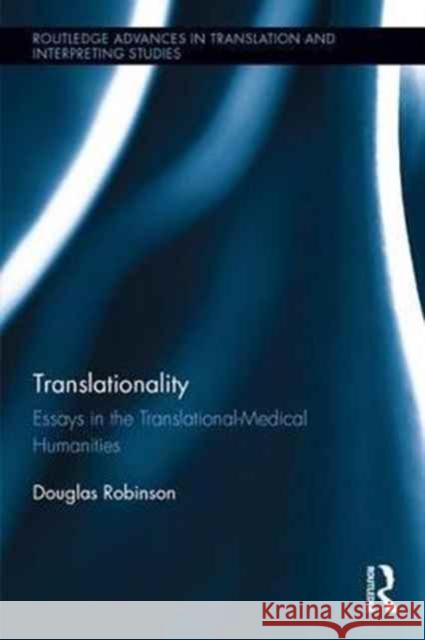
This book defines "translationality" by weaving a number of sub- and interdisciplinary interests through the medical humanities: medicine in literature, the translational history of medical literature, a medical (neuroscience) approach to literary translation and translational hermeneutics, and a humanities (phenomenological/performative) approach to translational medicine. It consists of three long essays: the first on the traditional medicine-in-literature side of the medical humanities, with a close look at a recent novel built around the Capgras delusion and other neurological...
This book defines "translationality" by weaving a number of sub- and interdisciplinary interests through the medical humanities: medicine in litera...