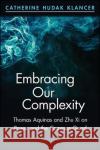
This book discusses what a religiously grounded authority might look like from the viewpoints of the European Catholic Thomas Aquinas (1225-1274) and the Chinese Neo-Confucian Zhu Xi (1130-1200). The consideration of these two figures, immensely influential in their respective traditions, reflects the conviction that any responsible discourse on authority must consider different cultural perspectives. Catherine Hudak Klancer notes that both Zhu Xi and Aquinas conceive wisdom as including, yet surpassing, human reason. Both express an explicit faith in the moral order of the cosmos and the...
This book discusses what a religiously grounded authority might look like from the viewpoints of the European Catholic Thomas Aquinas (1225-1274) and ...
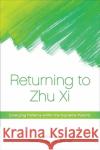
Zhu Xi (1130-1200), the chief architect of neo-Confucian thought, affected a momentous transformation in Chinese philosophy. His ideas came to dominate Chinese intellectual life, including the educational and civil service systems, for centuries. Despite his influence, Zhu Xi is known as the "great synthesizer" and rarely appreciated as a thinker in his own right. This volume presents Zhu Xi as a major world philosopher, one who brings metaphysics and cosmology into attunement with ethical and social practice. Contributors from the English- and Chinese-speaking worlds explore Zhu Xi's unique...
Zhu Xi (1130-1200), the chief architect of neo-Confucian thought, affected a momentous transformation in Chinese philosophy. His ideas came to dominat...
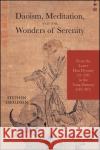
Stephen Eskildsen offers an overview of Daoist religious texts from the Latter Han (25-220) through Tang (618-907) periods, exploring passive meditation methods and their anticipated effects. These methods entailed observing the processes that unfold spontaneously within mind and body, rather than actively manipulating them by means common in medieval Daoist religion such as visualization, invocations, and the swallowing of breath or saliva. Through the resulting deep serenity, it was claimed, one could attain profound insights, experience visions, feel surges of vital force, overcome thirst...
Stephen Eskildsen offers an overview of Daoist religious texts from the Latter Han (25-220) through Tang (618-907) periods, exploring passive meditati...
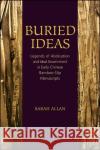
The discovery of previously unknown philosophical texts from the Axial Age is revolutionizing our understanding of Chinese intellectual history. Buried Ideas presents and discusses four texts found on brush-written slips of bamboo and their seemingly unprecedented political philosophy. Written in the regional script of Chu during the Warring States period (475-221 BCE), all of the works discuss Yao's abdication to Shun and are related to but differ significantly from the core texts of the classical period, such as the Mencius and Zhuangzi. Notably, these works evince an...
The discovery of previously unknown philosophical texts from the Axial Age is revolutionizing our understanding of Chinese intellectual history. Bu...
What were the intentions of early China's historians? Modern readers must contend with the tension between the narrators' moralizing commentary and their description of events. Although these historians had notions of evidence, it is not clear to what extent they valued what contemporary scholars would deem "hard" facts. Offering an innovative approach to premodern historical documents, Garret P. S. Olberding argues that the speeches of court advisors reveal subtle strategies of information management in the early monarchic context. Olberding focuses on those addresses concerning military...
What were the intentions of early China's historians? Modern readers must contend with the tension between the narrators' moralizing commentary and th...
This revealing book challenges longstanding notions of the Qin dynasty, China's first imperial dynasty (221-206 BCE). The received history of the Qin dynasty and its founder is one of cruel tyranny with rule through fear and coercion. Using a wealth of new information afforded by the expansion of Chinese archaeology in recent decades as well as traditional historical sources, Charles Sanft concentrates on cooperative aspects of early imperial government, especially on the communication necessary for government. Sanft suggests that the Qin authorities sought cooperation from the populace with...
This revealing book challenges longstanding notions of the Qin dynasty, China's first imperial dynasty (221-206 BCE). The received history of the Qin ...
Zhu Xi, the twelfth-century architect of the neo-Confucian canon, declared Zhou Dunyi to be the first true sage since Mencius. This was controversial, as many of Zhu Xi's contemporaries were critical of Zhou Dunyi's Daoist leanings, and other figures had clearly been more significant to the Song dynasty Confucian resurgence. Why was Zhou Dunyi accorded such importance? Joseph A. Adler finds that the earlier thinker provided an underpinning for Zhu Xi's religious practice. Zhou Dunyi's theory of the interpenetration of activity and stillness allowed Zhu Xi to proclaim that his own theory of...
Zhu Xi, the twelfth-century architect of the neo-Confucian canon, declared Zhou Dunyi to be the first true sage since Mencius. This was controversial,...
Yong Huang presents a new way of doing comparative philosophy as he demonstrates the resources for contemporary ethics offered by the Cheng brothers, Cheng Hao (1032-1085) and Cheng Yi (1033-1107), canonical neo-Confucian philosophers. Huang departs from the standard method of Chinese/Western comparison, which tends to interest those already interested in Chinese philosophy. While Western-oriented scholars may be excited to learn about Chinese philosophers who have said things similar to what they or their favored philosophers have to say, they hardly find anything philosophically new from...
Yong Huang presents a new way of doing comparative philosophy as he demonstrates the resources for contemporary ethics offered by the Cheng brothers, ...
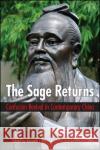
Until its rejection by reformers and revolutionaries in the twentieth century, Confucianism had been central to Chinese culture, identity, and thought for centuries. Confucianism was rejected by both Nationalists under Chiang Kai-shek and Mao Zedong's Communist Party, which characterized it as an ideology of reaction and repression. Yet the sage has returned: today, Chinese people from all walks of life and every level of authority are embracing Confucianism. As China turned away from the excesses of the Cultural Revolution and experienced the adoption and challenges of market practices,...
Until its rejection by reformers and revolutionaries in the twentieth century, Confucianism had been central to Chinese culture, identity, and thought...