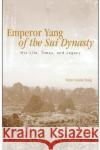
Looking at the life and legacy of Emperor Yang (569-618) of the brief Sui dynasty in a new light, this book presents a compelling case for his importance to Chinese history. Author Victor Cunrui Xiong utilizes traditional scholarship and secondary literature from China, Japan, and the West to go beyond the common perception of Emperor Yang as merely a profligate tyrant. Xiong accepts neither the traditional verdict against Emperor Yang nor the apologist effort to revise it, and instead offers a reassessment of Emperor Yang by exploring the larger political, economic, military, religious, and...
Looking at the life and legacy of Emperor Yang (569-618) of the brief Sui dynasty in a new light, this book presents a compelling case for his importa...
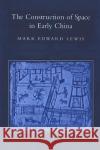
This book examines the formation of the Chinese empire through its reorganization and reinterpretation of its basic spatial units: the human body, the household, the city, the region, and the world. The central theme of the book is the way all these forms of ordered space were reshaped by the project of unification and how, at the same time, that unification was constrained and limited by the necessary survival of the units on which it was based. Consequently, as Mark Edward Lewis shows, each level of spatial organization could achieve order and meaning only within an encompassing, superior...
This book examines the formation of the Chinese empire through its reorganization and reinterpretation of its basic spatial units: the human body, the...
In this book, author Ge Ling Shang provides a systematic comparison of original texts by Zhuangzi (fourth century BCE) and Nietzsche (1846-1900), under the rubric of religiosity, to challenge those who have customarily relegated both thinkers to relativism, nihilism, escapism, pessimism, or anti-religion. Shang closely examines Zhuangzi's and Nietzsche's respective critiques of metaphysics, morals, language, knowledge, and humanity in general and proposes a conception of the philosophical outlooks of Zhuangzi and Nietzsche as complementary. In the creative and vital spirit of Nietzsche, as in...
In this book, author Ge Ling Shang provides a systematic comparison of original texts by Zhuangzi (fourth century BCE) and Nietzsche (1846-1900), unde...
Confucianism and Women argues that Confucian philosophy--often criticized as misogynistic and patriarchal--is not inherently sexist. Although historically bound up with oppressive practices, Confucianism contains much that can promote an ethic of gender parity. Attacks on Confucianism for gender oppression have marked China's modern period, beginning with the May Fourth Movement of 1919 and reaching prominence during the Cultural Revolution of the 1960s and 1970s. The West has also readily characterized Confucianism as a foundation of Chinese women's oppression. Author Li-Hsiang Lisa Rosenlee...
Confucianism and Women argues that Confucian philosophy--often criticized as misogynistic and patriarchal--is not inherently sexist. Although historic...
Approaching writing as a form of cultural practice and understanding text as an historical object, this book not only recovers elements of the ritual practice of Middle-Period weddings, but also reassesses the relationship between texts and the Middle-Period past. Its fourfold narrative of the writing of weddings and its spirited engagement with the texts--ritual manuals, engagement letters, nuptial songs, calendars and almanacs, and legal texts--offer a form and style for a cultural history that accommodates the particularities of the sources of the Chinese imperial past.
Approaching writing as a form of cultural practice and understanding text as an historical object, this book not only recovers elements of the ritual ...
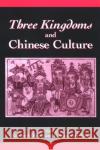
This is the first book-length treatment in English of Three Kingdoms (Sanguo yanyi), often regarded as China's first great classical novel. Set in the historical period of the disunion (220-280 AD), Three Kingdoms fuses history and popular tradition to create a sweeping epic of heroism and political ambition. The essays in this volume explore the multifarious connections between Three Kingdoms and Chinese culture from a variety of disciplines, including history, literature, philosophy, art history, theater, cultural studies, and communications, demonstrating the diversity of backgrounds...
This is the first book-length treatment in English of Three Kingdoms (Sanguo yanyi), often regarded as China's first great classical novel. Set in the...
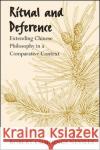
Ritual and Deference develops Robert Cummings Neville's thesis that contemporary philosophy has much to gain by shaping itself through important themes of the Chinese philosophical traditions, especially the themes of ritual and deference. Neville here offers a broad and detailed interpretation of the relevance of Confucianism and Daoism to contemporary issues. The discussion includes analyses of classical Confucian and Daoist texts, especially those of Xunzi and Laozi, and of the current scene of English-speaking philosophy advancing Chinese themes. The book also reflects on the...
Ritual and Deference develops Robert Cummings Neville's thesis that contemporary philosophy has much to gain by shaping itself through importan...
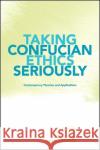
This thought-provoking work presents Confucianism as a living ethical tradition with contemporary relevance. While acknowledged as one of the world's most influential philosophies, Confucianism's significance is too often consigned to a historical or solely East Asian context. Discussing both the strengths and weaknesses of Confucian ethics, the volume's contributors reflect on what this tradition offers that we cannot readily learn from other systems of ethics. Developing Confucian ethical ideas within a contemporary context, this work discusses the nature of virtue, the distinction between...
This thought-provoking work presents Confucianism as a living ethical tradition with contemporary relevance. While acknowledged as one of the world's ...
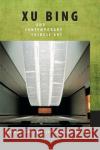
How Chinese is contemporary Chinese art? Treasured by collectors, critics, and art world cognoscenti, this art developed within an avant-garde that looked West to find a language to strike out against government control. Traditionally, Chinese artistic expression has been related to the structure and function of the Chinese language and the assumptions of Chinese natural cosmology. Is contemporary Chinese art rooted in these traditions or is it an example of cultural self-colonization? Contributors to this volume address this question, going beyond the more obvious political and social...
How Chinese is contemporary Chinese art? Treasured by collectors, critics, and art world cognoscenti, this art developed within an avant-garde that lo...
Thomas Michael's study of the early history of the Daodejing reveals that the work is grounded in a unique tradition of early Daoism, one unrelated to other early Chinese schools of thought and practice. The text is associated with a tradition of hermits committed to yangsheng, a particular practice of physical cultivation involving techniques of breath circulation in combination with specific bodily movements leading to a physical union with the Dao. Michael explores the ways in which the text systematically anchored these techniques to a Dao-centered worldview. Including a new...
Thomas Michael's study of the early history of the Daodejing reveals that the work is grounded in a unique tradition of early Daoism, one unrel...