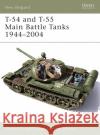
The T-54 and T-55 tanks are the most widely manufactured tanks of all time. They have become ubiquitous to wars around the globe since the 1950s, starting with Hungary in 1956, and including the the Arab-Israeli wars of 1967, 1973 and 1982, the Vietnam war of 1967-75, the Iran-Iraq War of 1980-88, the Afghanistan conflict, Operation Desert Storm, the Yugoslav Civil Wars, and the recent conflict in Iraq. This book will examine the roots of this prolific tank family, starting with the Soviet Army's first attempts to replace the legendary T-34 during World War II, and covering the T-43 and the...
The T-54 and T-55 tanks are the most widely manufactured tanks of all time. They have become ubiquitous to wars around the globe since the 1950s, star...
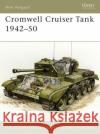
For most of World War II, British tank development remained faithful to the design philosophy inaugurated during World War I; but when the General Staff identified the need for a new heavy cruiser, the Cromwell Cruiser tank was designed. It soon proved itself the fastest and most successful tank deployed by the Allies.
For most of World War II, British tank development remained faithful to the design philosophy inaugurated during World War I; but when the General Sta...
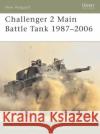
The Challenger 2 is the current Main Battle Tank of the British Army and represents the culmination of 80 years of tank design. In 1987, its design was presented to the Ministry of Defence in response to a requirement to replace the Chieftain MBT that had been partially superseded by the Challenger 1 MBT. Production began in 1993, and the tank finally entered service in 2002. The tank recently appeared in Iraq, where it proved indispensable during the battle of Basra. This book covers the evolution of the Challenger 2, from its origins and testing to its involvement in the Middle East and...
The Challenger 2 is the current Main Battle Tank of the British Army and represents the culmination of 80 years of tank design. In 1987, its design wa...
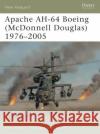
The Boeing (McDonnell Douglas, formerly Hughes) AH-64A Apache is the US Army's primary attack helicopter, and the most advanced helicopter gunship flying today. The most expensive rotary-winged aircraft ever built when it was introduced in the early 1980s, it has since proved its worth on battlefields all over the world, seeing action in the Gulf War, Afghanistan, Bosnia, Kosovo and the recent conflict in Iraq. This book examines the design, development and deployment of a quick-reacting, airborne weapons system that can fight close and deep to destroy, disrupt, or delay enemy forces.
The Boeing (McDonnell Douglas, formerly Hughes) AH-64A Apache is the US Army's primary attack helicopter, and the most advanced helicopter gunship fly...
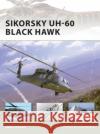
The successor to the Vietnam-veteran Bell UH-1 "Huey," the Sikorsky UH-60 first flew in 1974 and was christened the Black Hawk. It has become one of the most versatile and successful utility helicopters ever in service and has been used widely, from the invasion of Grenada to the conflict in Somalia and the ongoing Operation Iraqi Freedom.
An attack helicopter configured with missiles, rockets, machine guns and cannon the Black Hawk is also capable of undertaking a wide range of missions on the battlefield, including troop transport, command and control and aeromedical...
The successor to the Vietnam-veteran Bell UH-1 "Huey," the Sikorsky UH-60 first flew in 1974 and was christened the Black Hawk. It has become one o...
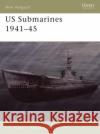
Naval warfare in the Pacific changed completely with the Japanese attack on Pearl Harbor in 1941. The strategic emphasis shifted from battleships to much more lethal, far-ranging weapons systems; one of these was the submarine. This book details the design and development, classes, weapons and equipment, tactics and operational history of the US submarine in World War II. Detailed tables, photographs, and superb color plates depict the force that had an effect far beyond its size - the submarine accounted for 55% of all Japanese shipping losses, despite suffering the highest percentage loss...
Naval warfare in the Pacific changed completely with the Japanese attack on Pearl Harbor in 1941. The strategic emphasis shifted from battleships to m...
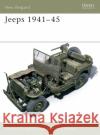
The jeep was the most famous military vehicle of World War II, and its name has become synonymous with a whole class of military and civilian all-terrain vehicles. The jeep originated in a prewar US Army requirement for a simple, inexpensive, and robust vehicle for basic utility chores. Its simple design proved to be adaptable to a host of military tasks including use as a scout vehicle, battlefield ambulance, communications vehicle, and staff car. This book, covering "the savior of World War II," focuses on the design and development of this versatile vehicle used on nearly every front of...
The jeep was the most famous military vehicle of World War II, and its name has become synonymous with a whole class of military and civilian all-terr...
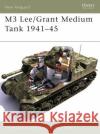
The highly successful 'stop-gap' M3 medium tank was designed in 1941, and as adequate turret casting facilities were not yet ready, the M3 used an unusual armament configuration patterned after a French tank. British lend-lease demands led to the design of a second turret type with the US version called the Lee and the British version the Grant. It could penetrate Panzer armor, and its explosive firepower was excellent for dealing with German anti-tank guns. This book covers the design, development, service and variants of a vehicle that was the backbone of many World War II forces.
The highly successful 'stop-gap' M3 medium tank was designed in 1941, and as adequate turret casting facilities were not yet ready, the M3 used an unu...
The southernmost region of the Republic of Vietnam (South Vietnam) encompassed the vast Mekong River Delta, and area covering 10,190 square miles. Three major rivers run through the Delta, the Song Hou Giang (aka Bassac) and the Song Mekong, which broke into three large rivers (Song My Tho, Ham Luong, and Go Chien). The Nhon Trach delineated the Delta's eastern edge. In all there were some 1,500 miles of natural navigable waterways and 2,500 miles of man-made canals and channels. The canal system was begun in 800 AD and its expansion continued up to World War II. The nation's capital,...
The southernmost region of the Republic of Vietnam (South Vietnam) encompassed the vast Mekong River Delta, and area covering 10,190 square miles. ...
The HMMWV, better known as the Humvee or Hummer, has set the world standard for army tactical vehicles since its introduction into the US Army in the 1980s. Designed to be the successor to the jeep of World War II with a greater load-bearing capacity, the Humvee has proven to be adaptable to a wide range of roles, including weapons carrier, missile launcher, command vehicle and other specialized types. This book traces the development and use of the Humvee and its variations, including the latest families of armored Humvees used in Iraq in 2003-05, and its adoption in a peacekeeping role the...
The HMMWV, better known as the Humvee or Hummer, has set the world standard for army tactical vehicles since its introduction into the US Army in the ...