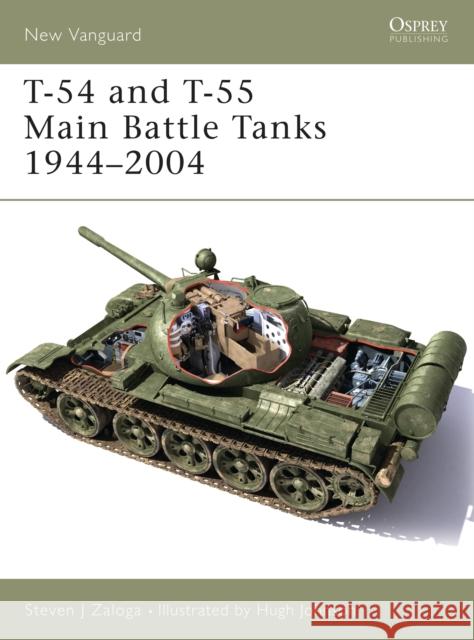
The T-54 and T-55 tanks are the most widely manufactured tanks of all time. They have become ubiquitous to wars around the globe since the 1950s, starting with Hungary in 1956, and including the the Arab-Israeli wars of 1967, 1973 and 1982, the Vietnam war of 1967-75, the Iran-Iraq War of 1980-88, the Afghanistan conflict, Operation Desert Storm, the Yugoslav Civil Wars, and the recent conflict in Iraq. This book will examine the roots of this prolific tank family, starting with the Soviet Army's first attempts to replace the legendary T-34 during World War II, and covering the T-43 and the...
The T-54 and T-55 tanks are the most widely manufactured tanks of all time. They have become ubiquitous to wars around the globe since the 1950s, star...
Following the Battle of the Bulge in the Ardennes, the Allies began steps for the final assault into Germany. The long-delayed US Army thrust over the Roer River, Operation Lumberjack, finally took place in February, placing the US Army along the Rhine. The Rhine represented the last major geographical barrier to the Allied advance into Germany. The plan was for Montgomery's 21st Army Group to leap the Rhine into the Ruhr in a carefully choreographed attack called Operation Plunder. In the event, fortune smiled on the US Army when the 9th Armored unexpectedly found that the Ludendorff...
Following the Battle of the Bulge in the Ardennes, the Allies began steps for the final assault into Germany. The long-delayed US Army thrust over ...
In this book Steven J Zaloga offers a fascinating comparison of the combat performance of the two most important tanks involved in the crucial fighting of 1944, the Sherman and the Panther. Examining the design and development of both tanks, Zaloga notes the obvious superiority that the Panther had over the Sherman and how the highly engineered German tank was eventually beaten back, not necessarily by the improvements made to the Sherman, but rather by the superior numbers of tanks that the Allies were able to put into the field.
Putting the reader into the heart of this battle...
In this book Steven J Zaloga offers a fascinating comparison of the combat performance of the two most important tanks involved in the crucial figh...
Operation Husky, the Anglo-American amphibious landings on Sicily in July 1943 were the proving ground for all subsequent Allied amphibious operations including Salerno, Anzio, and D-Day in Normandy. Husky's strategic objective was to knock Italy out of the war, a mission that ultimately proved successful. But it also demonstrated the growing ability of Britain and the United States to conduct extremely complex combined-arms attacks involving not only amphibious landings, but also airborne assaults. It was in many ways the precursor of all modern joint operations through the recent wars in...
Operation Husky, the Anglo-American amphibious landings on Sicily in July 1943 were the proving ground for all subsequent Allied amphibious operati...
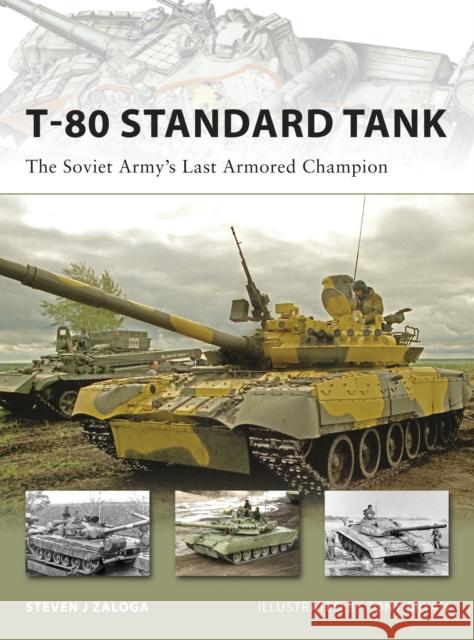
The Soviet T-80 Standard Tank was the last tank fielded before the Soviet collapse, and the most controversial. Like the US M1 Abrams tank, the T-80 used a turbine power plant rather than a conventional diesel. Although the design was blessed with some of the most sophisticated armament, fire controls, and multi-layer armor ever fielded on a Soviet tank, its power plant remained a source of considerable trouble through its career. It saw very little service in the Chechen War, though T-80 tanks were used in some of the regional conflicts in the former Soviet Union in the 1990s....
The Soviet T-80 Standard Tank was the last tank fielded before the Soviet collapse, and the most controversial. Like the US M1 Abrams tank, the T-8...
The tank battles in the Soviet Union during the summer of 1941 were the largest in World War II, exceeding even the more famous Prokhorovka encounter during the Kursk campaign. Indeed, they were the largest tank battles ever fought.
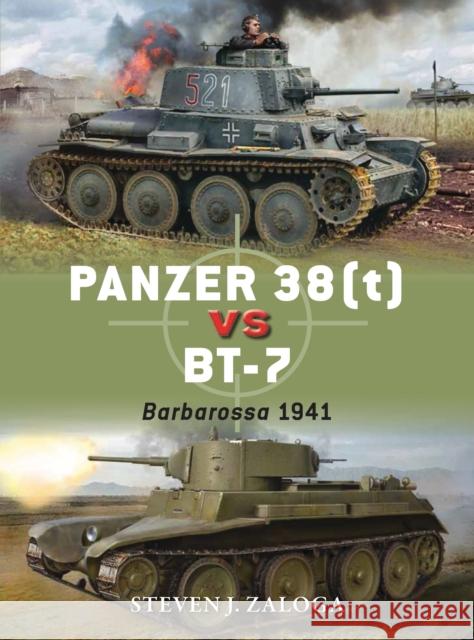
This book examines two evenly matched competitors in this conflict, the German Panzer 38(t) and the Soviet BT-7. Both were of similar size, armed with guns of comparable firepower, and had foreign roots--the Panzer 38(t) was a Czechoslovak design and the BT-7 was an evolution of the American Christie tank. With full-color artwork and archive and...
The tank battles in the Soviet Union during the summer of 1941 were the largest in World War II, exceeding even the more famous Prokhorovka encount...
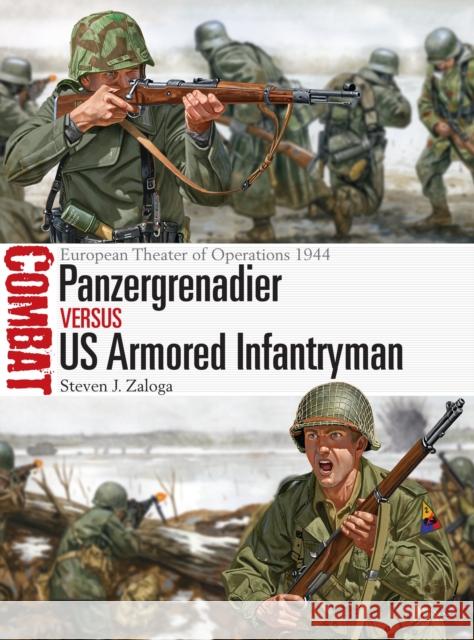
During World War II, the two preeminent mechanized infantry forces of the conflict, the German Panzergrenadier arm and the U.S. Army's armored infantrymen clashed in France and Belgium after the Normandy landings. These engagements went on to profoundly influence the use of mechanized infantry in the postwar world. Drawing upon a variety of sources, this book focuses on three key encounters between July and December of 1944 including during Operation Cobra and the Battle of the Bulge, and examines the origins, equipment, doctrine, and combat record of both forces.
With specially...
During World War II, the two preeminent mechanized infantry forces of the conflict, the German Panzergrenadier arm and the U.S. Army's armored infa...
The design quality of France's armored vehicles is somewhat forgotten in light of the myth of superiority surrounding the German Panzers' role in the Blitzkrieg against France, Belgium and the Netherlands.
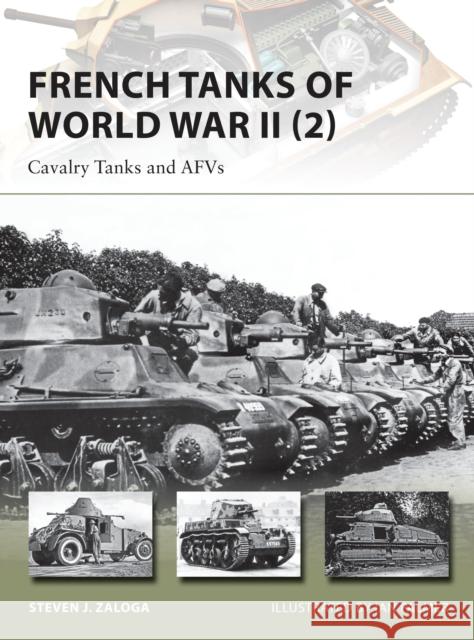
The second volume of two covering the French tanks of World War II, this title focuses primarily on the design, development, combat performance, and technical features of France's armored cavalry vehicles, including the AMR and AMC families of light reconnaissance tanks, and the famous Somua S.35 cavalry tank. Also examined are the wide array of armored cars and half-tracks...
The design quality of France's armored vehicles is somewhat forgotten in light of the myth of superiority surrounding the German Panzers' role in t...
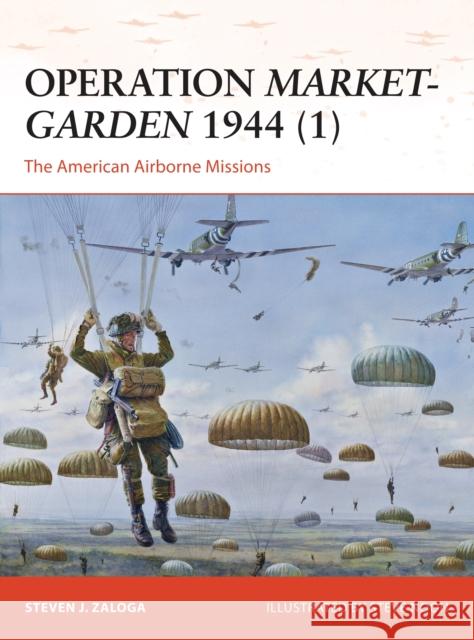
Immortalized by the movie A Bridge Too Far, the parachute landings of the 82nd and 101st Airborne Divisions were the first part of an Allied breakthrough attempt. In the late summer of 1944, the First Allied Airborne Army began to plan a complex operation to seize a Rhine River Bridge at Arnhem in the Netherlands. The airborne mission was code-named Operation Market, and the ground assault was designated Garden. The American portion of Operation Market was to employ the two divisions of Gen. Matthew Ridgway's US XVIII Airborne Corps to seize key terrain features that might otherwise delay...
Immortalized by the movie A Bridge Too Far, the parachute landings of the 82nd and 101st Airborne Divisions were the first part of an Allied breakt...
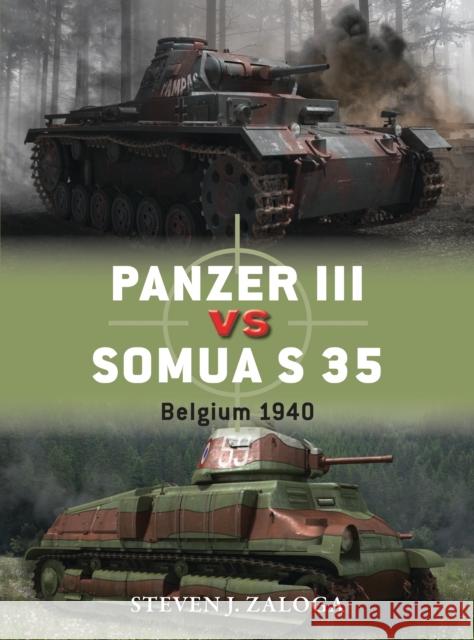
This fully illustrated study pits Germany's PzKpfw III tank against France's Somua S 35 in the vast armored battles that opened the campaign.
The armor clashes in May 1940 were the biggest the world had yet seen, as the German advances of that period came to epitomize Blitzkrieg. Nonetheless the Wehrmacht's Panzer III was well matched by the French Somua S35; the two representing very different design philosophies and yet ranking among the best designs in the world at the time.
This fully illustrated study pits Germany's PzKpfw III tank against France's Somua S 35 in the vast armored battles that opened the campaign.