Born in Ferrara, Lilio Gregorio Giraldi (1479-1552) received an excellent classical education at the world-famous humanist schools of his native city. On his various travels in search of a patron, he visited Naples, frequenting the Academy there; Mirandola, where he entered the service of Gianfrancesco Pico; Milan, where he studied Greek under Demetrius Chalcondyles; and Rome, where he enjoyed the munificence of Pope Leo X. Following the sack of Rome in 1527, Giraldi eventually made his way back to Ferrara, where he spent the last years of his life.
Giraldi was the author of many...
Born in Ferrara, Lilio Gregorio Giraldi (1479-1552) received an excellent classical education at the world-famous humanist schools of his native ci...
Bartolomeo Fonzio (1447-1513) was a leading literary figure in Florence during the time of Lorenzo de' Medici and Machiavelli. A professor of poetry and rhetoric at the University of Florence, he included among his friends and colleagues leading figures such as Marsilio Ficino, Angelo Poliziano, John Argyropoulos, Cristoforo Landino, and Pietro Soderini. He was one of the principal collaborators in creating the famous humanist library of King Mattyas Corvinus of Hungary. As a scholar and teacher, he devoted himself to the study of classical authors, particularly Valerius Flaccus, Livy,...
Bartolomeo Fonzio (1447-1513) was a leading literary figure in Florence during the time of Lorenzo de' Medici and Machiavelli. A professor of poetr...
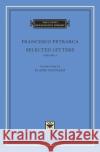
Francesco Petrarca (1304-1374), one of the greatest of Italian poets, was also the leading spirit in the Renaissance movement to revive the cultural and moral excellence of ancient Greece and Rome. This two-volume set contains an ample, representative sample from his enormous and fascinating correspondence with all the leading figures of his day, from popes, emperors, and kings to younger contemporaries such as Cola di Rienzi and Giovanni Boccaccio. The letters illustrate the remarkable story of Petrarca's life in a Europe beset by war, plague, clerical corruption, and political...
Francesco Petrarca (1304-1374), one of the greatest of Italian poets, was also the leading spirit in the Renaissance movement to revive the cultural a...
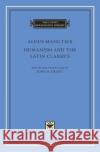
Aldus Manutius (c. 1451-1515) was the most important and innovative scholarly publisher of the Renaissance. His Aldine Press was responsible for more first editions of classical literature, philosophy, and science than any other publisher before or since. A companion volume to I Tatti's The Greek Classics (2016), Humanism and the Latin Classics presents all of Aldus's prefaces to his editions of works by ancient Latin and modern humanist writers, translated for the first time into English, along with other illustrative writings by Aldus and his collaborators. They provide unique...
Aldus Manutius (c. 1451-1515) was the most important and innovative scholarly publisher of the Renaissance. His Aldine Press was responsible for more ...
Francesco Petrarca (1304-1374), one of the greatest of Italian poets, was also the leading spirit in the Renaissance movement to revive the cultural and moral excellence of ancient Greece and Rome. This two-volume set contains an ample, representative sample from his enormous and fascinating correspondence with all the leading figures of his day, from popes, emperors, and kings to younger contemporaries such as Cola di Rienzi and Giovanni Boccaccio. The letters illustrate the remarkable story of Petrarca's life in a Europe beset by war, plague, clerical corruption, and political...
Francesco Petrarca (1304-1374), one of the greatest of Italian poets, was also the leading spirit in the Renaissance movement to revive the cultural a...
On the World and Religious Life (c. 1381) is the first surviving treatise of Coluccio Salutati (1332-1406), chancellor of the Florentine Republic (1375-1406) and the leader of the humanist movement in Italy in the generation after Petrarch and Boccaccio. The work was written for a lawyer who had left secular life to enter the Camaldulensian monastery of Santa Maria degli Angeli, located in the heart of Florence. The new monk prevailed on Salutati to write a treatise encouraging him to persevere in the religious life. His request led to this wide-ranging reflection on humanity's misuse...
On the World and Religious Life (c. 1381) is the first surviving treatise of Coluccio Salutati (1332-1406), chancellor of the Florentine Republ...
The defeat of the Ottomans by the Holy League fleet at the Battle of Lepanto (1571) was among the most celebrated international events of the sixteenth century. This volume anthologizes the work of twenty-two poets from diverse social and geographical backgrounds who composed Latin poetry, often modeled on Vergil and other Roman poets, in response to the news of the battle, the largest Mediterranean naval encounter since antiquity. Among the poems included is the two-book Austrias Carmen by the remarkable Juan Latino, a black African former slave who became a professor of Latin in...
The defeat of the Ottomans by the Holy League fleet at the Battle of Lepanto (1571) was among the most celebrated international events of the sixteent...
Giovanni Pontano (1429-1503), whose academic name was Gioviano, was one of the great scholar-poets of the Renaissance as well as a leading statesman who served as prime minister to the Kings of Aragon and southern Italy. The dominant literary figure of quattrocento Naples, Pontano produced literary works in several genres and was the leader of the Neapolitan academy. Among his large poetic output are the two brilliantly original poetical cycles that comprise the present volume. On Married Love stakes out new ground in the Western tradition as the first sustained exploration of married...
Giovanni Pontano (1429-1503), whose academic name was Gioviano, was one of the great scholar-poets of the Renaissance as well as a leading statesman w...
Ugolino Verino (1438-1516) was among the principal Latin poets in the Florence of Lorenzo de'Medici. A student of Cristoforo Landino, whose youthful love poems Verino imitated, Verino was a leading figure in the Renaissance revival of ancient Latin elegy. He blended Propertius, Ovid's Amores, and elements of Petrarch's lyric style to forge a distinctive poetic voice in a three-book cycle of poems in honor of his lady-love, Fiammetta. His Paradise, by contrast, is a vision-poem indebted to Vergil's Aeneid, Dante, and Cicero's Dream of Scipio, in which Ugolino is...
Ugolino Verino (1438-1516) was among the principal Latin poets in the Florence of Lorenzo de'Medici. A student of Cristoforo Landino, whose youthful l...
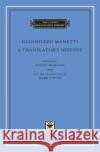
Giannozzo Manetti (1396-1459) was an Italian diplomat and a celebrated humanist orator and scholar of the early Renaissance. Son of a wealthy Florentine merchant, he turned away from a commercial career to take up scholarship under the guidance of the great civic humanist, Leonardo Bruni. Like Bruni he mastered both classical Latin and Greek, but, unusually, added to his linguistic armory a command of Biblical Hebrew as well. He used his knowledge of Hebrew to make a fresh translation of the Psalms into humanist Latin, a work that implicitly challenged the canonical Vulgate of St. Jerome. His...
Giannozzo Manetti (1396-1459) was an Italian diplomat and a celebrated humanist orator and scholar of the early Renaissance. Son of a wealthy Florenti...