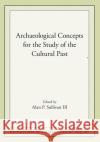
One idiosyncrasy of archaeology in North America is that it is considered a sub-field of cultural anthropology. To explore the dimensions of this situation, editor Alan P. Sullivan assembled a group of practicing archaeologists, each with different expertise, to analyze problems with the current disciplinary arrangement and to recommend changes in practice and pedagogy that might coalesce into a truly archaeological study of the cultural past. By using the theoretical tension that has arisen between archaeology and cultural anthropology, the contributors illustrate the effectiveness of...
One idiosyncrasy of archaeology in North America is that it is considered a sub-field of cultural anthropology. To explore the dimensions of this situ...
Throughout history, warfare and raiding forced captives from one society into another, forming an almost invisible stratum of many people without kin and largely outside the social systems in which they lived. Invisible Citizens explores the profound effects this mingling of societies and customs had on cultural development around the world. The contributors to this volume explore the remarkable range in the conditions and experiences of captives, from abject drudge to quasi kinswoman and from war captive to sexual concubine. Developing methods for identifying captives in the...
Throughout history, warfare and raiding forced captives from one society into another, forming an almost invisible stratum of many people without kin ...
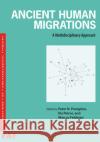
The study of human migration is integral to the understanding of essential features of human experience. Many ancient civilizations were created and modified through migrations, and migrations of later periods gave rise to the modern ethnic map of the world, affecting ideology, economy and politics. Historically, most human migration studies have taken a more specialized approach, often focusing on archaeology or linguistics. Ancient Human Migrations collects outstanding papers from internationally renowned scholars to clarify the need for multidisciplinary approaches to the topic of human...
The study of human migration is integral to the understanding of essential features of human experience. Many ancient civilizations were created and m...
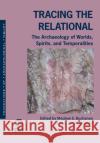
In the broadest sense this book is concerned with describing and explaining how particular places contain the key elements necessary for understanding the social worlds constructed, maintained, and modified by those who once inhabited them. This is achieved through the investigation of biographical, topographic, geopolitical, ideological, cosmological, and mnemonic facets of place, beginning with processes of place making and continuing with the development of networks among and between places and broader landscapes. Diverse spatial and temporal contexts in two culture areas--Mesoamerica...
In the broadest sense this book is concerned with describing and explaining how particular places contain the key elements necessary for understanding...
The contributions to this volume represent a diverse array of Mesoamerican archaeological studies that are all theo-retically rooted to larger, global debates concerning issues of power and identity two logically paired concepts. While social identity has been the focus of more critical analysis in recent years, the concept of power has received far less attention. Most studies focus on large-scale, institutional forms of power and the ruling body.Here, the focus is on "relations "of power, addressing broader segments of society outside the dominant group, that often are ignored in...
The contributions to this volume represent a diverse array of Mesoamerican archaeological studies that are all theo-retically rooted to larger, glo...
Behavioral archaeology, defined as the study of people-object interactions in all times and places, emerged in the 1970s, in large part because of the innovative work of Michael Schiffer and colleagues. This volume provides an overview of how behavioral archaeology has evolved and how it has affected the field of archaeology at large.
The contributors to this volume are Schiffer s former students, from his first doctoral student to his most recent. This generational span has allowed for chapters that reflect Schiffer s research from the 1970s to 2012. They are iconoclastic and creative...
Behavioral archaeology, defined as the study of people-object interactions in all times and places, emerged in the 1970s, in large part because of ...
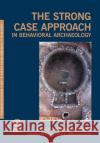
Although all archaeologists subscribe in principle to building strong cases in support of their inferences, behavioural archaeology alone has created methodology for developing strong cases in practice. The behavioural version of the strong case approach rests on two main pillars: (1) nomothetic (generalising) strategies, consisting of research in experimental archaeology, ethnoarchaeology, and long-term processes of behavioural change to produce principles necessary for inference; and (2) the formation processes of supporting evidence when constructing inferences.
Although all archaeologists subscribe in principle to building strong cases in support of their inferences, behavioural archaeology alone has created ...
Although most ceramic studies describe vessel production and use, the causes and rates of pottery discard are often neglected in archaeological studies. Michael Shott presents analytical methods for determining pottery use life and demonstrates why use life should not be overlooked.
Although most ceramic studies describe vessel production and use, the causes and rates of pottery discard are often neglected in archaeological studie...