"Emil Haury stands as one of the finest archaeologists of the American Southwest. He skills were sharpened by the best mentors--Cummings, Douglass, Gladwin--and eventually Haury's excavations became the definitive work on the Mogollon and Hohokam cultures. . . . This work is a 'best of Haury' collection of many of his previously published works, with excellent introductory essays by colleagues and noted archaeologists--gathered into one, readable volume."--Choice "Emil Haury is virtually beyond compare among southwestern archaeologists....the republication together of so many so...
"Emil Haury stands as one of the finest archaeologists of the American Southwest. He skills were sharpened by the best mentors--Cummings, Douglass, Gl...
Jefferson Reid Stephanie Whittlesey J. Jefferson Reid
Carved from cliffs and canyons, buried in desert rock and sand are pieces of the ancient past that beckon thousands of visitors every year to the American Southwest. Whether Montezuma Castle or a chunk of pottery, these traces of prehistory also bring archaeologists from all over the world, and their work gives us fresh insight and information on an almost day-to-day basis. Who hasn't dreamed of boarding a time machine for a trip into the past? This book invites us to step into a Hohokam village with its sounds of barking dogs, children's laughter, and the ever-present grinding...
Carved from cliffs and canyons, buried in desert rock and sand are pieces of the ancient past that beckon thousands of visitors every year to ...
Located in the mountains of east-central Arizona, Grasshopper Pueblo is a prehistoric ruin that has been excavated and interpreted more thoroughly than most sites in the Southwest: more than 100 rooms have been unearthed here, and artifacts of remarkable quantity and quality have been discovered. Thanks to these findings, we know more about ancient life at Grasshopper than at most other pueblos. Now two archaeologists who have devoted more than two decades to investigations at Grasshopper reconstruct the life and times of this fourteenth-century Mogollon community. Written for...
Located in the mountains of east-central Arizona, Grasshopper Pueblo is a prehistoric ruin that has been excavated and interpreted more thorou...
For thirty years, the University of Arizona Archaeological Field School at Grasshopper--a 500-room Mogollon pueblo located on what is today the Fort Apache Indian Reservation in Arizona--probed the past, taught scholars of international repute, and generated controversy. This book offers an extraordinary window into a changing American archaeology and three different research programs as they confronted the same pueblo ruin. Like the enigmatic Mogollon culture it sought to explore and earlier University of Arizona field schools in the Forestdale Valley and at Point of Pines,...
For thirty years, the University of Arizona Archaeological Field School at Grasshopper--a 500-room Mogollon pueblo located on what is today th...
For thirty years, the University of Arizona Archaeological Field School at Grasshopper--a 500-room Mogollon pueblo located on what is today the Fort Apache Indian Reservation in Arizona--probed the past, taught scholars of international repute, and generated controversy. This book offers an extraordinary window into a changing American archaeology and three different research programs as they confronted the same pueblo ruin. Like the enigmatic Mogollon culture it sought to explore and earlier University of Arizona field schools in the Forestdale Valley and at Point of Pines,...
For thirty years, the University of Arizona Archaeological Field School at Grasshopper--a 500-room Mogollon pueblo located on what is today th...
Trudy Griffin-Pierce J. Jefferson Reid Stephanie M. Whittlesey
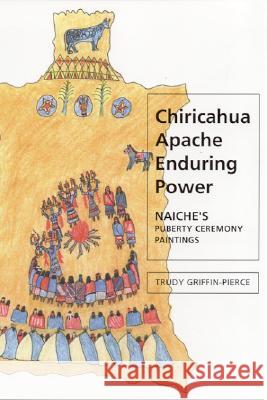
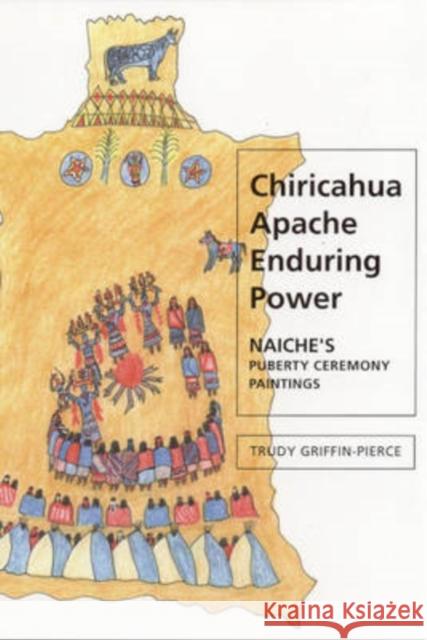
A gripping story of the cultural resilience of the descendants of Geronimo and Cochise. This book reveals the conflicting meanings of power held by the federal government and the Chiricahua Apaches throughout their history of interaction. When Geronimo and Naiche, son of Cochise, surrendered in 1886, their wartime exploits came to an end, but their real battle for survival was only beginning. Throughout their captivity in Florida, Alabama, and Oklahoma, Naiche kept alive Chiricahua spiritual power by embodying it in his beautiful hide paintings of the Girl s Puberty Ceremony a ritual at the...
A gripping story of the cultural resilience of the descendants of Geronimo and Cochise. This book reveals the conflicting meanings of power held by th...
A gripping story of the cultural resilience of the descendants of Geronimo and Cochise. This book reveals the conflicting meanings of power held by the federal government and the Chiricahua Apaches throughout their history of interaction. When Geronimo and Naiche, son of Cochise, surrendered in 1886, their wartime exploits came to an end, but their real battle for survival was only beginning. Throughout their captivity in Florida, Alabama, and Oklahoma, Naiche kept alive Chiricahua spiritual power by embodying it in his beautiful hide paintings of the Girl s Puberty Ceremony a ritual at the...
A gripping story of the cultural resilience of the descendants of Geronimo and Cochise. This book reveals the conflicting meanings of power held by th...
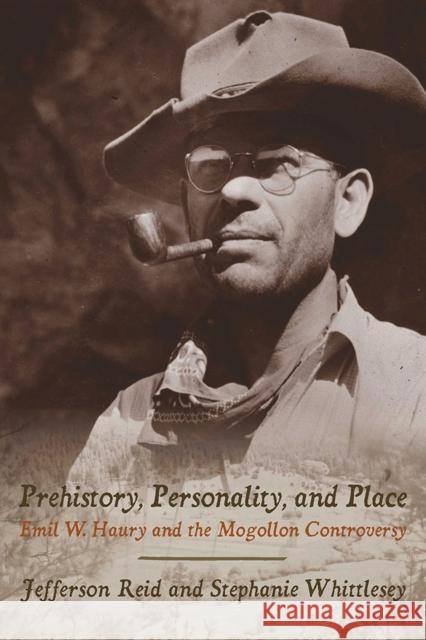
When Emil Haury defined the ancient Mogollon in the 1930s as a culture distinct from their Ancestral Pueblo and Hohokam neighbors, he triggered a major intellectual controversy in the history of southwestern archaeology, centering on whether the Mogollon were truly a different culture or merely a "backwoods variant" of a better-known people. In this book, archaeologists Jefferson Reid and Stephanie Whittlesey tell the story of the remarkable individuals who discovered the Mogollon culture, fought to validate it, and eventually resolved the controversy. Reid and Whittlesey present the...
When Emil Haury defined the ancient Mogollon in the 1930s as a culture distinct from their Ancestral Pueblo and Hohokam neighbors, he triggered a majo...
Michael Brian Schiffer Charles Riggs J. Jefferson Reid
Although all archaeologists subscribe in principle to building strong cases in support of their inferences, behavioural archaeology alone has created methodology for developing strong cases in practice. The behavioural version of the strong case approach rests on two main pillars: (1) nomothetic (generalising) strategies, consisting of research in experimental archaeology, ethnoarchaeology, and long-term processes of behavioural change to produce principles necessary for inference; and (2) the formation processes of supporting evidence when constructing inferences.
Although all archaeologists subscribe in principle to building strong cases in support of their inferences, behavioural archaeology alone has created ...