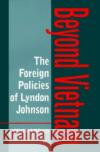
American political scholarship has so focused on Vietnam that little attention has been paid to Johnson's foreign policy in other regions of the world. Recently some scholars have moved beyond Vietnam to examine other aspects of American dealings with the world during the Johnson years. In this volume, H. W. Brands has gathered the work of some of the most important of these scholars, not only addressing regions other than Vietnam but also asking important analytic questions about Johnson's foreign policies. - Robert Dallek, a Johnson biographer, evaluates the president as a world leader....
American political scholarship has so focused on Vietnam that little attention has been paid to Johnson's foreign policy in other regions of the world...
"International Perspectives on Vietnam" is a collection by a diverse group of scholars that looks at the Vietnam War in terms of its significance to the global arena. Under the guidance of editors Lloyd C. Gardner and Ted Gittinger, the contributors examine whether the Vietnam War was responsible for transforming the international system. Topics include Robert J. McMahon's assessment of the war's legacy to Southeast Asia; Xiaoming Zhang's analysis of Chinese involvement in the Sino-Soviet rivalry; Ilya V. Gaiduk's account of the Soviet Indochina policy within the context of Moscow's...
"International Perspectives on Vietnam" is a collection by a diverse group of scholars that looks at the Vietnam War in terms of its significance to t...
Americans consider themselves a peaceful people. Yet every generation since colonial times has taken part in war. Why? Does something in our democratic creed lead us repeatedly into hostilities? Does the American sense of mission demand that we take up arms to transform the world into our own image? Do baser motives drive national policy? Is there, in short, a distinctive American motive and style of war? Distinguished diplomatic historian Robert A. Divine considers these questions in a thoughtful retrospective of the wars of the twentieth century. He examines the process of going to war...
Americans consider themselves a peaceful people. Yet every generation since colonial times has taken part in war. Why? Does something in our democrati...
The presidential election of 1952, unlike most others before and since, was dominated by foreign policy, from the bloody stalemate of Korea to the deepening menace of international communism. During the campaign, Dwight Eisenhower and his spokesmen fed the public's imagination with their promises to liberate the peoples of Eastern Europe and created the impression that in office they would undertake an aggressive program to roll back Soviet influence across the globe. But time and again during the 1950s, Eisenhower and his advisers found themselves powerless to shape the course of events in...
The presidential election of 1952, unlike most others before and since, was dominated by foreign policy, from the bloody stalemate of Korea to the dee...
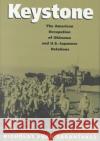
In the mid1990s, Okinawa became the focal point of a major crisis in U.S.Japanese relations. During this diplomatic incident many Americans were surprised to learn that the United States had military bases on this island. In fact, the United States had ruled Okinawa and its surrounding islands as a colony in everything but name from 1945 to 1972. The island had been the strategic keystone of the American postwar base system of double containment in the Pacific and the only spot in that chain that American officials insisted on governing under the legal cover of "residual sovereignty." Why...
In the mid1990s, Okinawa became the focal point of a major crisis in U.S.Japanese relations. During this diplomatic incident many Americans were surpr...
"The Search for Peace in ""Vietnam"," 1964-1968, " the newest edition in the Texas A&M University Press Series on Foreign Relations and the Presidency, is a collection of essays that analyze the Vietnam War in terms of its significance to the global arena. Under the guidance of editors Lloyd C. Gardner and Ted Gittinger, the contributors, representing both communist and capitalist backgrounds, examine whether the Vietnam War was responsible for the transformation of the international system, using a formula postulated by series editor H. W. Brands, which looks at the international system at...
"The Search for Peace in ""Vietnam"," 1964-1968, " the newest edition in the Texas A&M University Press Series on Foreign Relations and the Presidency...
Even at the time it was announced near the end of the first term of the Reagan administration, such luminaries as William Safire mischaracterized the Weinberger Doctrine as a conservative retreat from the use of force in U.S. international relations. Since that time, scholars have largely agreed with Safire that the six points spelled out in the statement represented a reaction to the Vietnam War and were intended to limit U.S. military action to "only the fun wars" that could be relatively easily won or those in response to direct attack.In this work of extensive original scholarship,...
Even at the time it was announced near the end of the first term of the Reagan administration, such luminaries as William Safire mischaracterized the ...
In the aftermath of the Cuban Missile Crisis, questions persisted about how the potential cataclysm had been allowed to develop. A subsequent congressional investigation focused on what came to be known as the "photo gap" five weeks during which intelligence-gathering flights over Cuba had been attenuated.In "Blind over Cuba," David M. Barrett and Max Holland challenge the popular perception of the Kennedy administration's handling of the Soviet Union's surreptitious deployment of missiles in the Western Hemisphere. Rather than epitomizing it as a masterpiece of crisis management by policy...
In the aftermath of the Cuban Missile Crisis, questions persisted about how the potential cataclysm had been allowed to develop. A subsequent congress...