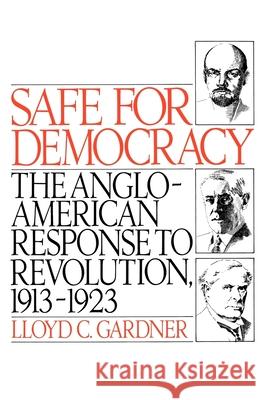
This ground-breaking book probes the way that two capitalist superpowers, Great Britain and the United States, responded to the momentous challenge of revolution that emerged during the early years of this century. Focusing on two key figures--Woodrow Wilson and David Lloyd George--the book explores the collective impact on the Western democracies of the revolutions that swept Mexico in 1910, China in 1911, and, especially, Russia in 1917.
This ground-breaking book probes the way that two capitalist superpowers, Great Britain and the United States, responded to the momentous challenge of...
"International Perspectives on Vietnam" is a collection by a diverse group of scholars that looks at the Vietnam War in terms of its significance to the global arena. Under the guidance of editors Lloyd C. Gardner and Ted Gittinger, the contributors examine whether the Vietnam War was responsible for transforming the international system. Topics include Robert J. McMahon's assessment of the war's legacy to Southeast Asia; Xiaoming Zhang's analysis of Chinese involvement in the Sino-Soviet rivalry; Ilya V. Gaiduk's account of the Soviet Indochina policy within the context of Moscow's...
"International Perspectives on Vietnam" is a collection by a diverse group of scholars that looks at the Vietnam War in terms of its significance to t...
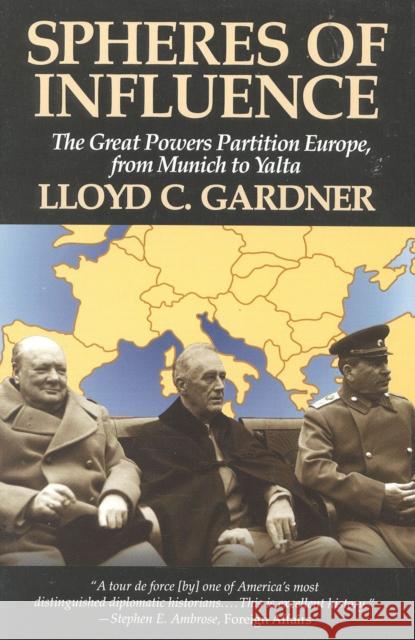
The war within the war was the struggle among Roosevelt, Churchill, and Stalin for the shape of the world that would follow World War II. That delicate diplomacy is spelled out in Lloyd Gardner's brilliant reinterpretation of the negotiations that divided Europe and laid the foundations of the cold war. Mr. Gardner begins his story not conventionally in 1941 but with the British attempt to appease Hitler at Munich in 1938. Here, the author argues, were the roots of the territorial agreements that culminated at Yalta the "spheres of influence" which the Americans sought to avoid as an Old...
The war within the war was the struggle among Roosevelt, Churchill, and Stalin for the shape of the world that would follow World War II. That delicat...
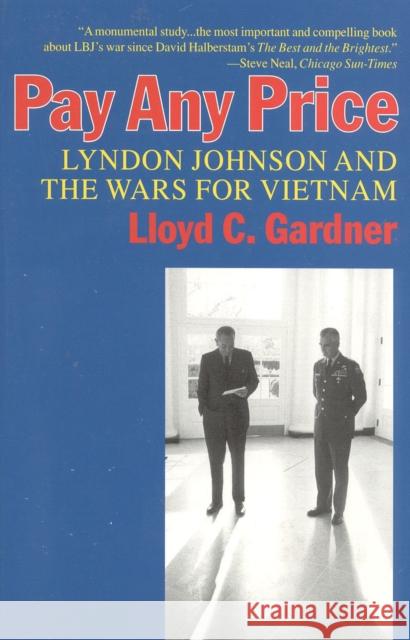
Lyndon Johnson brought to the presidency a political outlook steeped in New Deal liberalism and the idea of government intervention for the public good at home or abroad. Seeking to fulfill John Kennedy's pledge in Southeast Asia, LBJ constructed a fatal coupling of the Great Society and the anti-Communist imperative. Pay Any Price is Lloyd Gardner's riveting account of the fall into Vietnam; of behind-the-scenes decision-making at the highest levels of government; of miscalculation, blinkered optimism, and moral obtuseness. Blending political biography with diplomatic history, Gardner has...
Lyndon Johnson brought to the presidency a political outlook steeped in New Deal liberalism and the idea of government intervention for the public goo...
"The Search for Peace in ""Vietnam"," 1964-1968, " the newest edition in the Texas A&M University Press Series on Foreign Relations and the Presidency, is a collection of essays that analyze the Vietnam War in terms of its significance to the global arena. Under the guidance of editors Lloyd C. Gardner and Ted Gittinger, the contributors, representing both communist and capitalist backgrounds, examine whether the Vietnam War was responsible for the transformation of the international system, using a formula postulated by series editor H. W. Brands, which looks at the international system at...
"The Search for Peace in ""Vietnam"," 1964-1968, " the newest edition in the Texas A&M University Press Series on Foreign Relations and the Presidency...
The first Vietnam War, a war of diplomatic maneuver and decisions made from afar, began in 1941, while the fires of World War II raged. With masterly command of documents never before analyzed in a book, Lloyd C. Gardner paints an absorbing picture of the events of that fateful period.
The first Vietnam War, a war of diplomatic maneuver and decisions made from afar, began in 1941, while the fires of World War II raged. With masterly ...
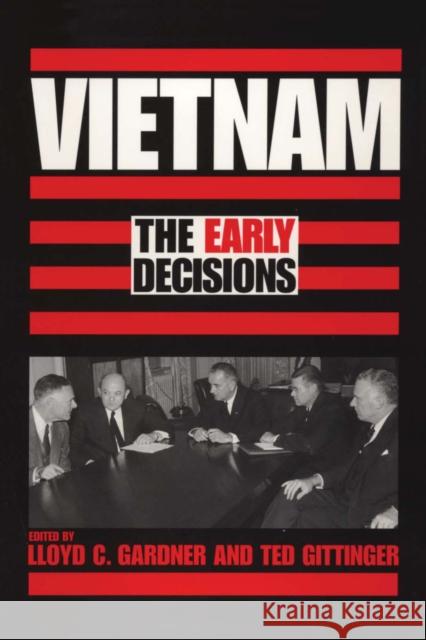
Haunting questions remain about our involvement in Vietnam. Perhaps the most persistent of these is whether President Kennedy would have ended American involvement in Vietnam if he had lived.
For many Americans, Oliver Stone's film JFK left no doubt that before his assassination Kennedy had determined to quit Vietnam. Yet the historical record offers a more complex answer. In this fresh look at the archival evidence, noted scholars take up the challenge to provide us with their conclusions about the early decisions that put the United States on the path to the greatest...
Haunting questions remain about our involvement in Vietnam. Perhaps the most persistent of these is whether President Kennedy would have ended Amer...