Less bloody and less known than the land campaigns of the Civil War, the naval battles--and especially the naval blockade of the South--were crucial factors in the outcome of the war. The spectacular battle between the Monitor and the Merrimack marked the debut of ironclads, a revolution in naval warfare. Ships supported McClellan's Peninsula Campaign and Grant's conquest of the Mississippi Valley. The raiding of the Confederate cruisers Sumter, Florida, and Alabama, Farragut's capture of the forts in Mobile Bay, and the interception of foreign ships on their way...
Less bloody and less known than the land campaigns of the Civil War, the naval battles--and especially the naval blockade of the South--were crucial f...
"A moving and powerful story, written by a Tennessean; written from the Southern stand-point, of course, but without a trace of bigotry . . . his choice of selections in that long battle-scarred record is felicitous and beyond reproach."--C. W. Thompson, New York Times "Henry's Story of the Confederacy is a remarkably clear, sympathetic, accurate, and inclusive account of the rise and fall of the Confederate states. The story is told with zest and understanding and a clarity that is not always to be found in the description of battles and campaigns."--Henry Steele...
"A moving and powerful story, written by a Tennessean; written from the Southern stand-point, of course, but without a trace of bigotry . . . his choi...
No biographer could ask for a more colorful or difficult subject than the painter and revolutionary Gustave Courbet. One of the fathers of Realism, a style he created with his huge canvases of his birthplace in Ornans (After Dinner at Ornans, 1949; Funeral at Ornans, 1850, and The Stonebreakers, 1850), Courbet chose his subjects from ordinary life and portrayed them with the same monumental dignity as the great men of history. A man with big appetites for life, women, and politics, he frequently found himself at odds with French authorities, especially during the...
No biographer could ask for a more colorful or difficult subject than the painter and revolutionary Gustave Courbet. One of the fathers of Realism, a ...
A history of weapons and warfare, from the Macedonian sarissa to the atomic bomb. The book describes technological and strategic advances in military science, but also aims to evoke the horror of war and comment on the future of warfare.
A history of weapons and warfare, from the Macedonian sarissa to the atomic bomb. The book describes technological and strategic advances in military ...
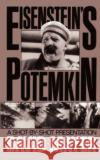
Sergei M. Eisenstein'sPotemkin, a vivid account of the mutiny of Russian sailors on a Czarist battleship in 1905, is universally acknowledged to be one of the greatest films of all time. Until now, however, Potemkin's astonishing vividness and artistry has never been translated satisfactorily into print. David Mayer's precise, shot-by-shot re-creation of Potemkin, the product of five years' work, is unquestionably definitive. For the student, it is a complete and faithful guide to the film. For the non-initiate, it can be read as a novel--a magnificent story of...
Sergei M. Eisenstein'sPotemkin, a vivid account of the mutiny of Russian sailors on a Czarist battleship in 1905, is universally acknowledged t...
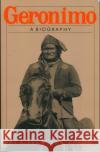
In the Apaches' final campaign, Geronimo led 19 warriors against 5,000 U.S. troops. No Apaches were killed, and the U.S. suffered heavy casualties. For the Apaches could travel seventy miles a day on foot, lay a deadly ambush in country so open a white man could not find a hiding place, and elude pursuit by scattering in every direction, only to reassemble as soon as the force was gone. Probably the greatest foot soldiers ever known, they held the U.S. Army at bay for forty years. This book tells the stories of Geronimo, his Apache warriors, and his American enemies with vigor and verve....
In the Apaches' final campaign, Geronimo led 19 warriors against 5,000 U.S. troops. No Apaches were killed, and the U.S. suffered heavy casualties. Fo...
With these words the sculptors Naum Gabo and Antoine Pevsner pronounced the official birth of constructivist art, the most revolutionary, challenging, and enigmatic of twentieth-century artistic movements. Since the time of their "Realistic Manifesto," constructivism has spread throughout the world, opposing personal, expressionistic art with abstraction and formal construction. In this book, Stephen Bann has collected the most important constructivist documents, including the writings of EI Lissitzky, Theo Van Doesburg, Hans Richter, Victor Vasarely, and Charles Biederman--many of which have...
With these words the sculptors Naum Gabo and Antoine Pevsner pronounced the official birth of constructivist art, the most revolutionary, challenging,...
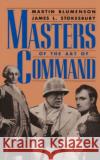
A wide-ranging series of essays on military leaders, ancient and modern, whose actions and personalities provide insights into the interplay of time, circumstance, and individual character and ability that makes for success or failure.
A wide-ranging series of essays on military leaders, ancient and modern, whose actions and personalities provide insights into the interplay of time, ...
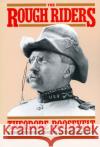
The advent of war with Spain was a glorious opportunity for forceful leadership not to be missed by the hotheaded young Theodore Roosevelt. He resigned his post as assistant-secretary of the Navy in April, 1898, and, despite the strong disapproval of family and friends, he joined the Army as Lt. Colonel of a regiment to be raised in the territories of Arizona, New Mexico, and Oklahoma. He ordered a uniform from Brooks Brothers, a dozen pairs of steel spectacles, "a couple of good, stout, quiet horses," and he was off to train his volunteers at San Antonio. The Rough Riders were a most unusual...
The advent of war with Spain was a glorious opportunity for forceful leadership not to be missed by the hotheaded young Theodore Roosevelt. He resigne...
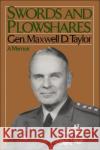
General Maxwell D. Taylor was one of the great military heroes of recent American history. During World War II, Taylor fought in Sicily and Italy before parachuting into France as head of the 101st Airborne Division on Dday, 1944. Later he commanded the Division in the Arnhem drop in Holland and in the defense of Basting in the Bulge. After the war, Taylor served as superintendent of West Point, U.S. Commander in Berlin, Commander of the Eighth Army in Korea, and Army Chief of Staff under President Eisenhower. John F. Kennedy named him chairman of the Joint Chiefs of Staff and sent him to...
General Maxwell D. Taylor was one of the great military heroes of recent American history. During World War II, Taylor fought in Sicily and Italy befo...