A decade after his release from Federal prison, the 67-year-old Jefferson Davis--ex-President of the Confederacy, the "Southern Lincoln," popularly regarded as a martyr to the Confederate cause--began work on his monumental Rise and Fall of the Confederate Government. Motivated partially by his deep-rooted antagonism toward his enemies (both the Northern victors and his Southern detractors), partially by his continuing obsession with the "cause," and partially by his desperate pecuniary and physical condition, Davis devoted three years and extensive research to the writing of what he...
A decade after his release from Federal prison, the 67-year-old Jefferson Davis--ex-President of the Confederacy, the "Southern Lincoln," popularly re...
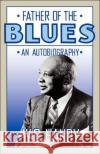
W. C. Handy's blues--"Memphis Blues," "Beale Street Blues," "St. Louis Blues"--changed America's music forever. In Father of the Blues, Handy presents his own story: a vivid picture of American life now vanished. W. C. Handy (1873-1958) was a sensitive child who loved nature and music; but not until he had won a reputation did his father, a preacher of stern Calvinist faith, forgive him for following the "devilish" calling of black music and theater. Here Handy tells of this and other struggles: the lot of a black musician with entertainment groups in the turn-of-the-century South;...
W. C. Handy's blues--"Memphis Blues," "Beale Street Blues," "St. Louis Blues"--changed America's music forever. In Father of the Blues, Handy ...
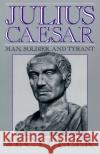
Since the Renaissance, Julius Caesar has been idolized as a superman. Classical sources, however, present a far less exalted being. As General Fuller writes, Caesar was "an unscrupulous demagogue whose one aim was power, and a general who could not only win brilliant victories but also commit dismal blunders.... It is reasonable to suspect that, at times, Caesar was not responsible for his actions, and toward the end of his life, not altogether sane." There is not doubt that Caesar was an extraordinary man." But Fuller points out that he was extraordinary for his reckless ambition, matchless...
Since the Renaissance, Julius Caesar has been idolized as a superman. Classical sources, however, present a far less exalted being. As General Fuller ...
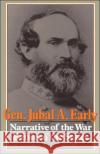
'Early's book is a large work which students of Lee's army cannot ignore...Gary Gallagher's introduction is as fine a piece of writing of this nature as a reader is likely to find. Dr. Gallagher knew 'Old Jube' and captures him in a model sketch.'--Jeffry Wert, author of Mosby's Rangers
'Early's book is a large work which students of Lee's army cannot ignore...Gary Gallagher's introduction is as fine a piece of writing of this nature ...
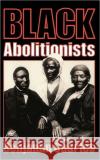
While much is known about the white men and women who were involved in the anti-slavery movement, the black abolitionists have been largely ignored. This book, written by one of America's leading black historians, sets the record straight. As Benjamin Quarles shows, blacks were anything but passive in the abolitionist movement. Many of the pioneers of abolition were black; dozens of black preachers and writers actively promoted the cause; black organizations were founded to support their brothers; black ambassadors for freedom crossed the Atlantic; blacks were instrumental in the operation of...
While much is known about the white men and women who were involved in the anti-slavery movement, the black abolitionists have been largely ignored. T...
Features interviews with 14 jazz players, including Art Farmer, Cecil Taylor, Clark Terry, Eddie Lockjaw Davis, Thelonius Monk, Big Joe Turner and Archie Shepp. It provides portraits of the often troubled lives of the musicians who changed the shape of jazz in the 50s and 60s.
Features interviews with 14 jazz players, including Art Farmer, Cecil Taylor, Clark Terry, Eddie Lockjaw Davis, Thelonius Monk, Big Joe Turner and Arc...
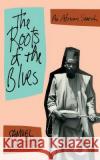
I went to Africa to find the roots of the blues. So Samuel Charters begins the extraordinary story of his research. But what began as a study of how the blues was handed down from African slaves to musicians of today via the slave ships, became something much more complex. For in Africa Samuel Charters discovered a music which was not just a part of the past but a very vital living part of African culture. The Roots of the Blues not only reveals Charters's remarkable talent in discussing African folk music and its relationship with American blues; it demonstrates his power as a...
I went to Africa to find the roots of the blues. So Samuel Charters begins the extraordinary story of his research. But what began as a study of how t...
In 1972, Stonehill Books published David Dalton's Janis, a multimedia extravaganza that incorporated interviews, quotes, photographs, lyrics, Rolling Stone Clippings, sheet music, a record of rapping and singing, and prose as wild and moving as Janis's performances. Piece of My Heart is a reconstruction and revision of that early work - one of the first "rock 'n' roll" books--leaving the prose and interviews intact, adding dozens of new photos, and incorporating a wealth of new material. Here is the best possible portrait of the lonely teenager from Port Arthur, Texas,...
In 1972, Stonehill Books published David Dalton's Janis, a multimedia extravaganza that incorporated interviews, quotes, photographs, lyrics, ...
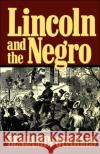
First published in 1962, Lincoln and the Negro was the first book to examine in detail how Lincoln faced the problem of the status of black people in American democracy, and it remains unsurpassed. Starting with Lincoln's childhood attitudes, Benjamin Quarles traces the development of Lincoln's thought in relation to the African American, a development which was to culminate in the Emancipation Proclamation. Concerned at first with methods of colonization outside the United States, Lincoln came later to advocate not only emancipation of the slaves, but also equal political rights for...
First published in 1962, Lincoln and the Negro was the first book to examine in detail how Lincoln faced the problem of the status of black peo...
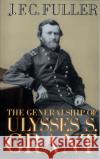
An analysis of one of America's greatest soldiers which refutes the notion that Grant relied only on brute force to achieve his victories, demonstrating instead the mastery of mobility, surprise, judgement, and strategic co-ordination that made Grant the premier Civil War general.
An analysis of one of America's greatest soldiers which refutes the notion that Grant relied only on brute force to achieve his victories, demonstrati...