< div> For two millennia, the site now known as Blue Creek in northwestern Belize was a Maya community that became an economic and political center that included some 15,000-20,000 people at its height.& nbsp; Fairly well protected from human destruction, the site offers the full range of city components including monumental ceremonial structures, elite and non-elite residences, ditched agricultural fields, and residential clusters just outside the core.& nbsp; Since 1992, a multi-disciplinary, multi-national research team has intensively investigated Blue Creek in an integrated...
< div> For two millennia, the site now known as Blue Creek in northwestern Belize was a Maya community that became an economic and political center th...
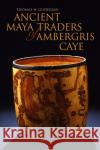
Archaeologists are unsure exactly when the Maya inhabited the coastal areas of Belize, but ample evidence exists to support an extensive maritime trade network along the coast by A.D. 600 This volume focuses on the maritime trade network sites on Ambergris Caye, Belize where excavations have revealed remnants of very small villages, or camps, along the Caribbean coastline.
Archaeologists are unsure exactly when the Maya inhabited the coastal areas of Belize, but ample evidence exists to support an extensive maritime t...
Much of Jamaican prehistoric research like that in the rest of the Caribbean basin has been guided by at least a subconscious attempt to allow prehistoric native peoples to find their places within the charts established by Irving Rouse, who guided Caribbean research for much of the last half-century. The pre-Columbian peoples of Jamaica, and not merely their material culture, are beginning to take form, revealing their lifestyles and rituals, and taking their rightful place among the cultures of the New World.Pre-Columbian Jamaica represents the first substantial attempt to summarize...
Much of Jamaican prehistoric research like that in the rest of the Caribbean basin has been guided by at least a subconscious attempt to allow prehist...
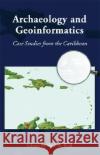
Addressing the use of geoinformatics in Caribbean archaeology, this volume is based on case studies drawn from specific island territories, namely, Barbados, St. John, Puerto Rico, Jamaica, Nevis, St. Eustatius, and Trinidad and Tobago, as well as inter-island interaction and landscape conceptualization in the Caribbean region. Geoinformatics is especially critical within the Caribbean where site destruction is intense due to storm surges, hurricanes, ocean and riverine erosion, urbanization, industrialization, and agriculture, as well as commercial development along the very waterfronts that...
Addressing the use of geoinformatics in Caribbean archaeology, this volume is based on case studies drawn from specific island territories, namely, Ba...
This compilation, by an international grouping of scholars, focuses on the nature of Caribbean rock art or rock graphics and makes clear the region's substantial and distinctive rock art tradition. Thorough and comparative, it includes data on the history of rock graphic research, the nature of the assemblages (image numbers, types, locations), and the legal, conservation, and research status of the image sites.Chapters on these topics cover research on the islands of Cuba, Haiti, Dominican Republic, the Bahamas, Jamaica, Puerto Rico, U.S. Virgin Islands, Guadeloupe, Aruba, and Bonaire.The...
This compilation, by an international grouping of scholars, focuses on the nature of Caribbean rock art or rock graphics and makes clear the region's ...
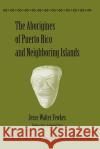
A valuable recounting of the first formal archaeological excavations in Puerto Rico. Originally published as the "Twenty-Fifth Annual Report of the Bureau of American Ethnology to the Secretary of the Smithsonian Institution" in 1907, this book was praised in an article in American Anthropologist as doing "more than any other to give a comprehensive idea of the archaeology of the West Indies." Until that time, for mainly political reasons, little scientific research had been conducted by Americans on any of the Caribbean islands. Dr. Fewkes' unique skills of observation and...
A valuable recounting of the first formal archaeological excavations in Puerto Rico. Originally published as the "Twenty-Fifth Annual Report of t...
The history of Puerto Rico has usually been envisioned as a sequence of colonizations-various indigenous peoples from Archaic through Taino were successively invaded, assimilated, or eliminated, followed by the Spanish entrada, which was then modified by African traditions and, since 1898, by the United States. The truth is more complex, but in many ways Puerto Rico remains one of the last colonies in the world. This volume focuses on the successive indigenous cultures of Puerto Rico prior to 1493.
The history of Puerto Rico has usually been envisioned as a sequence of colonizations-various indigenous peoples from Archaic through Taino were succe...
This innovative volume builds on dialogues opened in recent years between Cuban archaeologists, whose work has long been carried out behind closed doors, and their international colleagues. The chapters included herein span a wide range of subjects across the full chronological spectrum. Most were written by emerging Cuban professionals who are breaking new ground; a few were penned by long-time leaders in the field. Issues addressed by the 17 contributors represented in this collection include the long-term cultural and intellectual links between Florida and Cuba, which influence shared...
This innovative volume builds on dialogues opened in recent years between Cuban archaeologists, whose work has long been carried out behind closed doo...
This innovative volume builds on dialogues opened in recent years between Cuban archaeologists, whose work has long been carried out behind closed doors, and their international colleagues. The chapters included herein span a wide range of subjects across the full chronological spectrum. Thus this volume makes a crucial contribution to the field of archaeology on many fronts, not the least of which is the sharing of information across the blockade.
This innovative volume builds on dialogues opened in recent years between Cuban archaeologists, whose work has long been carried out behind closed ...