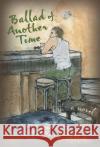
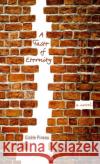
Approaching midlife, after rising to comfortable suburban life, Edgar Bonjour becomes involved with a drug-trafficking Puerto Rican motorcycle gang from his old neighbourhood and is brought down by an affair with a woman in the gang. News of his murder leads to introspection among other members of the Puerto Rican Bonjour clan, all descended from three now nameless French brothers remembered only by their surname. Though extended generations of the Bonjours dispersed, some settling in New York, they remain connected by the shared lore of their ancestry, that starting with the three original...
Approaching midlife, after rising to comfortable suburban life, Edgar Bonjour becomes involved with a drug-trafficking Puerto Rican motorcycle gang fr...
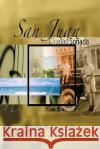
"San Juan: Memoir of a City" conducts readers through Puerto Rico's capital, guided by one of its most graceful and reflective writers, Edgardo Rodrí guez Juliá . No mere sightseeing tour, this is culture through immersion, a circuit of San Juan's historical and intellectual vistas as well as its architecture. In the allusive cityscape he recreates, Rodrí guez Juliá invokes the ghosts of his childhood, of San Juan's elder literati, and of characters from his own...
"San Juan: Memoir of a City" conducts readers through Puerto Rico's capital, guided by one of its most graceful and reflec...
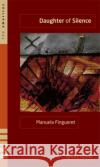
Silence is a tradition among the women of Rita s family, so it is no wonder that she must interpret for herself what her mother has left unsaid about the horrors of the Terezin concentration camp. But Rita faces a silence of her own: a Peronist militant in 1980s Argentina, she has been incarcerated and abused in Buenos Aires s infamous Escuela de Mecanica de la Armada (ESMA) detention center. In an imagined dialogue between mother and daughter, Rita recreates Tinkeleh s unarticulated story, interweaving it with memories of her own childhood. Breaking with the tradition of women as silent...
Silence is a tradition among the women of Rita s family, so it is no wonder that she must interpret for herself what her mother has left unsaid about ...
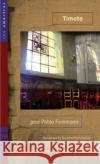
This much is fact: at noon on May 29, 1970, Argentinean general and former president Pablo Eugenio Aramburu was abducted from his Buenos Aires apartment by the Montoneros, an urban guerilla group that supported the regimeand returnof exiled leader Juan Peron. Only after a month-long search was it discovered that the Montoneros had executed Aramburu three days after kidnapping him, leaving his corpse to rot inside a farmhouse in the remote hamlet of Timote. Jose Pablo Feinmann s brilliant fictionalization of this momentous event in Argentine history raises as many questions as it answers,...
This much is fact: at noon on May 29, 1970, Argentinean general and former president Pablo Eugenio Aramburu was abducted from his Buenos Aires apartme...
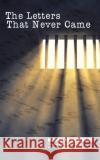
"An interweaving of longing and reemergence" Originally published in Spanish in 2000 and first appearing in English in 2004, "The Letters that Never Came" is an autobiographical novel in three parts that reflects Rosencof s life growing up in 1930s Uruguay as the son of Polish-Jewish immigrants and, later, his twelve-year imprisonment during the military dictatorship his country suffered. Part I is a rich evocation of life in Montevideo in the mid-1930s as seen through the eyes of young Moishe. Every day, Moishe's father waits for the postman, hoping for news of his family, who are...
"An interweaving of longing and reemergence" Originally published in Spanish in 2000 and first appearing in English in 2004, "The Letters that Ne...
"Two women, separate but bound by hope" When Sybille arrives in Paris from Guadeloupe with her infant son, she encounters the extravagant and marvelous Lila. Sybille is young and black with her life still ahead of her; an ex-actress, Lila is white and seventy years old. Despite their differences, the women become inseparable. Haunted by memories, Lila confides in Sybille and, among other things, relates the endless cycle of lovers in her life. Her most cherished memories are of Henry, a black man from the British Caribbean whom she met during the Liberation Day celebrations in Paris....
"Two women, separate but bound by hope" When Sybille arrives in Paris from Guadeloupe with her infant son, she encounters the extravagant and mar...
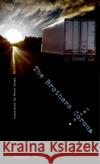
"A modern-day picaresque novel by one of Mexico s best" "The Brothers Corona" is a novel that reads like a Sam Shepard story made into a Wim Wenders road movie. It is the first Mexican detective novel that reflects rural Mexican life and culture, showcasing the splendor of its customs and traditions. The novel unfolds as two revolving stories that eventually intertwine into one. The first is the story of Abel Corona and his three brothers, who are involved in a nasty feud with the neighboring Alcaraz family. The second story focuses on the journey that Abel undertakes to search for...
"A modern-day picaresque novel by one of Mexico s best" "The Brothers Corona" is a novel that reads like a Sam Shepard story made into a Wim Wende...
Todo el paisaje de mi infancia ha desaparecido . . . Edgardo Rodriguez Julia is an expert and lyrical guide to the history, inhabitants, and culture of his native city of San Juan, recalling scenes from his childhood while chonicling the social and physical changes in the city. Though superhighways have replaced the winding lanes and Puerto Ricans remain socially and politically divided, Rodriguez Julia also evokes picturesque imagery and the melancholy sweetness of remembrance as he leads readers through his Ciudad Sonada, his city of dreams.
Todo el paisaje de mi infancia ha desaparecido . . . Edgardo Rodriguez Julia is an expert and lyrical guide to the history, inhabitants, and culture o...